

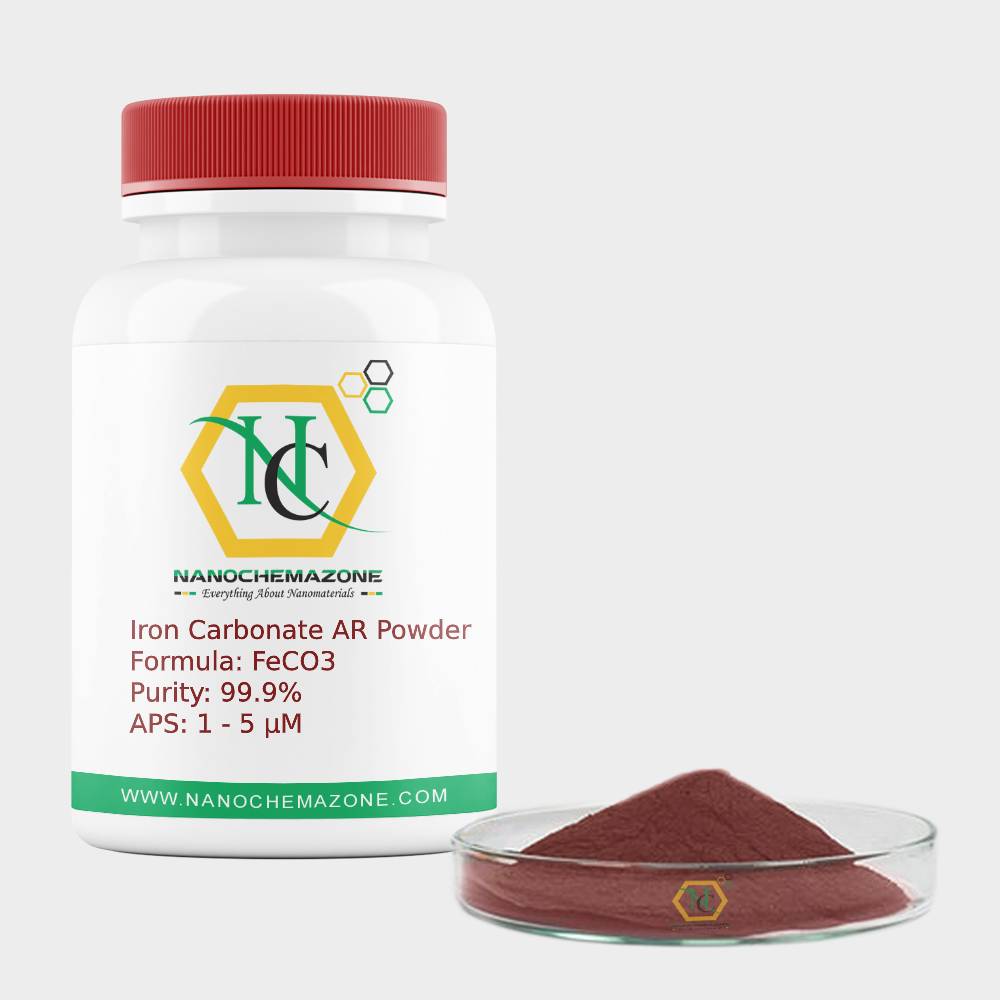
Cadmium Stannate Powder
₹0.00
Cadmium Stannate
Cadmium Stannate
| Product |
Cadmium Stannate |
| Colour | White |
| Purity | 99% |
| Particle Size | 1-5µM(customizable) |
| Ingredient/MF | Cd2SnO4 |
| Product Code | NCZ-CP-382/20 |
| CAS Number | 12185-56-7 |
| Density | N/A |
| Melting point | N/A |
| Boiling Point | N/A |
| Molecular Weight | 407.49 |
| Exact Mass | N/A |
Cadmium Stannate Description
Cadmium is a Block D, Group 12, Period 5 element with an atomic weight of 112.411. The number of electrons in each of Cadmium’s shells is 2, 8, 18, 18, 2 and its electron configuration is [Kr] 4d10 5s2. The cadmium atom has a radius of 151 pm and a Van der Waals radius of 230 pm.
Cadmium was discovered and first isolated by Karl Samuel Leberecht Hermann and Friedrich Stromeyer in 1817. In its elemental form, cadmium has a silvery bluish gray metallic appearance. Cadmium makes up about 0.1 ppm of the earth’s crust.
No significant deposits of cadmium containing ores are known, however, it is sometimes found in its metallic form. It is a common impurity in zinc ores and is isolated during the production of zinc.
Cadmium is a key component in battery production and particular pigments and coatings due to its distinct yellow color. Cadmium oxide is used in phosphors for television picture tubes. The name Cadmium originates from the Latin word ‘cadmia’ and the Greek word ‘kadmeia’.
Tin:
Tin is a Block P, Group 14, Period 5 element with an atomic weight of 118.710. The number of electrons in each of tin’s shells is 2, 8, 18, 18, 4 and its electron configuration is [Kr] 4d10 5s2 5p2.
The tin atom has a radius of 140.5 pm and a Van der Waals radius of 217 pm.In its elemental form, tin has a silvery-gray metallic appearance. It is malleable, ductile and highly crystalline. Tin has nine stable isotopes and 18 unstable isotopes.
Under 3.72 degrees Kelvin, Tin becomes a superconductor. Applications for tin include soldering, plating, and such alloys as pewter. The first uses of tin can be dated to the Bronze Age around 3000 BC in which tin and copper were combined to make the alloy bronze.
The origin of the word tin comes from the Latin word Stannum which translates to the Anglo-Saxon word tin. For more information on tin, including properties, safety data, research, and Nanochemazone catalog of tin products, visit the Tin element page.
Related Information
Storage Conditions:
Airtight sealed, avoid light and keep dry at room temperature.
Please contact us for customization and price inquiry
Email: contact@nanochemazone.com
Note: We supply different size ranges of Nano and micron as per the client’s requirements and also accept customization in various parameters.
Note: For pricing & ordering information, please contact us at sales@nanochemazone.com
Please contact us for quotes on Larger Quantities & Customization. E-mail: contact@nanochemazone.com
Customization:
If you are planning to order large quantities for your industrial and academic needs, please note that customization of parameters (such as size, length, purity, functionalities, etc.) are available upon request.
You must be logged in to post a review.
Related products
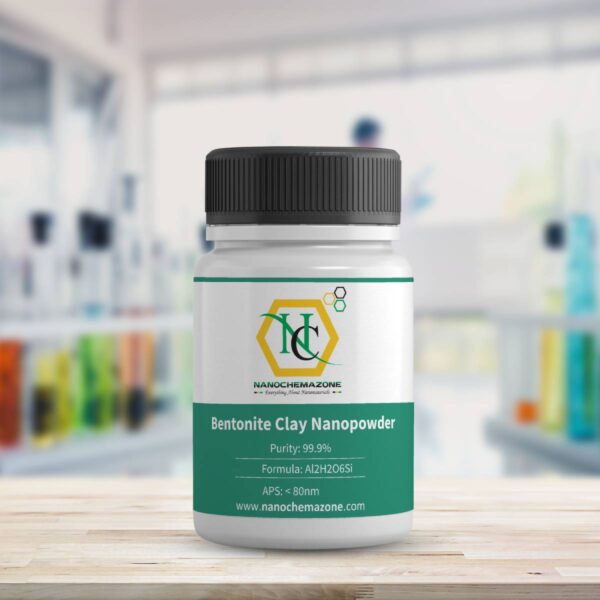
Bentonite Clay Nanopowder
Bentonite Clay Nanopowder
Product Name: Bentonite Clay Nanopowder (Purity: 99.9%, APS: < 80nm)
Product |
Bentonite Clay Nanopowder |
| Cat No | NCZ-MN-113/20 |
| CAS No | 1302-78-9 |
| Purity | 99.9% |
| APS | < 80nm |
| Molecular Weight | 108.1 g/mol |
| Form | Powder |
| Specific Gravity | 2.5(H2O) |
| Melting Point | Decomposes |
| Solubility | Slightly soluble in water Insoluble in methanol |
| Molecular Formula | Al2H2O6Si |
Bentonite Clay Related Information
Storage Conditions:
Airtight sealed, avoid light and keep dry at room temperature.
Please contact us for customization and price inquiry
Email: contact@nanochemazone.com
Note: We supply different size ranges of Nano and micron as per the client’s requirements and also accept customization in various parameters.
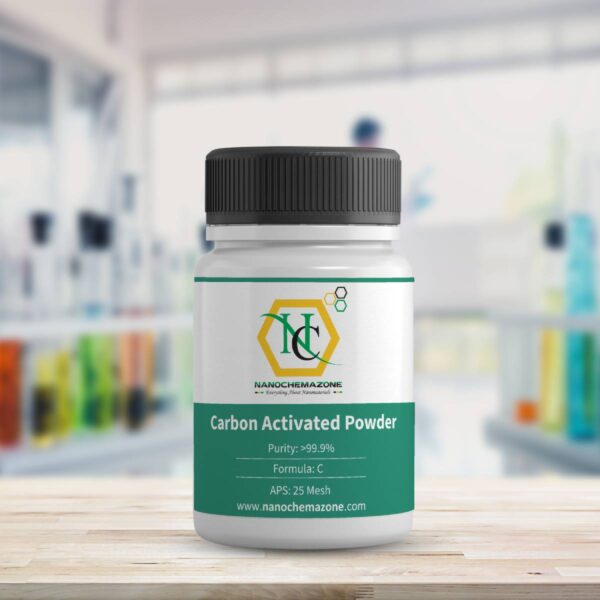
Carbon Activated Powder
Carbon Activated Powder
Product Name: Carbon Activated Powder (C, Purity: > 99.9% APS: 25 mesh)
| Product | Carbon Activated Powder |
| Cat No | NCZ-MN-158/20 |
| CAS No | 7440-44-0 |
| Purity | > 99.9% |
| APS | 25 mesh |
| Molecular Formula | C |
| Molecular Weight | 12.01g/mol |
| Form | Powder |
| Color | Black |
| Melting Point | 3550C (6422F) |
| Boiling Point | Sublimes |
| PH value | 5.0-10.0 |
| Specific Gravity | 250-600g/1 |
| % Volatiles by volume @ 21C (70F) | 0 |
| Vapor Density | 0.4 |
| Vapor pressure | 1 @ 3586C (6487F) |
| Solubility | Insoluble in water |
Please email us for the customization.
Email: contact@nanochemazone.com
Please contact us for customization and price inquiry
Note: We supply different size ranges of Nano and micron as per the client’s requirements and also accept customization in various parameters.
Gallium Arsenide Powder
Gallium Arsenide Powder
| Product | Gallium Arsenide Powder |
| Cat No | NCZ-NSC811/20 |
| CAS No | 1303-00-0 |
| Purity | 99.9% |
| APS | 40-50 µm |
| Density | 5.32 g/cm³ |
| Group Gallium | 13 |
| Group Arsenide | 15 |
| Gallium | 48.2% |
| Arsenic | 51.79 % |
| Molar Mass | 144.645 g/mol |
| Melting Point | 1238 °C |
| Conclusion | The specifications Confirm with enterprise standard |
Gallium Arsenide Description
Gallium Arsenide powder composed of gallium arsenide nanoparticles (average particle size: 4?m) used in various semiconductor and photo optic applications. Gallium arsenide powder is hydrophobic and forms clear colloidal sultions in ethanol and non-polar solvents)
Nanochemazone produces to many standard grades when applicable, including Mil Spec (military grade); ACS, Reagent and Technical Grade; Food, Agricultural and Pharmaceutical Grade; Optical Grade, USP and EP/BP (European Pharmacopoeia/British Pharmacopoeia) and follows applicable ASTM testing standards.
Typical and custom packaging is available, as is additional technical and safety (MSDS) data. Please contact us for information on lead time and pricing above.
Gallium Arsenide Related Information
Storage Conditions:
Airtight sealed, avoid light, and keep dry at room temperature.
Please contact us for customization and price inquiry
Email: contact@nanochemazone.com
Note: We supply different size ranges of Nano and micron as per the client’s requirements and also accept customization in various parameters.
Indium Gallium Arsenide Nanopowder
Indium Gallium Arsenide Nanopowder
Product Name: Indium Gallium Arsenide Nanopowder (InGaAs, Purity: 99.9%, APS: < 100 nm)
| Product | Indium Gallium Arsenide Nanopowder |
| Cat No | NCZ-NSC814/20 |
| CAS No | 106097-59-0 |
| Purity | 99.9% |
| APS | < 100 nm |
| Molecular Formula | InGaAs |
| Molecular Weight | 259.46 g/mol |
| Form | Crystalline Powder |
| Color | White |
| Density | 5.68 g/cm³ |
| Melting Point | 844 °C |
| Conclusion | The specifications Confirm with enterprise standard |
Indium Gallium Arsenide Related Information
Storage Conditions:
Airtight sealed, avoid light, and keep dry at room temperature.
Please contact us for customization and price inquiry
Email: contact@nanochemazone.com
Note: We supply different size ranges of Nano and micron as per the client’s requirements and also accept customization in various parameters.
Palladium on Activated Charcoal Catalyst
Palladium on Activated Charcoal Catalyst
Product Name: Palladium on Activated Charcoal Catalyst (Pd/C, APS: 40-60µm, Purity: >99.9%)
| Product | Palladium on Activated Charcoal Catalyst |
| Cat No | NCZ-MN-150/20 |
| CAS No | 7440-05-3 |
| Purity | >99.9% |
| APS | 40-60µm |
| Molecular Formula | Pd/C |
| Color | Black |
| Pd on Activated Charcoal | 1%, 2%, 3%, 4%, 5%, 10% |
| Surface Area, BET | ≥950 m²/g |
| Impurity | ≤0.3 % |
| Water Content | 0.1 % |
| Ash Content | ≤0.5 % |
Please email us for the customization.
Email: contact@nanochemazone.com a
Please contact us for customization and price inquiry
Note: We supply different size ranges of Nano and micron as per the client’s requirements and also accept customization in various parameters.
Tantalum Carbide Powder
Tantalum Carbide Powder
Tantalum Carbide Powder (TaC, Purity: 99.9%, APS: 1000 nm, Cubic)
| Product | Tantalum Carbide Powder |
| Cat No | NCZ-MN-260/20 |
| CAS No | 12070-06-3 |
| APS | 1000 nm (customizable) |
| Purity | 99.9% |
| Molecular Formula | TaC |
| Molecular Weight | 192.96 g/mol |
| Form | Powder |
| Color | Gray |
| Density | 14.30 g/cm³ |
| Melting Point | 3,880 °C |
| Boiling Point | 4,780 °C |
| Solubility | Insoluble in water |
They are extremely hard, brittle, refractory ceramic materials with metallic electrical conductivity. They appear as brown-gray powders, which are usually processed by sintering.
Being important cermet materials, tantalum carbides are commercially used in tool bits for cutting applications and are sometimes added to tungsten carbide alloys.
The melting points of tantalum carbides peak at about 3880 °C depending on the purity and measurement conditions; this value is among the highest for binary compounds. Only tantalum hafnium carbide may have a slightly higher melting point of about 3942 °C, whereas the melting point of hafnium carbide is comparable to that of TaC.
Tantalum Carbide Application:
Tantalum Carbide Powder Applications
1. Tantalum carbide is often added to tungsten carbide/cobalt (WC/Co) powder attritions to enhance the physical properties of the sintered structure. It also acts as a grain growth inhibitors preventing the formation of large grains, thus producing materials of optimal hardness.
2. It is also used as a coating for steel molds in the injection molding of aluminum alloys. While providing a hard, wear-resistant surface, it also provides a low friction mold surface.
3. Tantalum carbide is also used in the production of sharp instruments with extreme mechanical resistance and hardness.
4. It is also used in tool bits for cutting tools.
Tantalum carbide is widely used as a sintering additive in ultra-high temperature ceramics (UHTCs) or as a ceramic reinforcement in high-entropy alloys (HEAs) due to its excellent physical properties in melting point, hardness, elastic modulus, thermal conductivity, thermal shock resistance, and chemical stability, which makes it a desirable material for aircraft and rockets in aerospace industries.
Nanochemazone specializes in producing high purity Tantalum Carbide Powder with the smallest possible average grain sizes for use in the preparation of pressed and bonded sputtering targets and in Chemical Vapor Deposition (CVD) and Physical Vapor Deposition (PVD) processes including Thermal and Electron Beam (E-Beam) Evaporation, Low-Temperature Organic Evaporation, Atomic Layer Deposition (ALD), Metallic-Organic and Chemical Vapor Deposition (MOCVD). Powders are also useful in any application where high surface areas are desired such as water treatment and in fuel cell and solar applications. Nanoparticles also produce very high surface areas. Our standard powder particle sizes average in the range of - 325 mesh, - 100 mesh, 10-50 microns, and submicron (< 1 micron). We can also provide many materials in the nanoscale range.
Tantalum Carbide Related Information
Storage Conditions:
Airtight sealed, avoid light and keep dry at room temperature.
Please contact us for customization and price inquiry
Email: contact@nanochemazone.com
Note: We supply different size ranges of Nano and micron as per the client’s requirements and also accept customization in various parameters.
Tungsten Hexacarbonyl Nanopowder
Tungsten Hexacarbonyl Nanopowder
Product Name: Tungsten Hexacarbonyl Nanopowder (W, Purity: 99.9%, APS: 80-100 nm)
| Product | Tungsten Hexacarbonyl Nanopowder |
| Cat No | NCZ-MN-170/20 |
| CAS No | 14040-11-0 |
| Purity | 99.9% |
| APS | 80-100nm |
| Linear Formula | W(CO)6 |
| Form | Solid |
| Density | 2.65 g/mL at 25 °C (lit) |
| Melting Point | 150 °C (lit) |
| Vapor Density | 12.1 (vs air) |
| Vapor Pressure | 1.2 mmHg (67 °C) |
| Impurities | < 1 % Mo |
Please email us for the customization.
Email: contact@nanochemazone.com
Please contact us for customization and price inquiry
Note: We supply different size ranges of Nano and micron as per the client’s requirements and also accept customization in various parameters.
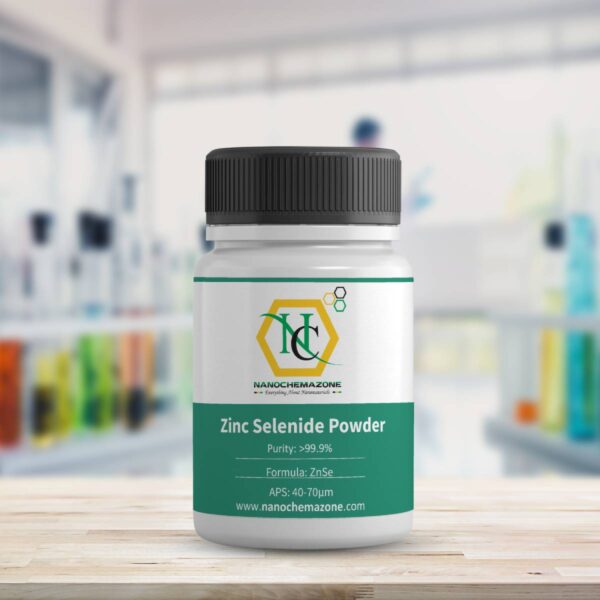
Zinc Selenide Powder
Zinc Selenide Powder
Product Name: Zinc Selenide Powder (ZnSe, >99.9%, APS: 40-70µm)
| Product | Zinc Selenide Powder |
| Cat No | NCZ-NSC817/20 |
| CAS No | 1315-09-9 |
| Purity | >99.9 % |
| APS | 40-70µm (Can be customized) |
| Molecular Formula | ZnSe |
| Molecular Weight | 144.35 g/mol |
| Color | Yellow |
| Density | 5.27 g/cm³ |
| Melting Point | 1525 °C |
| Linear Expansion Coefficient | 7.57x10⁻⁶ @ 20°C |
| Young Modulus | 67.2 GPa |
| Thermal Conductivity | 18 Wm |
| Solubility in water | Insoluble in water |
Zinc Selenide Related Information
Storage Conditions:
Airtight sealed, avoid light, and keep dry at room temperature.
Please contact us for customization and price inquiry
Email: contact@nanochemazone.com
Note: We supply different size ranges of Nano and micron as per the client’s requirements and also accept customization in various parameters.
Reviews
There are no reviews yet.