
Gold Gallium Alloy
₹0.00
Gold Gallium Alloy
| Product |
Gold Gallium Alloy |
| Colour | N/A |
| Purity | 99% |
| size | 3-6 mm (Customizable) |
| Ingredient/MF | AuGa |
| Product Code | NCZ-CP-264/20 |
| Density | N/A |
| CAS No | N/A |
Gold Gallium Alloy Description
Gallium is a chemical element with the symbol Ga and atomic number 31. Elemental gallium is a soft, silvery metal at standard temperature and pressure; however in its liquid state it becomes silvery white. If too much force is applied, the gallium may fracture conchoidally. It is in group 13 of the periodic table, and thus has similarities to the other metals of the group, aluminium, indium, and thallium. Gallium does not occur as a free element in nature, but as gallium compounds in trace amounts in zinc ores and in bauxite. Elemental gallium is a liquid at emperatures greater than 29.76 °C (85.57 °F), and will melt in a person’s hands at normal human body temperature of 37.0 °C (98.6 °F).
The melting point of gallium is used as a temperature reference point. Gallium alloys are used in thermometers as a non-toxic and environmentally friendly alternative to mercury, and can withstand higher temperatures than mercury. An even lower melting point of −19 °C (−2 °F), well below the freezing point of water, is claimed for the alloy galinstan (62–95% gallium, 5–22% indium, and 0–16% tin by weight), but that may be the freezing point with the effect of supercooling.
Since its discovery in 1875, gallium has been used to make alloys with low melting points. It is also used in semiconductors as a dopant in semiconductor substrates.
Gallium is predominantly used in electronics. Gallium arsenide, the primary chemical compound of gallium in electronics, is used in microwave circuits, high-speed switching circuits, and infrared circuits. Semiconducting gallium nitride and indium gallium nitride produce blue and violet light-emitting diodes (LEDs) and diode lasers. Gallium is also used in the production of artificial gadolinium gallium garnet for jewelry. Gallium is considered a technology-critical element.
Gallium has no known natural role in biology. Gallium behaves in a similar manner to ferric salts in biological systems and has been used in some medical applications, including pharmaceuticals and radiopharmaceuticals.
Related Information
Please email us for the customization.
Email: contact@nanochemazone.com
Please contact us for customization and price inquiry
Note: We supply different size ranges of Nano and micron as per the client’s requirements and also accept customization in various parameters.
Spherical High Speed Steel
Note: For pricing & ordering information, please contact us at sales@nanochemazone.com
Please contact us for quotes on Larger Quantities & Customization. E-mail: contact@nanochemazone.com
Customization:
If you are planning to order large quantities for your industrial and academic needs, please note that customization of parameters (such as size, length, purity, functionalities, etc.) are available upon request.
[/vc_column_text][/vc_column][/vc_row]
You must be logged in to post a review.
Related products
Activated Carbon Fiber
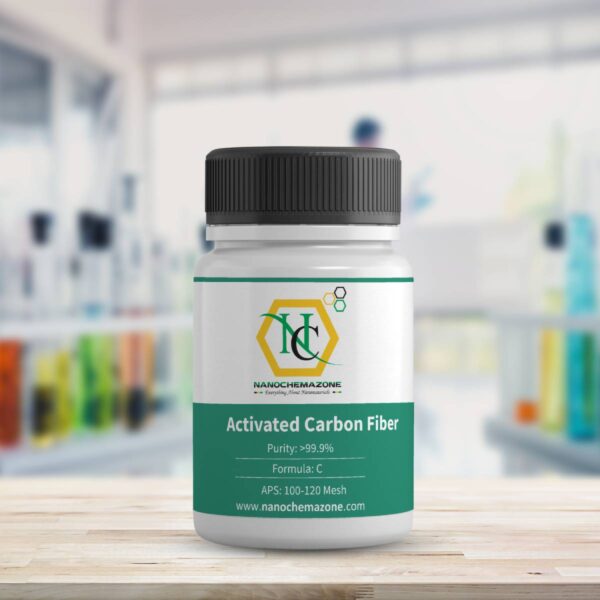
Activated Carbon Fiber
Product Name: ACF (Purity: 99.9%, Mesh: 120)
| Product | Activated Carbon Fiber |
| Cat No | NCZ-MN-156/20 |
| CAS No | 99685-96-8 |
| Purity | 99.99% |
| Mesh | 100-120 |
| Benzene | ≥ 40wt% |
| BET | ≥ 1300m2g |
Please email us for the customization.
Email: contact@nanochemazone.com
Please contact us for customization and price inquiry
Note: We supply different size ranges of Nano and micron as per the client’s requirements and also accept customization in various parameters.
Carbon Micro Powder
Carbon Micro Powder
Product Name: Carbon Micro Powder (C, Purity: 99.9%, APS: 2-12 µm)
| Product | Carbon Micro Powder |
| Cat No | NCZ-MN-161/20 |
| CAS No | 7440-44-0 |
| Purity | 99.9% |
| APS | 2-12µm |
| Molecular Formula | C |
| Molecular Weight | 12.01g/mol |
| Form | Powder |
| Color | Black |
| Density | 2.2g/cm³ |
| Melting Point | 3652-3697 ºC |
| Boiling Point | 4200 ºC |
| Thermal Conductivity | 119-165 W/m/ |
| Solubility | Soluble in Water |
Please email us for the customization.
Email: contact@nanochemazone.com
Please contact us for customization and price inquiry
Note: We supply different size ranges of Nano and micron as per the client’s requirements and also accept customization in various parameters.

Gallium Arsenide Nanopowder
Gallium Arsenide Nanopowder
| Product | Gallium Arsenide Nanopowder |
| Cat No | NCZ-NSC810/20 |
| CAS No | 1303-00-0 |
| Purity | 99.9% |
| APS | 80-100nm |
| Molecular Formula | GaAs |
| Molecular Weight | 144.64g/mol |
| Form | Powder |
| Color | Gray |
| Density | 5.3g/cm3 |
| Melting Point | 1400°C |
| Young Modulus | 85 GPa |
| Thermal Conductivity | 47 W/m-K |
| Solubility in water | Insoluble in water |
Gallium Arsenide Nano powder Description
Gallium Arsenide Nano powder composed of gallium arsenide nanoparticles (average particle size: 4?m) used in various semiconductor and photo optic applications. Gallium arsenide nano powder is hydrophobic and forms clear colloidal sultions in ethanol and non-polar solvents) Nanochemazone produces to many standard grades when applicable, including Mil Spec (military grade); ACS, Reagent and Technical Grade; Food, Agricultural and Pharmaceutical Grade; Optical Grade, USP and EP/BP (European Pharmacopoeia/British Pharmacopoeia) and follows applicable ASTM testing standards. Typical and custom packaging is available, as is additional technical and safety (MSDS) data. Please contact us for information on lead time and pricing above.
Gallium Arsenide Nanopowder Related Information
Storage Conditions:
Airtight sealed, avoid light, and keep dry at room temperature.
Please contact us for customization and price inquiry
Email: contact@nanochemazone.com
Note: We supply different size ranges of Nano and micron as per the client’s requirements and also accept customization in various parameters.
Gallium Arsenide Powder
Gallium Arsenide Powder
| Product | Gallium Arsenide Powder |
| Cat No | NCZ-NSC811/20 |
| CAS No | 1303-00-0 |
| Purity | 99.9% |
| APS | 40-50 µm |
| Density | 5.32 g/cm³ |
| Group Gallium | 13 |
| Group Arsenide | 15 |
| Gallium | 48.2% |
| Arsenic | 51.79 % |
| Molar Mass | 144.645 g/mol |
| Melting Point | 1238 °C |
| Conclusion | The specifications Confirm with enterprise standard |
Gallium Arsenide Description
Gallium Arsenide powder composed of gallium arsenide nanoparticles (average particle size: 4?m) used in various semiconductor and photo optic applications. Gallium arsenide powder is hydrophobic and forms clear colloidal sultions in ethanol and non-polar solvents)
Nanochemazone produces to many standard grades when applicable, including Mil Spec (military grade); ACS, Reagent and Technical Grade; Food, Agricultural and Pharmaceutical Grade; Optical Grade, USP and EP/BP (European Pharmacopoeia/British Pharmacopoeia) and follows applicable ASTM testing standards.
Typical and custom packaging is available, as is additional technical and safety (MSDS) data. Please contact us for information on lead time and pricing above.
Gallium Arsenide Related Information
Storage Conditions:
Airtight sealed, avoid light, and keep dry at room temperature.
Please contact us for customization and price inquiry
Email: contact@nanochemazone.com
Note: We supply different size ranges of Nano and micron as per the client’s requirements and also accept customization in various parameters.
Granular Activated Carbon
Granular Activated Carbon
Product Name: Granular Activated Carbon (C, Purity: 99.9%, APS: 50-60µm)
| Product | Granular Activated Carbon |
| Cat No | NCZ-MN-164/20 |
| CAS No | 7440-44-0 |
| Purity | 99.9% |
| APS | 50-60 µm |
| Molecular Weight | 242.62 g/ mol |
| Form | Granules |
| Color | Black |
| PH value | 6-7 |
| SSA | 900-1100 m2/g |
| Bulk Density | 0.45 g/ cm3 |
| Solubility | Insoluble In Water |
Please email us for the customization.
Email: contact@nanochemazone.com
Please contact us for customization and price inquiry
Note: We supply different size ranges of Nano and micron as per the client’s requirements and also accept customization in various parameters.
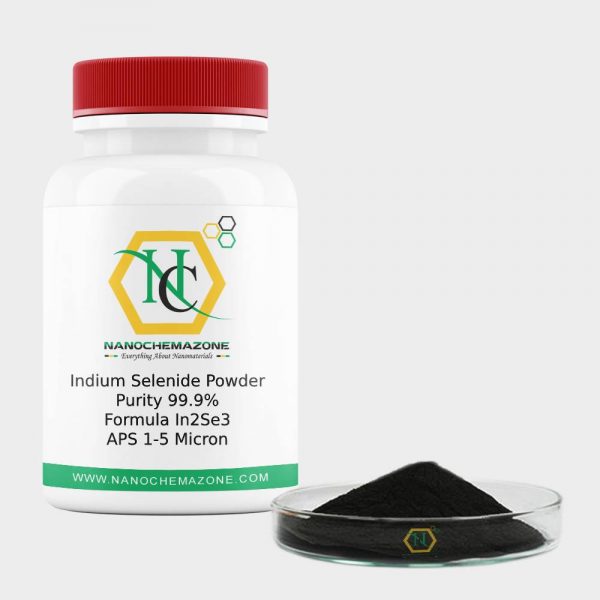
Indium Selenide Powder
Indium Selenide Powder
Product Name: Indium Selenide Powder (In2Se3, >99.9%, APS: 40-70µm)
| Product | Indium Selenide Powder |
| Cat No | NCZ-NSC815/20 |
| CAS No | 12056-07-4 |
| Purity | >99.9% |
| APS | 40-70µm |
| Molecular Formula | In2Se3 |
| Molecular Weight | 466.516 g/mol |
| Density | 5.80 g/cm³ |
| Solubility in water | Insoluble in cold water |
Indium Selenide Related Information
Storage Conditions:
Airtight sealed, avoid light, and keep dry at room temperature.
Please contact us for customization and price inquiry
Email: contact@nanochemazone.com
Note: We supply different size ranges of Nano and micron as per the client’s requirements and also accept customization in various parameters.
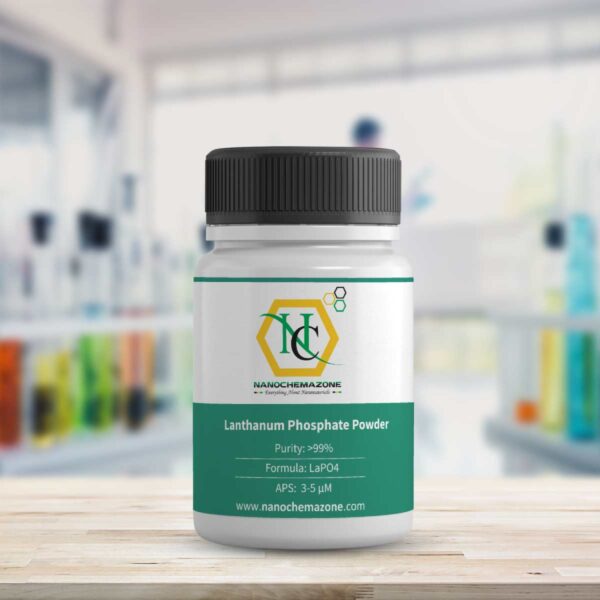
Lanthanum (III) Phosphate, Anhydrous Powder
Lanthanum Phosphate or Lanthanum (III) Phosphate, Anhydrous Powder
Product Name: Lanthanum (III) Phosphate, Anhydrous
| Product Name | Lanthanum (III) Phosphate, Anhydrous |
| Cat No | NCZ-MN-259/20 |
| CAS No | 13778-59-1 |
| Purity | 99.9% |
| APS | 40-50 µm |
| MF | LaPO4 |
| Molecular Weight | 233.875 g/mol |
| Appearance | White powder or chunks |
| Form | Powder |
| Non-Rare Earth Impurities | %Max. | %Max. | %Max. |
| Fe2O3 | 0.005 | 0.01 | 0.01 |
| SiO2 | 0.01 | 0.02 | 0.03 |
| CaO | 0.01 | 0.01 | 0.03 |
| Cl- | 0.005 | 0.01 | 0.05 |
| SO4- | 0.01 | 0.01 | 0.03 |
| K2O | 0.01 | 0.01 | 0.01 |
| Na2O | 0.005 | 0.01 | 0.01 |
Lanthanum (III) phosphate Applications:
Lanthanum Phosphate Widely used in microelectronics, catalysts, ferroelectric materials, lithium batteries, semiconductors, and other electronic fields.
Lanthanum (III) phosphate Related Information
Storage Conditions:
Airtight sealed, avoid light and keep dry at room temperature.
Please contact us for customization and price inquiry
Email: contact@nanochemazone.com
Note: We supply different size ranges of Nano and micron as per the client’s requirements and also accept customization in various parameters.
Also available as Lanthanum (III) phosphate hydrate form powder
Lanthanum (III) Phosphate Hydrate
Lanthanum Phosphate or Lanthanum (III) Phosphate Hydrate is highly insoluble in water and converts to the oxide when heated (calcined). Anhydrous Lanthanum (III) Phosphate is generally immediately available in most volumes. High purity, submicron, and nanopowder forms may be considered. Nanochemazone produces too many standard grades when applicable, including Mil Spec (military grade); ACS, Reagent and Technical Grade; Food, Agricultural and Pharmaceutical Grade; Optical Grade, USP and EP/BP (European Pharmacopoeia/British Pharmacopoeia) and follows applicable ASTM testing standards. Typical and custom packaging is available. Additional technical, research, and safety (MSDS) information are available. Please request a quote above to receive pricing information based on your specifications.
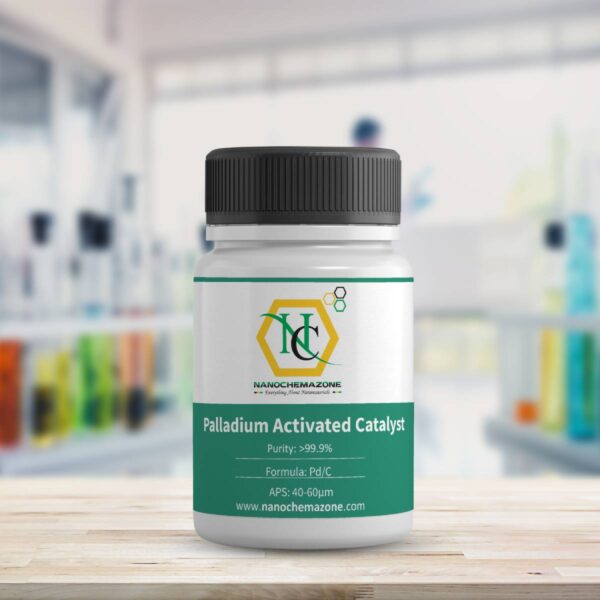
Palladium on Activated Charcoal Catalyst
Palladium on Activated Charcoal Catalyst
Product Name: Palladium on Activated Charcoal Catalyst (Pd/C, APS: 40-60µm, Purity: >99.9%)
| Product | Palladium on Activated Charcoal Catalyst |
| Cat No | NCZ-MN-150/20 |
| CAS No | 7440-05-3 |
| Purity | >99.9% |
| APS | 40-60µm |
| Molecular Formula | Pd/C |
| Color | Black |
| Pd on Activated Charcoal | 1%, 2%, 3%, 4%, 5%, 10% |
| Surface Area, BET | ≥950 m²/g |
| Impurity | ≤0.3 % |
| Water Content | 0.1 % |
| Ash Content | ≤0.5 % |
Please email us for the customization.
Email: contact@nanochemazone.com a
Please contact us for customization and price inquiry
Note: We supply different size ranges of Nano and micron as per the client’s requirements and also accept customization in various parameters.
Reviews
There are no reviews yet.