
Gold hydroxide Powder
₹0.00
Gold hydroxide Powder
| Product |
Gold hydroxide Powder |
| Colour | Vivid, dark yellow crystals |
| Purity | 99% |
| Pack size | 100-325 Mesh (customizable) |
| Ingredient/MF | Au(OH)3 |
| Product Code | NCZ-CP-241/20 |
| CAS Number | 1303-52-2 |
Gold hydroxide Description
Gold hydroxide, gold trihydroxide, or gold hydroxide is an inorganic compound, a hydroxide of gold, with formula Au(OH)3. It is also called auric acid with formula H3AuO3. It is easily dehydrated above 140 °C to gold oxide. Salts of auric acid are termed aurates.
Gold hydroxide is used in medicine, porcelain making, gold plating, and daguerrotypes. Gold hydroxide deposited on suitable carriers can be used for preparation of gold catalysts.
Gold hydroxide is a product of electrochemical corrosion of gold metalization subjected to moisture and positive electric potential; it is one of the corrosion failure modes of microelectronics. Voluminous gold hydroxide is produced from gold metalization; after the layer grows thick it may spall, and the conductive particles may cause short circuits or leakage paths. The decreased thickness of the gold layer may also lead to an increase in its electrical resistance, which can also lead to electrical failure.
Gold is a chemical element with the symbol Au (from Latin: aurum) and atomic number 79, making it one of the higher atomic number elements that occur naturally. In a pure form, it is a bright, slightly reddish yellow, dense, soft, malleable, and ductile metal. Chemically, gold is a transition metal and a group 11 element. It is one of the least reactive chemical elements and is solid under standard conditions. Gold often occurs in free elemental (native) form, as nuggets or grains, in rocks, in veins, and in alluvial deposits.
It occurs in a solid solution series with the native element silver (as electrum), naturally alloyed with other metals like copper and palladium and also as mineral inclusions such as within pyrite. Less commonly, it occurs in minerals as gold compounds, often with tellurium (gold tellurides).
Gold is resistant to most acids, though it does dissolve in aqua regia (a mixture of nitric acid and hydrochloric acid), which forms a soluble tetrachloroaurate anion. Gold is insoluble in nitric acid, which dissolves silver and base metals, a property that has long been used to refine gold and to confirm the presence of gold in metallic objects, giving rise to the term acid test.
Gold also dissolves in alkaline solutions of cyanide, which are used in mining and electroplating. Gold dissolves in mercury, forming amalgam alloys, but this is not a chemical reaction.
Related Information
Please email us for the customization.
Email: contact@nanochemazone.com
Please contact us for customization and price inquiry
Note: We supply different size ranges of Nano and micron as per the client’s requirements and also accept customization in various parameters.
Note: For pricing & ordering information, please contact us at sales@nanochemazone.com
Please contact us for quotes on Larger Quantities & Customization. E-mail: contact@nanochemazone.com
Customization:
If you are planning to order large quantities for your industrial and academic needs, please note that customization of parameters (such as size, length, purity, functionalities, etc.) are available upon request.
[/vc_column_text][/vc_column][/vc_row]
You must be logged in to post a review.
Related products
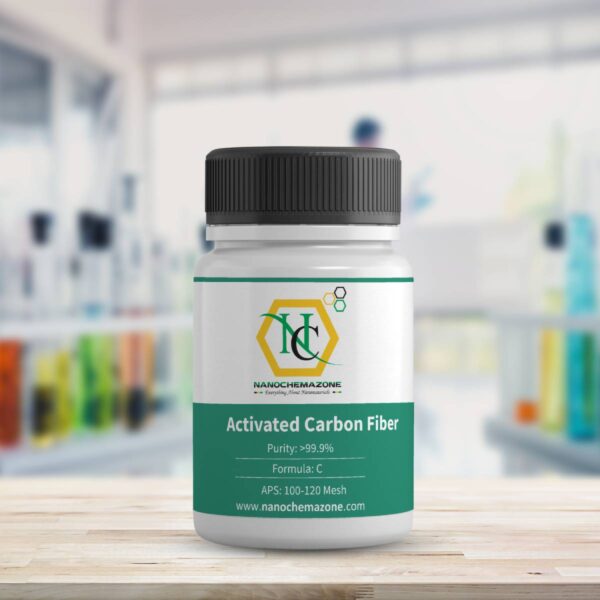
Activated Carbon Fiber
Activated Carbon Fiber
Product Name: ACF (Purity: 99.9%, Mesh: 120)
| Product | Activated Carbon Fiber |
| Cat No | NCZ-MN-156/20 |
| CAS No | 99685-96-8 |
| Purity | 99.99% |
| Mesh | 100-120 |
| Benzene | ≥ 40wt% |
| BET | ≥ 1300m2g |
Please email us for the customization.
Email: contact@nanochemazone.com
Please contact us for customization and price inquiry
Note: We supply different size ranges of Nano and micron as per the client’s requirements and also accept customization in various parameters.
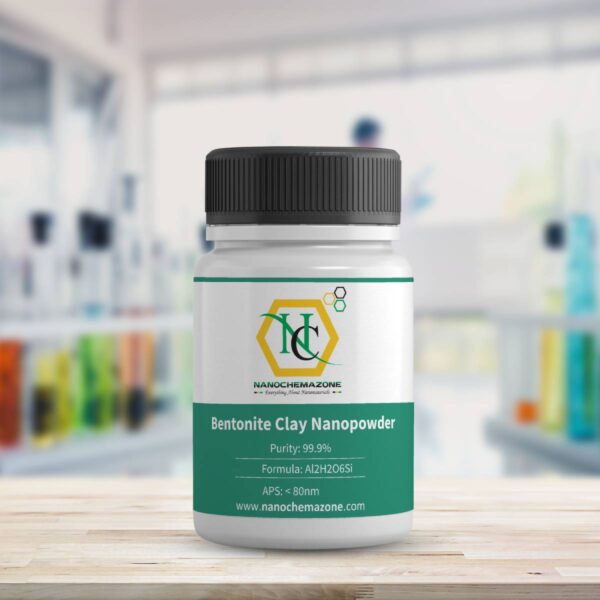
Bentonite Clay Nanopowder
Bentonite Clay Nanopowder
Product Name: Bentonite Clay Nanopowder (Purity: 99.9%, APS: < 80nm)
Product |
Bentonite Clay Nanopowder |
| Cat No | NCZ-MN-113/20 |
| CAS No | 1302-78-9 |
| Purity | 99.9% |
| APS | < 80nm |
| Molecular Weight | 108.1 g/mol |
| Form | Powder |
| Specific Gravity | 2.5(H2O) |
| Melting Point | Decomposes |
| Solubility | Slightly soluble in water Insoluble in methanol |
| Molecular Formula | Al2H2O6Si |
Bentonite Clay Related Information
Storage Conditions:
Airtight sealed, avoid light and keep dry at room temperature.
Please contact us for customization and price inquiry
Email: contact@nanochemazone.com
Note: We supply different size ranges of Nano and micron as per the client’s requirements and also accept customization in various parameters.
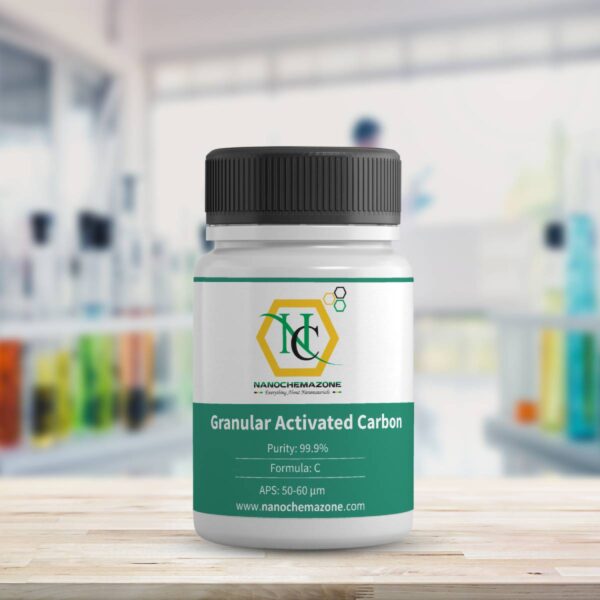
Granular Activated Carbon
Granular Activated Carbon
Product Name: Granular Activated Carbon (C, Purity: 99.9%, APS: 50-60µm)
| Product | Granular Activated Carbon |
| Cat No | NCZ-MN-164/20 |
| CAS No | 7440-44-0 |
| Purity | 99.9% |
| APS | 50-60 µm |
| Molecular Weight | 242.62 g/ mol |
| Form | Granules |
| Color | Black |
| PH value | 6-7 |
| SSA | 900-1100 m2/g |
| Bulk Density | 0.45 g/ cm3 |
| Solubility | Insoluble In Water |
Please email us for the customization.
Email: contact@nanochemazone.com
Please contact us for customization and price inquiry
Note: We supply different size ranges of Nano and micron as per the client’s requirements and also accept customization in various parameters.
Indium Arsenide Nanopowder
Indium Arsenide Nanopowder
Product Name: Indium Arsenide Nanopowder (InAs, Purity: 99.9%)
| Product | Indium Arsenide Nanopowder |
| Cat No | NCZ-NSC812/20 |
| CAS No | 1303-11-3 |
| Purity | 99.9% |
| APS | 80-100nm |
| Molecular Formula | InAs |
| Molecular Weight | 189.740g/mol |
| Form | Powder |
| Color | Gray |
| Density | 5.67g/cm3 |
| Melting Point | 942°C |
| Refractive Index | 3.51 |
| Dielectric Constant | 15.15 |
| Electrton Mobility | 40000(cm2/(V*s)) |
| Storage | Normal Room Temperature |
| Thermal Conductivity | 0.27(300K (W/cm•K)) |
| Specific Heat Capacity | 47.8 J•mol-1•K-1 |
| Solubility in water | Insoluble in water |
Indium Arsenide Nanopowder Related Information
Storage Conditions:
Airtight sealed, avoid light, and keep dry at room temperature.
Please contact us for customization and price inquiry
Email: contact@nanochemazone.com
Note: We supply different size ranges of Nano and micron as per the client’s requirements and also accept customization in various parameters.
Indium Arsenide Powder
Indium Arsenide Powder
Product Name: Indium Arsenide Powder (InAs, Purity: 99.9%, APS: 40-50 µm)
| Product | Indium Arsenide Powder |
| Cat No | NCZ-NSC813/20 |
| CAS No | 1303-11-3 |
| Purity | 99.9% |
| APS | 40-50µm |
| Molecular Formula | InAs |
| Molecular Weight | 189.740g/mol |
| Form | Powder |
| Color | Gray |
| Density | 5.67g/cm3 |
| Melting Point | 942°C |
| Refractive Index | 3.51 |
| Dielectric Constant | 15.15 |
| Electrton Mobility | 40000(cm2/(V*s)) |
| Storage | Normal Room Temperature |
| Thermal Conductivity | 0.27(300K (W/cm•K)) |
| Specific Heat Capacity | 47.8 J•mol-1•K-1 |
| Solubility in water | Insoluble in water |
Indium Arsenide Powder Related Information
Storage Conditions:
Airtight sealed, avoid light, and keep dry at room temperature.
Please contact us for customization and price inquiry
Email: contact@nanochemazone.com
Note: We supply different size ranges of Nano and micron as per the client’s requirements and also accept customization in various parameters.
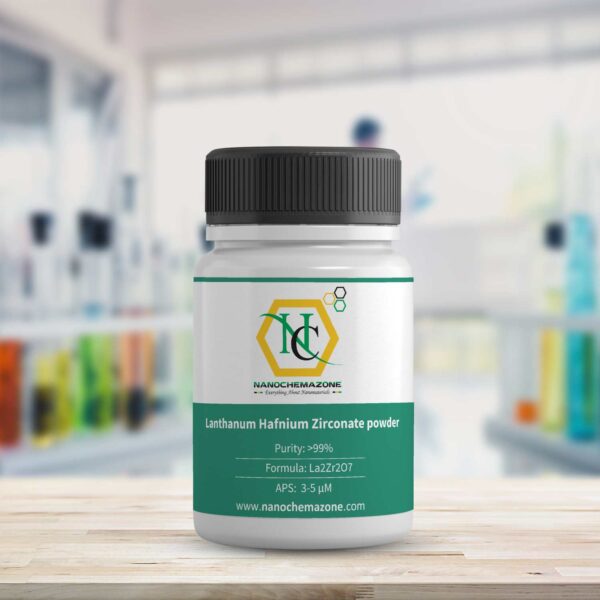
Lanthanum Hafnium Zirconate Powder
Lanthanum Hafnium Zirconate powder
Product Name: Lanthanum Hafnium Zirconate powder (Purity: 99.5%, APS: 30-45µM)
| Product | Lanthanum Hafnium Zirconate powder |
| Cat No | NCZ-MN-258/20 |
| CAS No | 12031-48-0 |
| APS | 1-10 µM, 10-25 µM 25- 45 µM (Customizable) |
| Purity | 99.5% |
| Form | White, odorless Powder |
| Density | 6.05 g/cm3 |
| Melting Point | ~ 2680 deg C |
| Solubility | Insoluble in Water |
| Formula | La2Zr2O7 |
Lanthanum Hafnium Zirconate powder’s COA:
| Hf | 2.2% |
| Fe | 0.01% |
| Na | 0.01% |
| Al | 0.1% |
| Si | 0.1% |
| Ca | 0.005% |
| Sr | 0.02% |
| Pb | 0.001% |
Latest information about the manufacturing techniques of lanthanum zirconate (La2Zr2O7, LZ) Powder and La2Zr2O7 based thermal barrier coatings (TBCs). Lanthanum zirconate is a promising candidate material for TBC applications due to its lower thermal conductivity and higher thermal stability compared to other traditional TBC systems.
We can supply Lanthanum zirconate powder and target materials, welcome contact us!
Lanthanum zirconate ( La2Zr2O7 ), purity 3N5, primary particle size 3um, material XRD pure phase.
Lanthanum zirconate Applications:
Widely used in microelectronics, catalysts, ferroelectric materials, / lithium batteries, semiconductors, and other electronic fields.
Lanthanum zirconate Related Information
Storage Conditions:
Airtight sealed, avoid light and keep dry at room temperature.
Please contact us for customization and price inquiry
Email: contact@nanochemazone.com
Note: We supply different size ranges of Nano and micron as per the client’s requirements and also accept customization in various parameters.
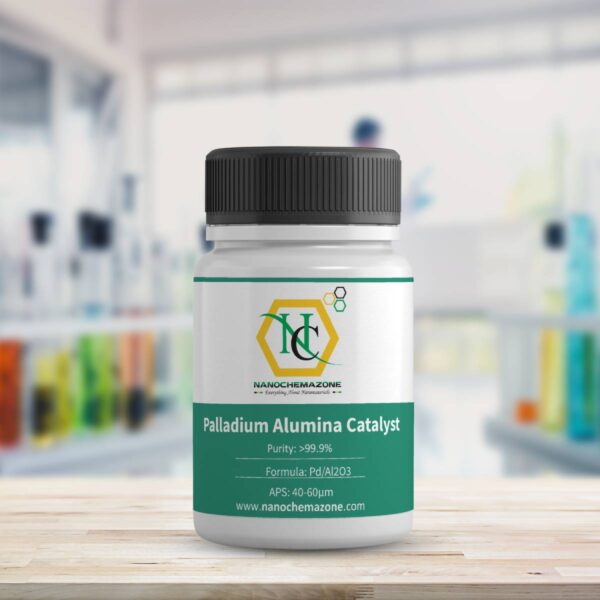
Palladium on Alumina Catalyst
Palladium on Alumina Catalyst
Product Name: Palladium on Alumina Catalyst (Pd/Al2O3, Purity: >99.9%, APS: 40-60µm)
| Product | Palladium on Alumina Catalyst |
| Cat No | NCZ-MN-151/20 |
| CAS No | 7440-05-3 |
| Purity | >99.9% |
| APS | 40-60µm |
| Molecular Formula | Pd/Al2O3 |
| Palladium on Alumina | 1%, 2%, 3%, 4%, 5%, 10% |
| Density | ≥0.55 g/ml |
| Surface Area, BET | ≥120 m²/g |
Please email us for the customization.
Email: contact@nanochemazone.com
Please contact us for customization and price inquiry
Note: We supply different size ranges of Nano and micron as per the client’s requirements and also accept customization in various parameters.
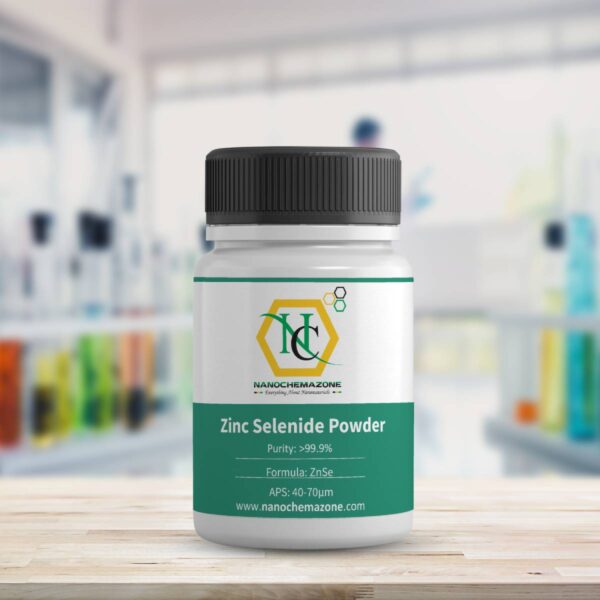
Zinc Selenide Powder
Zinc Selenide Powder
Product Name: Zinc Selenide Powder (ZnSe, >99.9%, APS: 40-70µm)
| Product | Zinc Selenide Powder |
| Cat No | NCZ-NSC817/20 |
| CAS No | 1315-09-9 |
| Purity | >99.9 % |
| APS | 40-70µm (Can be customized) |
| Molecular Formula | ZnSe |
| Molecular Weight | 144.35 g/mol |
| Color | Yellow |
| Density | 5.27 g/cm³ |
| Melting Point | 1525 °C |
| Linear Expansion Coefficient | 7.57x10⁻⁶ @ 20°C |
| Young Modulus | 67.2 GPa |
| Thermal Conductivity | 18 Wm |
| Solubility in water | Insoluble in water |
Zinc Selenide Related Information
Storage Conditions:
Airtight sealed, avoid light, and keep dry at room temperature.
Please contact us for customization and price inquiry
Email: contact@nanochemazone.com
Note: We supply different size ranges of Nano and micron as per the client’s requirements and also accept customization in various parameters.
Reviews
There are no reviews yet.