

Gold Iodide Crystalline
₹0.00
Gold Iodide Crystalline
| Product |
Gold Iodide Crystalline |
| Colour | Yellowish to greenish-yellow |
| Purity | 99% |
| Pack size | 100 Mesh (customizable) |
| Ingredient/MF | AuI |
| Product Code | NCZ-CP-242/20 |
| CAS Number | 10294-31-2 |
| Density | 8.25 g/cm |
Gold Iodide Crystalline
Gold monoiodide is a chemical compound of gold and iodine. This compound is commercially available. It can be synthesized by heating gold and iodine in a sealed tube at 120°C for about four months. It decomposes when treated with hot water.
But its related complexes are much more stable. Iodine is a chemical element with the symbol I and atomic number. The heaviest of the stable halogens, it exists as a lustrous, purple-black non-metallic solid at standard conditions that melts to form a deep violet liquid at 114 degrees Celsius, and boils to a violet gas at 184 degrees Celsius.
However, it readily sublimes with gentle heat, resulting in a widespread misconception even taught in some science textbooks that it does not melt at standard pressure. The element was discovered by the French chemist Bernard Courtois in 1811, and was named two years later by Joseph Louis Gay-Lussac, after the Greek violet-coloured”. and the various periodate anions.
It is the least abundant of the stable halogens, being the sixty-first most abundant element. It is the heaviest essential mineral nutrient. Iodine is essential in the synthesis of thyroid hormones.Iodine deficiency affects about two billion people and is the leading preventable cause of intellectual disabilities.
The dominant producers of iodine today are Chile and Japan. Iodine and its compounds are primarily used in nutrition. Due to its high atomic number and ease of attachment to organic compounds, it has also found favour as a non-toxic radiocontrast material. Because of the specificity of its uptake by the human body, radioactive isotopes of iodine can also be used to treat thyroid cancer. Iodine is also used as a catalyst in the industrial production of acetic acid and some polymers.
Related Information
Please email us for the customization.
Email: contact@nanochemazone.com
Please contact us for customization and price inquiry
Note: We supply different size ranges of Nano and micron as per the client’s requirements and also accept customization in various parameters.
Note: For pricing & ordering information, please contact us at sales@nanochemazone.com
Please contact us for quotes on Larger Quantities & Customization. E-mail: contact@nanochemazone.com
Customization:
If you are planning to order large quantities for your industrial and academic needs, please note that customization of parameters (such as size, length, purity, functionalities, etc.) are available upon request.
[/vc_column_text][/vc_column][/vc_row]
You must be logged in to post a review.
Related products
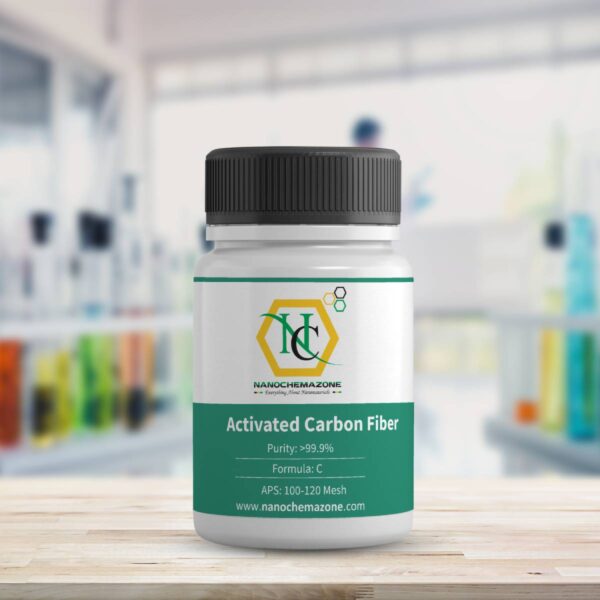
Activated Carbon Fiber
Activated Carbon Fiber
Product Name: ACF (Purity: 99.9%, Mesh: 120)
| Product | Activated Carbon Fiber |
| Cat No | NCZ-MN-156/20 |
| CAS No | 99685-96-8 |
| Purity | 99.99% |
| Mesh | 100-120 |
| Benzene | ≥ 40wt% |
| BET | ≥ 1300m2g |
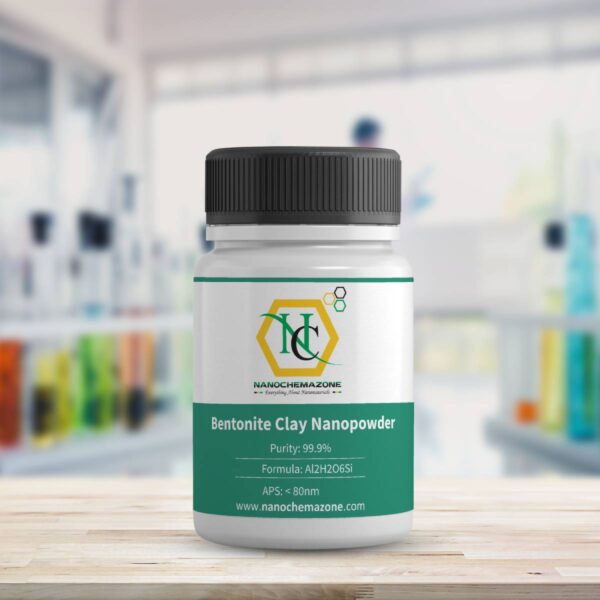
Bentonite Clay Nanopowder
Bentonite Clay Nanopowder
Product Name: Bentonite Clay Nanopowder (Purity: 99.9%, APS: < 80nm)
Product |
Bentonite Clay Nanopowder |
| Cat No | NCZ-MN-113/20 |
| CAS No | 1302-78-9 |
| Purity | 99.9% |
| APS | < 80nm |
| Molecular Weight | 108.1 g/mol |
| Form | Powder |
| Specific Gravity | 2.5(H2O) |
| Melting Point | Decomposes |
| Solubility | Slightly soluble in water Insoluble in methanol |
| Molecular Formula | Al2H2O6Si |
Bentonite Clay Related Information
Storage Conditions:
Airtight sealed, avoid light and keep dry at room temperature.
Please contact us for customization and price inquiry
Email: contact@nanochemazone.com
Note: We supply different size ranges of Nano and micron as per the client’s requirements and also accept customization in various parameters.
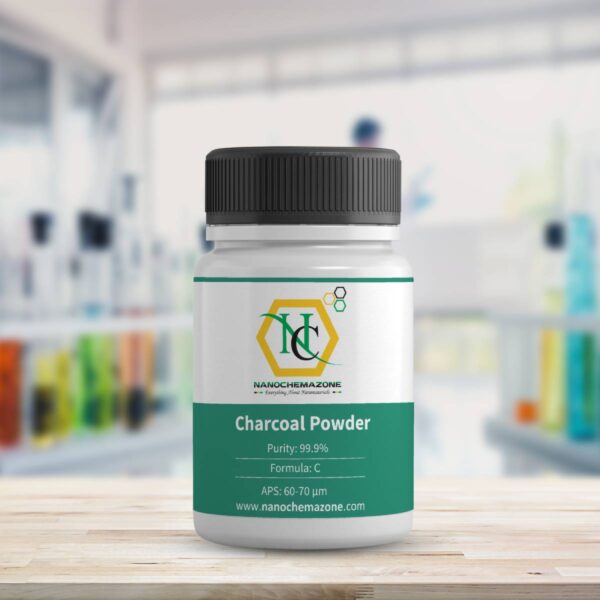
Charcoal Powder
Charcoal Powder
Product Name: Charcoal Powder (C, APS: 60-70µm, Purity: 99.9%)
| Product | Charcoal Powder |
| Cat No | NCZ-MN-162/20 |
| CAS No | 7440-44-0 |
| Purity | 99.9% |
| APS | 60-70µm |
| Molecular Formula | C |
| Form | Powder |
| Color | Black |
| Bulk Density | 0.34g/ml |

Gallium Arsenide Nanopowder
Gallium Arsenide Nanopowder
| Product | Gallium Arsenide Nanopowder |
| Cat No | NCZ-NSC810/20 |
| CAS No | 1303-00-0 |
| Purity | 99.9% |
| APS | 80-100nm |
| Molecular Formula | GaAs |
| Molecular Weight | 144.64g/mol |
| Form | Powder |
| Color | Gray |
| Density | 5.3g/cm3 |
| Melting Point | 1400°C |
| Young Modulus | 85 GPa |
| Thermal Conductivity | 47 W/m-K |
| Solubility in water | Insoluble in water |
Gallium Arsenide Nano powder Description
Gallium Arsenide Nano powder composed of gallium arsenide nanoparticles (average particle size: 4?m) used in various semiconductor and photo optic applications. Gallium arsenide nano powder is hydrophobic and forms clear colloidal sultions in ethanol and non-polar solvents) Nanochemazone produces to many standard grades when applicable, including Mil Spec (military grade); ACS, Reagent and Technical Grade; Food, Agricultural and Pharmaceutical Grade; Optical Grade, USP and EP/BP (European Pharmacopoeia/British Pharmacopoeia) and follows applicable ASTM testing standards. Typical and custom packaging is available, as is additional technical and safety (MSDS) data. Please contact us for information on lead time and pricing above.
Gallium Arsenide Nanopowder Related Information
Storage Conditions:
Airtight sealed, avoid light, and keep dry at room temperature.
Please contact us for customization and price inquiry
Email: contact@nanochemazone.com
Note: We supply different size ranges of Nano and micron as per the client’s requirements and also accept customization in various parameters.
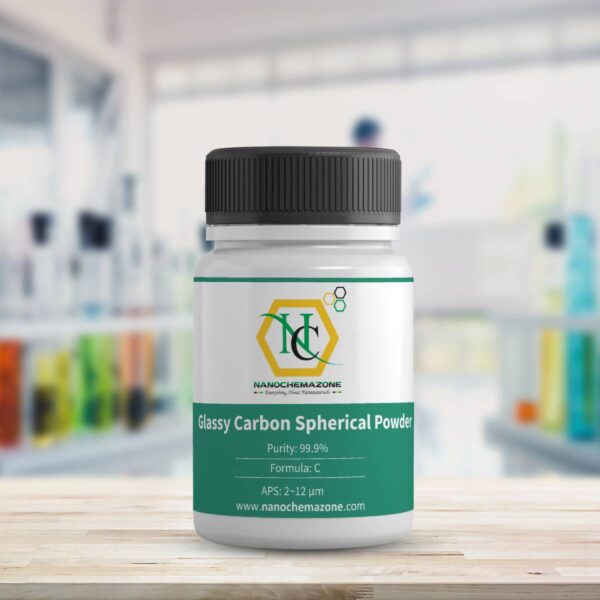
Glassy Carbon Spherical Powder
Glassy Carbon Spherical Powder
Product Name: Glassy Carbon Spherical Powder (C, Purity: 99.9%, APS: 2~12µm)
| Product | Glassy Carbon Spherical Powder |
| Cat No | NCZ-MN-163/20 |
| CAS No | 7440-44-0 |
| Purity | 99.9 % |
| APS | 2~12µm |
| Molecular Formula | C |
| Molecular Weight | 12.01 g/mol |
| Density | 2.267 g/cm³ |
| Appearance | Black solid |
| Melting Point | 3652 - 3697 °C (sublimes) |
| Boiling Point | 4200 °C |
| Thermal Conductivity | 119-165 W/m/K |
| Heat of Vaporization | 128 K-Cal/gm |
| Electronegativity | 2.55 Paulings |
| Solubility | Insoluble in water |
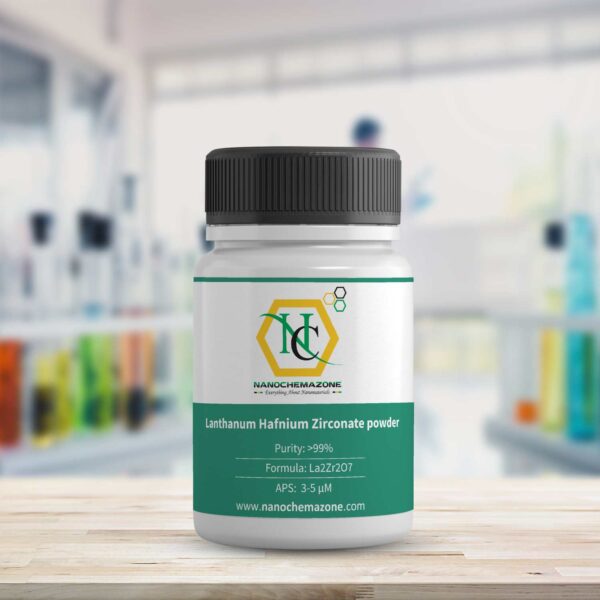
Lanthanum Hafnium Zirconate Powder
Lanthanum Hafnium Zirconate powder
Product Name: Lanthanum Hafnium Zirconate powder (Purity: 99.5%, APS: 30-45µM)| Product | Lanthanum Hafnium Zirconate powder |
| Cat No | NCZ-MN-258/20 |
| CAS No | 12031-48-0 |
| APS | 1-10 µM, 10-25 µM 25- 45 µM (Customizable) |
| Purity | 99.5% |
| Form | White, odorless Powder |
| Density | 6.05 g/cm3 |
| Melting Point | ~ 2680 deg C |
| Solubility | Insoluble in Water |
| Formula | La2Zr2O7 |
Lanthanum Hafnium Zirconate powder’s COA:
| Hf | 2.2% |
| Fe | 0.01% |
| Na | 0.01% |
| Al | 0.1% |
| Si | 0.1% |
| Ca | 0.005% |
| Sr | 0.02% |
| Pb | 0.001% |
Lanthanum zirconate Applications:
Widely used in microelectronics, catalysts, ferroelectric materials, / lithium batteries, semiconductors, and other electronic fields.Lanthanum zirconate Related Information
Storage Conditions: Airtight sealed, avoid light and keep dry at room temperature. Please contact us for customization and price inquiry Email: contact@nanochemazone.com Note: We supply different size ranges of Nano and micron as per the client’s requirements and also accept customization in various parameters. Lanthanum Strontium Ferrite Powder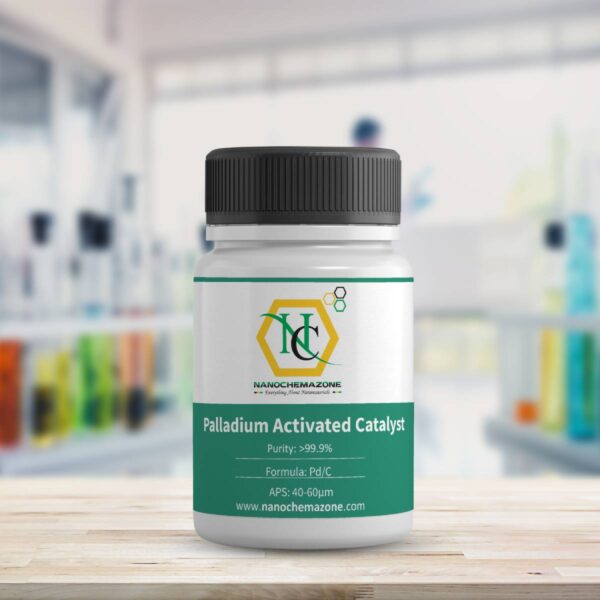
Palladium on Activated Charcoal Catalyst
Palladium on Activated Charcoal Catalyst
Product Name: Palladium on Activated Charcoal Catalyst (Pd/C, APS: 40-60µm, Purity: >99.9%)
| Product | Palladium on Activated Charcoal Catalyst |
| Cat No | NCZ-MN-150/20 |
| CAS No | 7440-05-3 |
| Purity | >99.9% |
| APS | 40-60µm |
| Molecular Formula | Pd/C |
| Color | Black |
| Pd on Activated Charcoal | 1%, 2%, 3%, 4%, 5%, 10% |
| Surface Area, BET | ≥950 m²/g |
| Impurity | ≤0.3 % |
| Water Content | 0.1 % |
| Ash Content | ≤0.5 % |
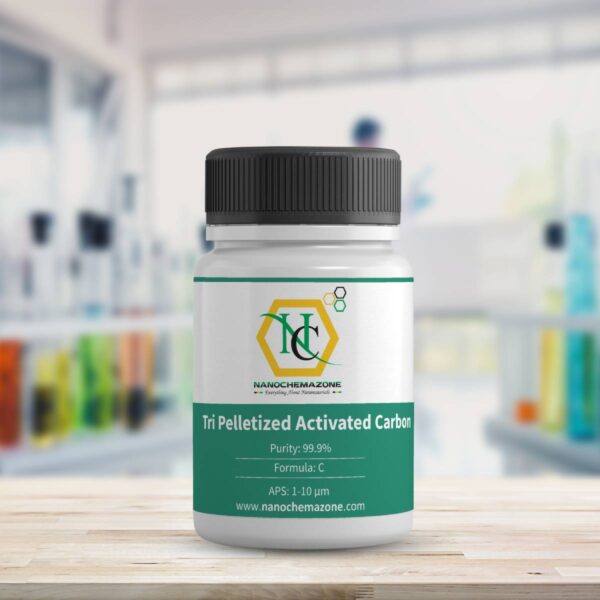
Tri Pelletized Activated Carbon
Tri Pelletized Activated Carbon
Product Name: Tri Pelletized Activated Carbon (c, APS: 1-10µm Purity: 99.9%)
| Product | Tri Pelletized Activated Carbon |
| Cat No | NCZ-MN-169/20 |
| CAS No | 7440-44-0 |
| Purity | 99.9% |
| APS | 1-10μm |
| Molecular Formula | C |
| Molecular Weight | 12-01g/mol |
| Form | Powder |
| Color | Black |
| Melting Point | 3550°C |
| Boiling Point | Sublimes |
| PH value | 5.0-10.0 |
| Vapor Density | 0.4 |
| Vapor pressure | 1 @ 3586C (6487F) |
| Solubility | Insoluble in water |
Reviews
There are no reviews yet.