


Gold Nickel Alloy
₹0.00
Gold Nickel Alloy
| Product |
Gold Nickel Alloy |
| Colour | N/A |
| Purity | 99% |
| Size | 3 mm – 6 mm.(Customizable) |
| Ingredient/MF | AuNi |
| Product Code | NCZ-CP-263/20 |
| Density | N/A |
| CAS No | N/A |
Gold Nickel Alloy Description
Nickel is a chemical element with the symbol Ni and atomic number 28. It is a silvery-white lustrous metal with a slight golden tinge. Nickel belongs to the transition metals and is hard and ductile. Pure nickel powdered to maximize.
The reactive surface area shows a significant chemical activity, but larger pieces are slow to react with air under standard conditions because an oxide layer forms on the surface and prevents further corrosion (passivation).
Even so, pure native nickel is found in Earth’s crust only in tiny amounts, usually in ultramafic rocks, and in the interiors of larger nickel–iron meteorites that were not exposed to oxygen when outside Earth’s atmosphere.
Meteoric nickel is found in combination with iron, a reflection of the origin of those elements as major end products of supernova nucleosynthesis. An iron–nickel mixture is thought to compose Earth’s outer and inner cores.
Use of nickel (as a natural meteoric nickel–iron alloy) has been traced as far back as 3500 BCE. Nickel was first isolated and classified as a chemical element in 1751 by Axel Fredrik Cronstedt, who initially mistook the ore for a copper mineral, in the cobalt mines of Los, Hälsingland, Sweden.
The element’s name comes from a mischievous sprite of German miner mythology, Nickel (similar to Old Nick), who personified the fact that copper-nickel ores resisted refinement into copper. An economically important source of nickel is the iron ore limonite, which often contains 1–2% nickel. Nickel’s other important ore minerals include pentlandite and a mixture of Ni-rich natural silicates known as garnierite. Major production sites include the Sudbury region in Canada (which is thought to be of meteoric origin), New Caledonia in the Pacific, and Norilsk in Russia.
Nickel is slowly oxidized by air at room temperature and is considered corrosion-resistant. Historically, it has been used for plating iron and brass, coating chemistry equipment, and manufacturing certain alloys that retain a high silvery polish, such as German silver.
About 9% of world nickel production is still used for corrosion-resistant nickel plating. Nickel-plated objects sometimes provoke nickel allergy. Nickel has been widely used in coins, though its rising price has led to some replacement with cheaper metals in recent years.
Nickel is one of four elements (the others are iron, cobalt, and gadolinium) that are ferromagnetic at approximately room temperature. Alnico permanent magnets based partly on nickel are of intermediate strength between iron-based permanent magnets and rare-earth magnets.
The metal is valuable in modern times chiefly in alloys; about 68% of world production is used in stainless steel. A further 10% is used for nickel-based and copper-based alloys, 7% for alloy steels, 3% in foundries, 9% in plating and 4% in other applications, including the fast-growing battery sector,including those in electric vehicles (EVs).
As a compound, nickel has a number of niche chemical manufacturing uses, such as a catalyst for hydrogenation, cathodes for batteries, pigments and metal surface treatments. Nickel is an essential nutrient for some microorganisms and plants that have enzymes with nickel as an active site.
Related Information
Please email us for the customization.
Email: contact@nanochemazone.com
Please contact us for customization and price inquiry
Note: We supply different size ranges of Nano and micron as per the client’s requirements and also accept customization in various parameters.
Spherical High Speed Steel
Note: For pricing & ordering information, please contact us at sales@nanochemazone.com
Please contact us for quotes on Larger Quantities & Customization. E-mail: contact@nanochemazone.com
Customization:
If you are planning to order large quantities for your industrial and academic needs, please note that customization of parameters (such as size, length, purity, functionalities, etc.) are available upon request.
[/vc_column_text][/vc_column][/vc_row]
You must be logged in to post a review.
Related products
Carbon Activated Powder
Carbon Activated Powder
Product Name: Carbon Activated Powder (C, Purity: > 99.9% APS: 25 mesh)
| Product | Carbon Activated Powder |
| Cat No | NCZ-MN-158/20 |
| CAS No | 7440-44-0 |
| Purity | > 99.9% |
| APS | 25 mesh |
| Molecular Formula | C |
| Molecular Weight | 12.01g/mol |
| Form | Powder |
| Color | Black |
| Melting Point | 3550C (6422F) |
| Boiling Point | Sublimes |
| PH value | 5.0-10.0 |
| Specific Gravity | 250-600g/1 |
| % Volatiles by volume @ 21C (70F) | 0 |
| Vapor Density | 0.4 |
| Vapor pressure | 1 @ 3586C (6487F) |
| Solubility | Insoluble in water |
Copper Indium Gallium Selenide
Copper Indium Gallium Selenide
| Product | Copper Indium Gallium Selenide |
| Cat No | NCZ-NSC809/20 |
| CAS No | 12018-95-0 |
| Purity | 99.9% |
| APS | 1-2µm |
| Molecular Formula | CuInxGa(1-x)Se2 |
| Form | Powder |
| Color | Silver |
| Density | 5.7 g/cm3 |
| Melting Point | 990-1070 °C |
Copper Indium Gallium Selenide Description
Copper Indium Gallium Selenide Powder (CIGS) for solar energy applications is a p-type or absorber layer material. CIGS-based photovoltaic cells (PV Cells) for solar energy are fabricated from a positively charged or p-type CIGS layer underneath a negatively charged or n-type layer.
The p-type layer can be produced by thin film deposition of a Gallium doped Copper Indium Selenide (CIGS) Nanopowder sold under the Nanochemazone Solar Energy group. Most CIGS-based PV solar cells are produced from thin film deposition of CIGS using sputtering techniques.
Nanochemazone produces to many standard grades when applicable, including Mil Spec (military grade); ACS, Reagent and Technical Grade; Food, Agricultural and Pharmaceutical Grade; Optical Grade, USP and EP/BP (European Pharmacopoeia/British Pharmacopoeia) and follows applicable ASTM testing standards. Typical and custom packaging is available.
Copper Indium Gallium Selenide Related Information
Storage Conditions:
Airtight sealed, avoid light, and keep dry at room temperature.
Please contact us for customization and price inquiry
Email: contact@nanochemazone.com
Note: We supply different size ranges of Nano and micron as per the client’s requirements and also accept customization in various parameters.
Granular Activated Carbon
Granular Activated Carbon
Product Name: Granular Activated Carbon (C, Purity: 99.9%, APS: 50-60µm)
| Product | Granular Activated Carbon |
| Cat No | NCZ-MN-164/20 |
| CAS No | 7440-44-0 |
| Purity | 99.9% |
| APS | 50-60 µm |
| Molecular Weight | 242.62 g/ mol |
| Form | Granules |
| Color | Black |
| PH value | 6-7 |
| SSA | 900-1100 m2/g |
| Bulk Density | 0.45 g/ cm3 |
| Solubility | Insoluble In Water |
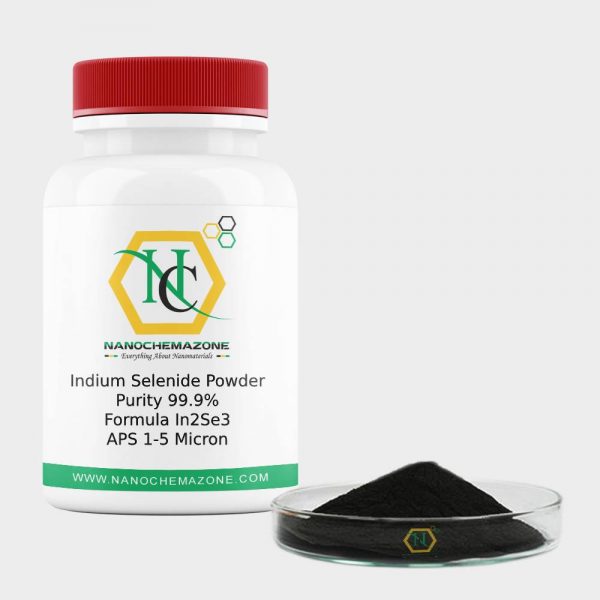
Indium Selenide Powder
Indium Selenide Powder
Product Name: Indium Selenide Powder (In2Se3, >99.9%, APS: 40-70µm)
| Product | Indium Selenide Powder |
| Cat No | NCZ-NSC815/20 |
| CAS No | 12056-07-4 |
| Purity | >99.9% |
| APS | 40-70µm |
| Molecular Formula | In2Se3 |
| Molecular Weight | 466.516 g/mol |
| Density | 5.80 g/cm³ |
| Solubility in water | Insoluble in cold water |
Indium Selenide Related Information
Storage Conditions: Airtight sealed, avoid light, and keep dry at room temperature. Please contact us for customization and price inquiry Email: contact@nanochemazone.com Note: We supply different size ranges of Nano and micron as per the client’s requirements and also accept customization in various parameters.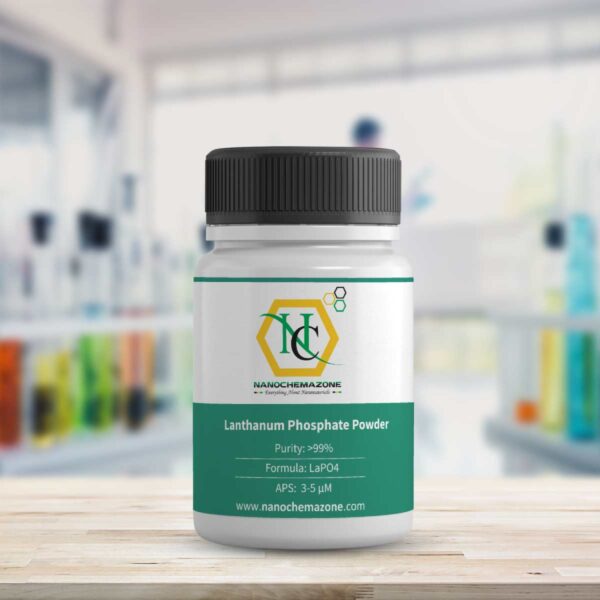
Lanthanum (III) Phosphate, Anhydrous Powder
Lanthanum Phosphate or Lanthanum (III) Phosphate, Anhydrous Powder
Product Name: Lanthanum (III) Phosphate, Anhydrous| Product Name | Lanthanum (III) Phosphate, Anhydrous |
| Cat No | NCZ-MN-259/20 |
| CAS No | 13778-59-1 |
| Purity | 99.9% |
| APS | 40-50 µm |
| MF | LaPO4 |
| Molecular Weight | 233.875 g/mol |
| Appearance | White powder or chunks |
| Form | Powder |
| Non-Rare Earth Impurities | %Max. | %Max. | %Max. |
| Fe2O3 | 0.005 | 0.01 | 0.01 |
| SiO2 | 0.01 | 0.02 | 0.03 |
| CaO | 0.01 | 0.01 | 0.03 |
| Cl- | 0.005 | 0.01 | 0.05 |
| SO4- | 0.01 | 0.01 | 0.03 |
| K2O | 0.01 | 0.01 | 0.01 |
| Na2O | 0.005 | 0.01 | 0.01 |
Lanthanum (III) phosphate Applications:
Lanthanum Phosphate Widely used in microelectronics, catalysts, ferroelectric materials, lithium batteries, semiconductors, and other electronic fields.Lanthanum (III) phosphate Related Information
Storage Conditions: Airtight sealed, avoid light and keep dry at room temperature. Please contact us for customization and price inquiry Email: contact@nanochemazone.com Note: We supply different size ranges of Nano and micron as per the client’s requirements and also accept customization in various parameters. Also available as Lanthanum (III) phosphate hydrate form powderLanthanum (III) Phosphate Hydrate
Lanthanum Phosphate or Lanthanum (III) Phosphate Hydrate is highly insoluble in water and converts to the oxide when heated (calcined). Anhydrous Lanthanum (III) Phosphate is generally immediately available in most volumes. High purity, submicron, and nanopowder forms may be considered. Nanochemazone produces too many standard grades when applicable, including Mil Spec (military grade); ACS, Reagent and Technical Grade; Food, Agricultural and Pharmaceutical Grade; Optical Grade, USP and EP/BP (European Pharmacopoeia/British Pharmacopoeia) and follows applicable ASTM testing standards. Typical and custom packaging is available. Additional technical, research, and safety (MSDS) information are available. Please request a quote above to receive pricing information based on your specifications. Lanthanum Hafnium Zirconate Powder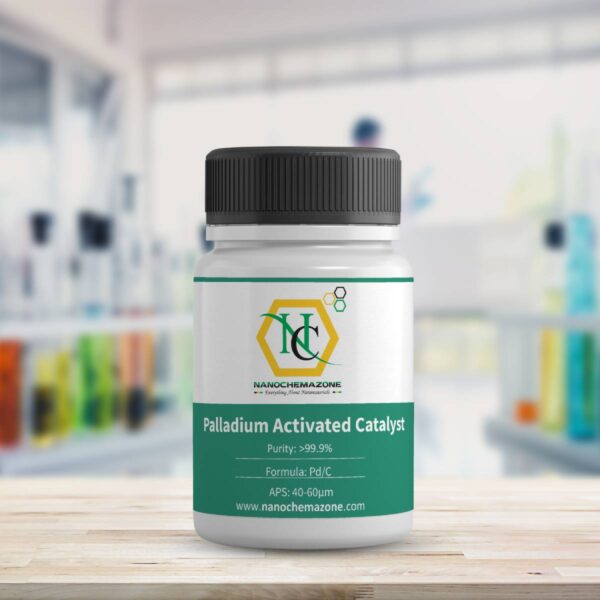
Palladium on Activated Charcoal Catalyst
Palladium on Activated Charcoal Catalyst
Product Name: Palladium on Activated Charcoal Catalyst (Pd/C, APS: 40-60µm, Purity: >99.9%)
| Product | Palladium on Activated Charcoal Catalyst |
| Cat No | NCZ-MN-150/20 |
| CAS No | 7440-05-3 |
| Purity | >99.9% |
| APS | 40-60µm |
| Molecular Formula | Pd/C |
| Color | Black |
| Pd on Activated Charcoal | 1%, 2%, 3%, 4%, 5%, 10% |
| Surface Area, BET | ≥950 m²/g |
| Impurity | ≤0.3 % |
| Water Content | 0.1 % |
| Ash Content | ≤0.5 % |
Tantalum Carbide Powder
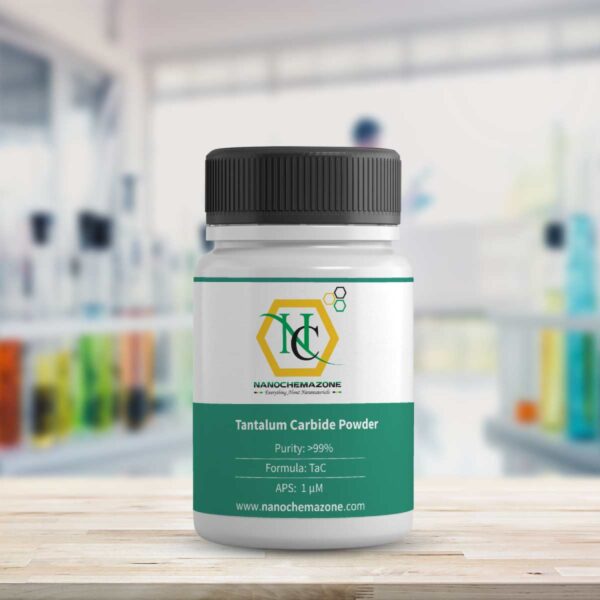
Tantalum Carbide Powder
Tantalum Carbide Powder (TaC, Purity: 99.9%, APS: 1000 nm, Cubic)| Product | Tantalum Carbide Powder |
| Cat No | NCZ-MN-260/20 |
| CAS No | 12070-06-3 |
| APS | 1000 nm (customizable) |
| Purity | 99.9% |
| Molecular Formula | TaC |
| Molecular Weight | 192.96 g/mol |
| Form | Powder |
| Color | Gray |
| Density | 14.30 g/cm³ |
| Melting Point | 3,880 °C |
| Boiling Point | 4,780 °C |
| Solubility | Insoluble in water |
Tantalum Carbide Application:
Tantalum Carbide Powder Applications
1. Tantalum carbide is often added to tungsten carbide/cobalt (WC/Co) powder attritions to enhance the physical properties of the sintered structure. It also acts as a grain growth inhibitors preventing the formation of large grains, thus producing materials of optimal hardness. 2. It is also used as a coating for steel molds in the injection molding of aluminum alloys. While providing a hard, wear-resistant surface, it also provides a low friction mold surface. 3. Tantalum carbide is also used in the production of sharp instruments with extreme mechanical resistance and hardness. 4. It is also used in tool bits for cutting tools. Tantalum carbide is widely used as a sintering additive in ultra-high temperature ceramics (UHTCs) or as a ceramic reinforcement in high-entropy alloys (HEAs) due to its excellent physical properties in melting point, hardness, elastic modulus, thermal conductivity, thermal shock resistance, and chemical stability, which makes it a desirable material for aircraft and rockets in aerospace industries. Nanochemazone specializes in producing high purity Tantalum Carbide Powder with the smallest possible average grain sizes for use in the preparation of pressed and bonded sputtering targets and in Chemical Vapor Deposition (CVD) and Physical Vapor Deposition (PVD) processes including Thermal and Electron Beam (E-Beam) Evaporation, Low-Temperature Organic Evaporation, Atomic Layer Deposition (ALD), Metallic-Organic and Chemical Vapor Deposition (MOCVD). Powders are also useful in any application where high surface areas are desired such as water treatment and in fuel cell and solar applications. Nanoparticles also produce very high surface areas. Our standard powder particle sizes average in the range of - 325 mesh, - 100 mesh, 10-50 microns, and submicron (< 1 micron). We can also provide many materials in the nanoscale range.Tantalum Carbide Related Information
Storage Conditions: Airtight sealed, avoid light and keep dry at room temperature. Please contact us for customization and price inquiry Email: contact@nanochemazone.com Note: We supply different size ranges of Nano and micron as per the client’s requirements and also accept customization in various parameters.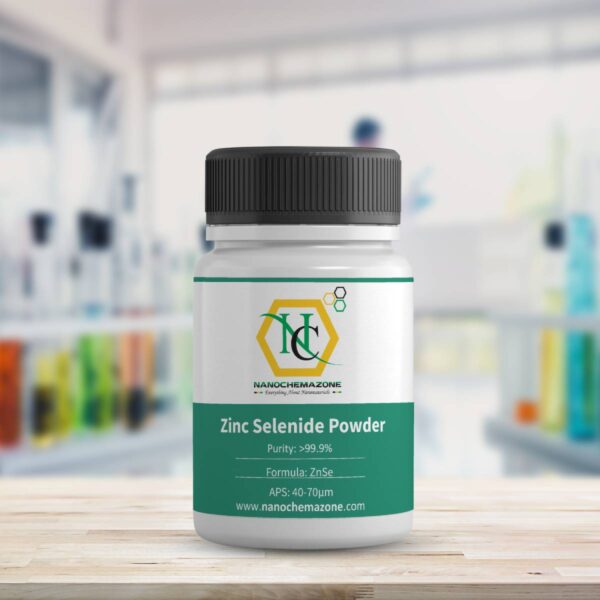
Zinc Selenide Powder
Zinc Selenide Powder
Product Name: Zinc Selenide Powder (ZnSe, >99.9%, APS: 40-70µm)
| Product | Zinc Selenide Powder |
| Cat No | NCZ-NSC817/20 |
| CAS No | 1315-09-9 |
| Purity | >99.9 % |
| APS | 40-70µm (Can be customized) |
| Molecular Formula | ZnSe |
| Molecular Weight | 144.35 g/mol |
| Color | Yellow |
| Density | 5.27 g/cm³ |
| Melting Point | 1525 °C |
| Linear Expansion Coefficient | 7.57x10⁻⁶ @ 20°C |
| Young Modulus | 67.2 GPa |
| Thermal Conductivity | 18 Wm |
| Solubility in water | Insoluble in water |
Reviews
There are no reviews yet.