

Iridium Bromide Hydrate
₹0.00
Iridium Bromide Hydrate
Product |
Iridium Bromide Hydrate |
| Colour | Gray to black |
| Purity | 99% |
| Pack size | 100 Mesh (customizable) |
| Ingredient/MF | IrBr3•XH2O |
| Melting point | 100℃ |
| Product Code | NCZ-CP-240/20 |
| CAS Number | 171769-74-7 |
Iridium Bromide Hydrate Description
Iridium is a chemical element with the symbol Ir and atomic number 77. A very hard, brittle, silvery-white transition metal of the platinum group, iridium is considered to be the second-densest metal (after osmium) with a density of 22.56 g/cm3 as defined by experimental X-ray crystallography.
However, at room temperature and standard atmospheric pressure, iridium has been calculated to have a density of 22.65 g/cm3, 0.04 g/cm3 higher than osmium measured the same way. Still, the experimental X-ray crystallography value is considered to be the most accurate, and as such iridium is considered to be the second densest element.[6] It is the most corrosion-resistant metal, even at temperatures as high as 2000 °C. Although only certain molten salts and halogens are corrosive to solid iridium, finely divided iridium dust is much more reactive and can be flammable.
Iridium was discovered in 1803 among insoluble impurities in natural platinum. Smithson Tennant, the primary discoverer, named iridium after the Greek goddess Iris, personification of the rainbow, because of the striking and diverse colors of its salts. Iridium is one of the rarest elements in Earth’s crust, with annual production and consumption of only three tonnes. 191Ir and 193Ir are the only two naturally occurring isotopes of iridium, as well as the only stable isotopes; the latter is the more abundant.
The most important iridium compounds in use are the salts and acids it forms with chlorine, though iridium also forms a number of organometallic compounds used in industrial catalysis, and in research. Iridium metal is employed when high corrosion resistance at high temperatures is needed, as in high-performance spark plugs, crucibles for recrystallization of semiconductors at high temperatures, and electrodes for the production of chlorine in the chloralkali process. Iridium radioisotopes are used in some radioisotope thermoelectric generators.
Iridium is found in meteorites in much higher abundance than in the Earth’s crust.For this reason, the unusually high abundance of iridium in the clay layer at the Cretaceous–Paleogene boundary gave rise to the Alvarez hypothesis that the impact of a massive extraterrestrial object caused the extinction of dinosaurs and many other species 66 million years ago. Similarly, an iridium anomaly in core samples from the Pacific Ocean suggested the Eltanin impact of about 2.5 million years ago.
Related Information
Please email us for the customization.
Email: contact@nanochemazone.com
Please contact us for customization and price inquiry
Note: We supply different size ranges of Nano and micron as per the client’s requirements and also accept customization in various parameters.
Note: For pricing & ordering information, please contact us at sales@nanochemazone.com
Please contact us for quotes on Larger Quantities & Customization. E-mail: contact@nanochemazone.com
Customization:
If you are planning to order large quantities for your industrial and academic needs, please note that customization of parameters (such as size, length, purity, functionalities, etc.) are available upon request.
[/vc_column_text][/vc_column][/vc_row]
You must be logged in to post a review.
Related products
Carbon Mesoporous Nanopowder
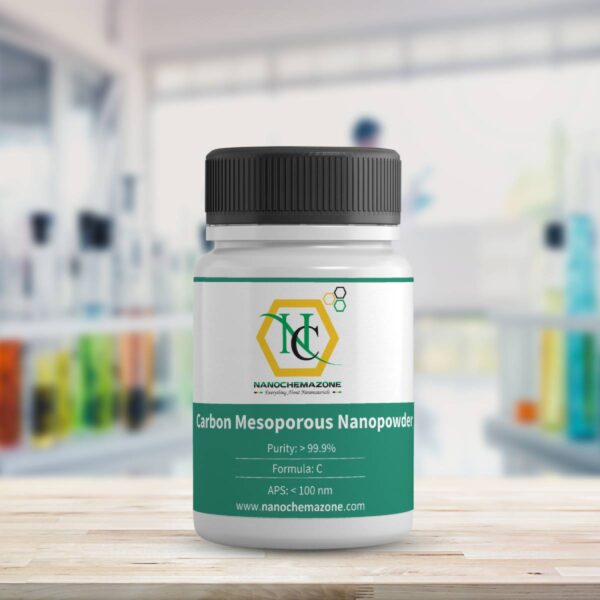
Carbon Mesoporous Nanopowder
Product Name: Carbon Mesoporous Nanopowder (C, Purity: >99.9%, APS: < 100nm)
| Product | Carbon Mesoporous Nanopowder |
| Cat No | NCZ-MN-160/20 |
| CAS No | 1333-86-4 |
| Purity | >99.9% |
| APS | < 100 nm |
| Molecular Formula | C |
| Molecular Weight | 12.01 |
| Form | Powder |
| Color | Black |
| Density | 1-2.1 g/cm³ |
| Melting Point | 3654 °C |
| Boiling Point | 4827 °C |
| SSA | >500 m2/g (BET) |
| Vapor pressure | 1 mm Hg @ 3586C |
| Solubility | Soluble in Water |
Cesium Selenide Powder
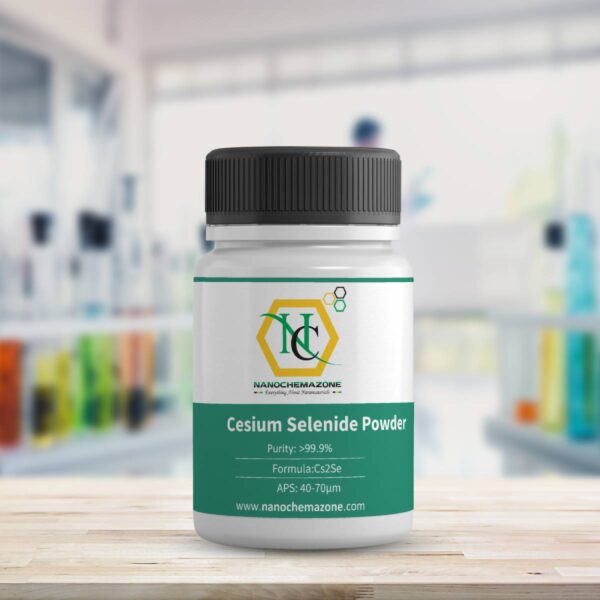
Cesium Selenide Powder
Product Name: Cesium Selenide Powder
| Product | Cesium Selenide Powder |
| Cat No | NCZ-NSC808/20 |
| CAS No | 31052-46-7 |
| Purity | >99.9 % |
| APS | 40-70µm |
| Molecular Formula | Cs2Se |
| Molecular Weight | 344.7709 g/mol |
| Form | Powder |
Cesium Selenide Description
Cesium Selenide is generally immediately available in most volumes. High purity, submicron and nanopowder forms may be considered. Nanochemazone produces to many standard grades when applicable, including Mil Spec (military grade); ACS, Reagent and Technical Grade; Food, Agricultural and Pharmaceutical Grade; Optical Grade, USP and EP/BP (European Pharmacopoeia/British Pharmacopoeia) and follows applicable ASTM testing standards. Typical and custom packaging is available. Additional technical, research and safety (MSDS) information is available as is a Reference Calculator for converting relevant units of measurement.
Cesium Selenide Related Information
Storage Conditions:
Airtight sealed, avoid light, and keep dry at room temperature.
Please contact us for customization and price inquiry
Email: contact@nanochemazone.com
Note: We supply different size ranges of Nano and micron as per the client’s requirements and also accept customization in various parameters.
Copper Indium Gallium Selenide
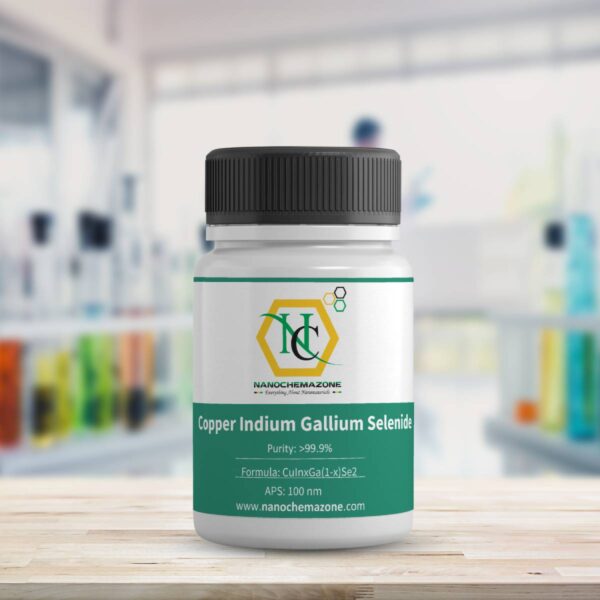
Copper Indium Gallium Selenide
| Product | Copper Indium Gallium Selenide |
| Cat No | NCZ-NSC809/20 |
| CAS No | 12018-95-0 |
| Purity | 99.9% |
| APS | 1-2µm |
| Molecular Formula | CuInxGa(1-x)Se2 |
| Form | Powder |
| Color | Silver |
| Density | 5.7 g/cm3 |
| Melting Point | 990-1070 °C |
Copper Indium Gallium Selenide Description
Copper Indium Gallium Selenide Powder (CIGS) for solar energy applications is a p-type or absorber layer material. CIGS-based photovoltaic cells (PV Cells) for solar energy are fabricated from a positively charged or p-type CIGS layer underneath a negatively charged or n-type layer.
The p-type layer can be produced by thin film deposition of a Gallium doped Copper Indium Selenide (CIGS) Nanopowder sold under the Nanochemazone Solar Energy group. Most CIGS-based PV solar cells are produced from thin film deposition of CIGS using sputtering techniques.
Nanochemazone produces to many standard grades when applicable, including Mil Spec (military grade); ACS, Reagent and Technical Grade; Food, Agricultural and Pharmaceutical Grade; Optical Grade, USP and EP/BP (European Pharmacopoeia/British Pharmacopoeia) and follows applicable ASTM testing standards. Typical and custom packaging is available.
Copper Indium Gallium Selenide Related Information
Storage Conditions:
Airtight sealed, avoid light, and keep dry at room temperature.
Please contact us for customization and price inquiry
Email: contact@nanochemazone.com
Note: We supply different size ranges of Nano and micron as per the client’s requirements and also accept customization in various parameters.
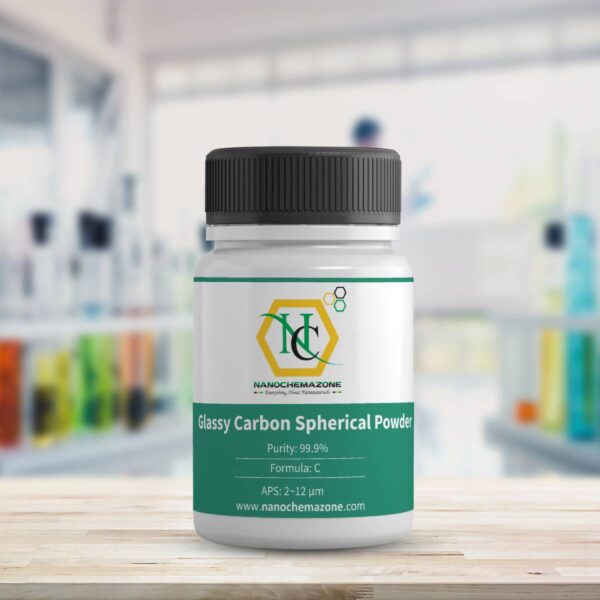
Glassy Carbon Spherical Powder
Glassy Carbon Spherical Powder
Product Name: Glassy Carbon Spherical Powder (C, Purity: 99.9%, APS: 2~12µm)
| Product | Glassy Carbon Spherical Powder |
| Cat No | NCZ-MN-163/20 |
| CAS No | 7440-44-0 |
| Purity | 99.9 % |
| APS | 2~12µm |
| Molecular Formula | C |
| Molecular Weight | 12.01 g/mol |
| Density | 2.267 g/cm³ |
| Appearance | Black solid |
| Melting Point | 3652 - 3697 °C (sublimes) |
| Boiling Point | 4200 °C |
| Thermal Conductivity | 119-165 W/m/K |
| Heat of Vaporization | 128 K-Cal/gm |
| Electronegativity | 2.55 Paulings |
| Solubility | Insoluble in water |
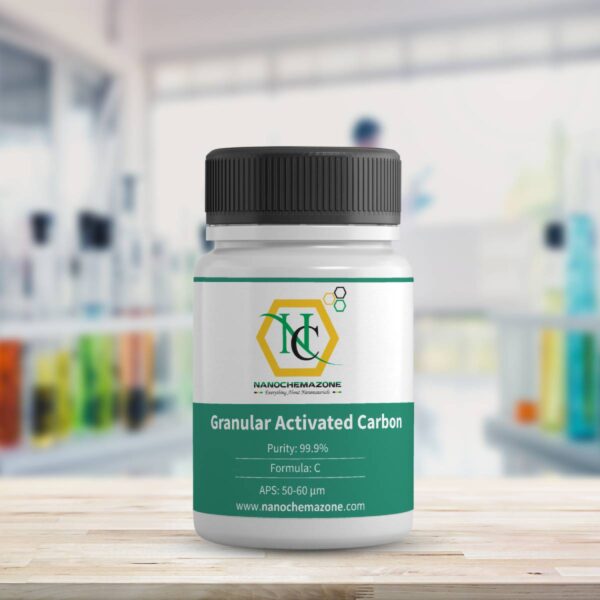
Granular Activated Carbon
Granular Activated Carbon
Product Name: Granular Activated Carbon (C, Purity: 99.9%, APS: 50-60µm)
| Product | Granular Activated Carbon |
| Cat No | NCZ-MN-164/20 |
| CAS No | 7440-44-0 |
| Purity | 99.9% |
| APS | 50-60 µm |
| Molecular Weight | 242.62 g/ mol |
| Form | Granules |
| Color | Black |
| PH value | 6-7 |
| SSA | 900-1100 m2/g |
| Bulk Density | 0.45 g/ cm3 |
| Solubility | Insoluble In Water |
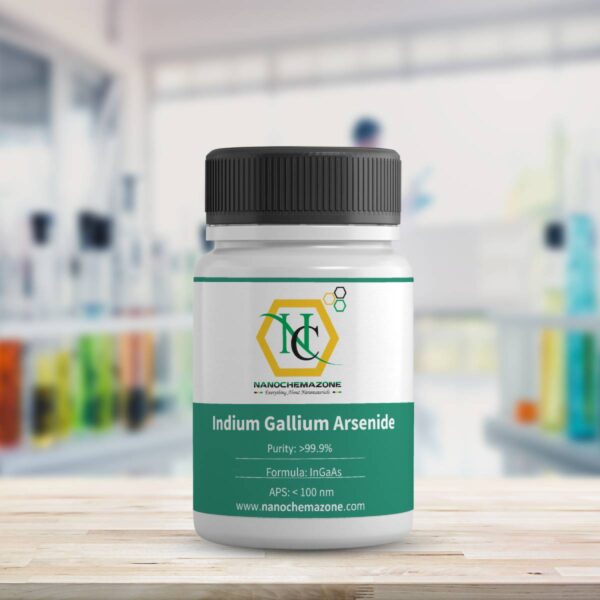
Indium Arsenide Powder
Indium Arsenide Powder
Product Name: Indium Arsenide Powder (InAs, Purity: 99.9%, APS: 40-50 µm)
| Product | Indium Arsenide Powder |
| Cat No | NCZ-NSC813/20 |
| CAS No | 1303-11-3 |
| Purity | 99.9% |
| APS | 40-50µm |
| Molecular Formula | InAs |
| Molecular Weight | 189.740g/mol |
| Form | Powder |
| Color | Gray |
| Density | 5.67g/cm3 |
| Melting Point | 942°C |
| Refractive Index | 3.51 |
| Dielectric Constant | 15.15 |
| Electrton Mobility | 40000(cm2/(V*s)) |
| Storage | Normal Room Temperature |
| Thermal Conductivity | 0.27(300K (W/cm•K)) |
| Specific Heat Capacity | 47.8 J•mol-1•K-1 |
| Solubility in water | Insoluble in water |
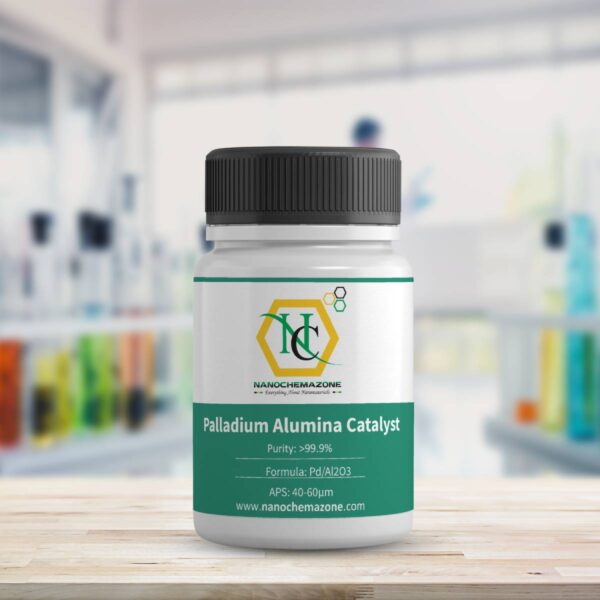
Palladium on Alumina Catalyst
Palladium on Alumina Catalyst
Product Name: Palladium on Alumina Catalyst (Pd/Al2O3, Purity: >99.9%, APS: 40-60µm)
| Product | Palladium on Alumina Catalyst |
| Cat No | NCZ-MN-151/20 |
| CAS No | 7440-05-3 |
| Purity | >99.9% |
| APS | 40-60µm |
| Molecular Formula | Pd/Al2O3 |
| Palladium on Alumina | 1%, 2%, 3%, 4%, 5%, 10% |
| Density | ≥0.55 g/ml |
| Surface Area, BET | ≥120 m²/g |
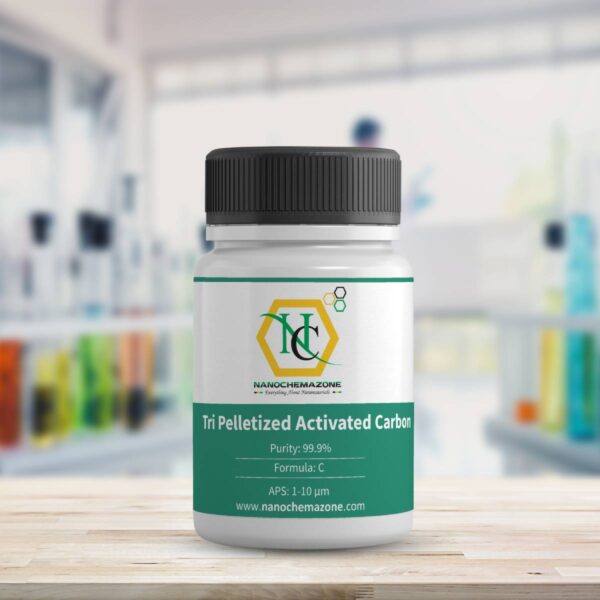
Tri Pelletized Activated Carbon
Micron Carbonyl Iron Powder
Product Name: Micron Carbonyl Iron Powder (Purity: 99.9%, APS: 5-10 µm)
| Product | Carbonyl Iron Powder |
| Cat No | NCZ-MN-166/20 |
| CAS No | 7439-89-6 |
| Purity | 99.9% |
| APS | 5-10µm |
| Molecular Formula | Fe |
| Molecular Weight | 55.85g/mol |
| Form | Powder |
| Color | Gray |
| Density | 7.86g/cm3 |
| Melting Point | 1535°C |
| Boiling Point | 2750°C |
| Thermal Expansion | 11.8 µm•m-1•K-1 |
| Thermal Conductivity | 0.804 W/cm/K (298.2 K) |
| Vickers Hardness | 608 MPa |
| Poisson's Ratio | 0.29 |
| Electrical Resistivity | 9.71 µΩ•cm (20°C) |
| Electronegativity | 1.8 Paulings |
| Young's Modulus | 211 GPa |
| Specific Heat | 0.106 Cal/g/K @ 25°C |
| Heat of Fusion | 3.56 Cal/gm mol |
| Solubility | Insoluble in water |
Reviews
There are no reviews yet.