


Lithium Nickel Cobalt Aluminum Oxide
₹0.00
Lithium Nickel Cobalt Aluminum Oxide
| Product |
Lithium Nickel Cobalt Aluminum Oxide |
| Colour | Black powder |
| Purity | 99% |
| Particle Size | 1-5 µm (Customizable) |
| Ingredient/MF | LiNi0.8Co0.15Al0.05O2 |
| Product Code | NCZ-CP-401/20 |
| CAS Number | 193214-24-3 |
| Density | 4.45 g/cm3 |
| Melting point | >1000 °C |
| Boiling Point | N/A |
| Molecular Weight | N/A |
| Exact Mass | N/A |
Lithium Nickel Cobalt Aluminum Oxide Description:
Aluminum is a Block P, Group 13, Period 3 element with an atomic weight of 26.9815386. It is the third most abundant element in the earth’s crust and the most abundant metallic element. Aluminum’s name is derived from alumina, the mineral from which Sir Humphrey Davy attempted to refine it from in 1812.
It was not until 1825 that Aluminum was first isolated by Hans Christian Oersted. Aluminum is a silvery gray metal that possesses many desirable characteristics. It is light, nonmagnetic, and non-sparking. It stands second among metals in the scale of malleability, and sixth in ductility.
It is extensively used in many industrial applications where a strong, light, easily constructed material is needed. Although it has only 60% of the electrical conductivity of copper, it is used in electrical transmission lines because of its light weight. Pure aluminum is soft and lacks strength, but alloyed with small amounts of copper, magnesium, silicon, manganese, or other elements it imparts a variety of useful properties. Aluminum was first predicted by Antoine Lavoisier in 1787 and first isolated by Friedrich Wohler in 1827.
Cobalt:
Cobalt is a Block D, Group 9, Period 4 element with an atomic weight of 58.933195. The number of electrons in each of cobalt’s shells is 2, 8, 15, 2 and its electron configuration is [Ar] 3d7 4s2The cobalt atom has a radius of 125 pm and a Van der Waals radius of 192 pm. Cobalt was first discovered by George Brandt in 1732. In its elemental form, cobalt has a lustrous gray appearance. Cobalt is found in cobaltite, erythrite, glaucodot and skutterudite ores.
Cobalt produces brilliant blue pigments which have been used since ancient times to color paint and glass. Cobalt is a ferromagnetic metal and is used primarily in the production of magnetic and high-strength superalloys. Co-60, a commercially important radioisotope, is useful as a radioactive tracer and gamma ray source. The origin of the word Cobalt comes from the German word “Kobalt” or “Kobold,” which translates as “goblin,” “elf” or “evil spirit.”
Lithium:
Lithium is a Block S, Group 1, Period 2 element with an atomic weight of 6.94. The number of electrons in each of Lithium’s shells is [2, 1] and its electron configuration is [He] 2s1. The lithium atom has a radius of 152 pm and a Van der Waals radius of 181 pm.
Lithium was discovered by Johann Arvedson in 1817 and first isolated by William Thomas Brande in 1821. The origin of the name Lithium comes from the Greek wordlithose which means “stone.” Lithium is a member of the alkali group of metals. It has the highest specific heat and electrochemical potential of any element on the period table and the lowest density of any elements that are solid at room temperature. Compared to other metals, it has one of the lowest boiling points.
In its elemental form, lithium is soft enough to cut with a knife its silvery white appearance quickly darkens when exposed to air. Because of its high reactivity, elemental lithium does not occur in nature. Lithium is the key component of lithium-ion battery technology, which is becoming increasingly more prevalent in electronics.
Nickel:
Nickel is a Block D, Group 4, Period 4 element with an atomic weight of 58.6934. The number of electrons in each of nickel’s shells is [2, 8, 16, 2] and its electron configuration is [Ar]3d8 4s2. Nickel was first discovered by Alex Constedt in 1751. The nickel atom has a radius of 124 pm and a Van der Waals radius of 184 pm. In its elemental form, nickel has a lustrous metallic silver appearance. Nickel is a hard and ductile transition metal that is considered corrosion-resistant because of its slow rate of oxidation.
It is one of four elements that are ferromagnetic and is used in the production of various type of magnets for commercial use. Nickel is sometimes found free in nature but is more commonly found in ores. The bulk of mined nickel comes from laterite and magmatic sulfide ores. The name originates from the German word kupfernickel, which means “false copper” from the illusory copper color of the ore.
Lithium Nickel Cobalt Aluminum Oxide Related Information
Please email us for the customization.
Email: contact@nanochemazone.com
Please contact us for customization and price inquiry
Note: We supply different size ranges of Nano and micron as per the client’s requirements and also accept customization in various parameters.
Note: For pricing & ordering information, please contact us at sales@nanochemazone.com
Please contact us for quotes on Larger Quantities & Customization. E-mail: contact@nanochemazone.com
Customization:
If you are planning to order large quantities for your industrial and academic needs, please note that customization of parameters (such as size, length, purity, functionalities, etc.) are available upon request.
You must be logged in to post a review.
Related products
Activated Carbon Fiber
Activated Carbon Fiber
Product Name: ACF (Purity: 99.9%, Mesh: 120)
| Product | Activated Carbon Fiber |
| Cat No | NCZ-MN-156/20 |
| CAS No | 99685-96-8 |
| Purity | 99.99% |
| Mesh | 100-120 |
| Benzene | ≥ 40wt% |
| BET | ≥ 1300m2g |
Please email us for the customization.
Email: contact@nanochemazone.com
Please contact us for customization and price inquiry
Note: We supply different size ranges of Nano and micron as per the client’s requirements and also accept customization in various parameters.
Granular Activated Carbon
Granular Activated Carbon
Product Name: Granular Activated Carbon (C, Purity: 99.9%, APS: 50-60µm)
| Product | Granular Activated Carbon |
| Cat No | NCZ-MN-164/20 |
| CAS No | 7440-44-0 |
| Purity | 99.9% |
| APS | 50-60 µm |
| Molecular Weight | 242.62 g/ mol |
| Form | Granules |
| Color | Black |
| PH value | 6-7 |
| SSA | 900-1100 m2/g |
| Bulk Density | 0.45 g/ cm3 |
| Solubility | Insoluble In Water |
Please email us for the customization.
Email: contact@nanochemazone.com
Please contact us for customization and price inquiry
Note: We supply different size ranges of Nano and micron as per the client’s requirements and also accept customization in various parameters.
Indium Arsenide Powder
Indium Arsenide Powder
Product Name: Indium Arsenide Powder (InAs, Purity: 99.9%, APS: 40-50 µm)
| Product | Indium Arsenide Powder |
| Cat No | NCZ-NSC813/20 |
| CAS No | 1303-11-3 |
| Purity | 99.9% |
| APS | 40-50µm |
| Molecular Formula | InAs |
| Molecular Weight | 189.740g/mol |
| Form | Powder |
| Color | Gray |
| Density | 5.67g/cm3 |
| Melting Point | 942°C |
| Refractive Index | 3.51 |
| Dielectric Constant | 15.15 |
| Electrton Mobility | 40000(cm2/(V*s)) |
| Storage | Normal Room Temperature |
| Thermal Conductivity | 0.27(300K (W/cm•K)) |
| Specific Heat Capacity | 47.8 J•mol-1•K-1 |
| Solubility in water | Insoluble in water |
Indium Arsenide Powder Related Information
Storage Conditions:
Airtight sealed, avoid light, and keep dry at room temperature.
Please contact us for customization and price inquiry
Email: contact@nanochemazone.com
Note: We supply different size ranges of Nano and micron as per the client’s requirements and also accept customization in various parameters.
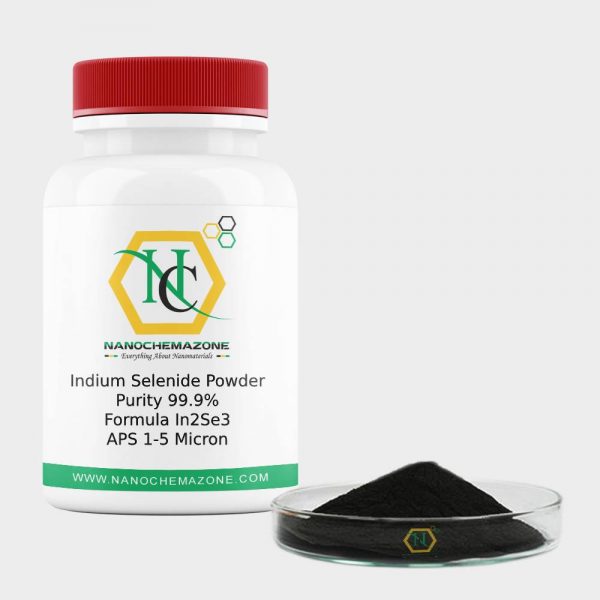
Indium Selenide Powder
Indium Selenide Powder
Product Name: Indium Selenide Powder (In2Se3, >99.9%, APS: 40-70µm)
| Product | Indium Selenide Powder |
| Cat No | NCZ-NSC815/20 |
| CAS No | 12056-07-4 |
| Purity | >99.9% |
| APS | 40-70µm |
| Molecular Formula | In2Se3 |
| Molecular Weight | 466.516 g/mol |
| Density | 5.80 g/cm³ |
| Solubility in water | Insoluble in cold water |
Indium Selenide Related Information
Storage Conditions:
Airtight sealed, avoid light, and keep dry at room temperature.
Please contact us for customization and price inquiry
Email: contact@nanochemazone.com
Note: We supply different size ranges of Nano and micron as per the client’s requirements and also accept customization in various parameters.
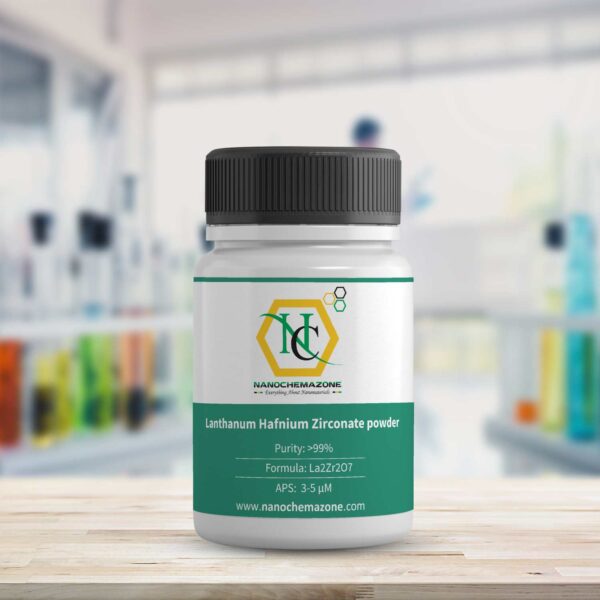
Lanthanum Hafnium Zirconate Powder
Lanthanum Hafnium Zirconate powder
Product Name: Lanthanum Hafnium Zirconate powder (Purity: 99.5%, APS: 30-45µM)
| Product | Lanthanum Hafnium Zirconate powder |
| Cat No | NCZ-MN-258/20 |
| CAS No | 12031-48-0 |
| APS | 1-10 µM, 10-25 µM 25- 45 µM (Customizable) |
| Purity | 99.5% |
| Form | White, odorless Powder |
| Density | 6.05 g/cm3 |
| Melting Point | ~ 2680 deg C |
| Solubility | Insoluble in Water |
| Formula | La2Zr2O7 |
Lanthanum Hafnium Zirconate powder’s COA:
| Hf | 2.2% |
| Fe | 0.01% |
| Na | 0.01% |
| Al | 0.1% |
| Si | 0.1% |
| Ca | 0.005% |
| Sr | 0.02% |
| Pb | 0.001% |
Latest information about the manufacturing techniques of lanthanum zirconate (La2Zr2O7, LZ) Powder and La2Zr2O7 based thermal barrier coatings (TBCs). Lanthanum zirconate is a promising candidate material for TBC applications due to its lower thermal conductivity and higher thermal stability compared to other traditional TBC systems.
We can supply Lanthanum zirconate powder and target materials, welcome contact us!
Lanthanum zirconate ( La2Zr2O7 ), purity 3N5, primary particle size 3um, material XRD pure phase.
Lanthanum zirconate Applications:
Widely used in microelectronics, catalysts, ferroelectric materials, / lithium batteries, semiconductors, and other electronic fields.
Lanthanum zirconate Related Information
Storage Conditions:
Airtight sealed, avoid light and keep dry at room temperature.
Please contact us for customization and price inquiry
Email: contact@nanochemazone.com
Note: We supply different size ranges of Nano and micron as per the client’s requirements and also accept customization in various parameters.
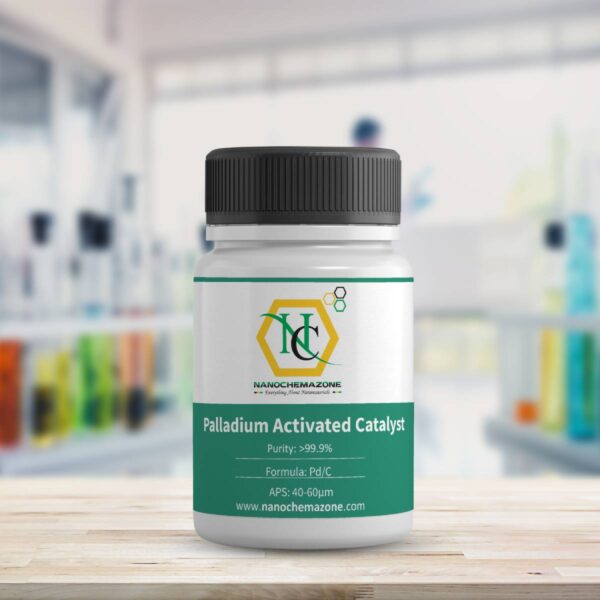
Palladium on Activated Charcoal Catalyst
Palladium on Activated Charcoal Catalyst
Product Name: Palladium on Activated Charcoal Catalyst (Pd/C, APS: 40-60µm, Purity: >99.9%)
| Product | Palladium on Activated Charcoal Catalyst |
| Cat No | NCZ-MN-150/20 |
| CAS No | 7440-05-3 |
| Purity | >99.9% |
| APS | 40-60µm |
| Molecular Formula | Pd/C |
| Color | Black |
| Pd on Activated Charcoal | 1%, 2%, 3%, 4%, 5%, 10% |
| Surface Area, BET | ≥950 m²/g |
| Impurity | ≤0.3 % |
| Water Content | 0.1 % |
| Ash Content | ≤0.5 % |
Please email us for the customization.
Email: contact@nanochemazone.com a
Please contact us for customization and price inquiry
Note: We supply different size ranges of Nano and micron as per the client’s requirements and also accept customization in various parameters.
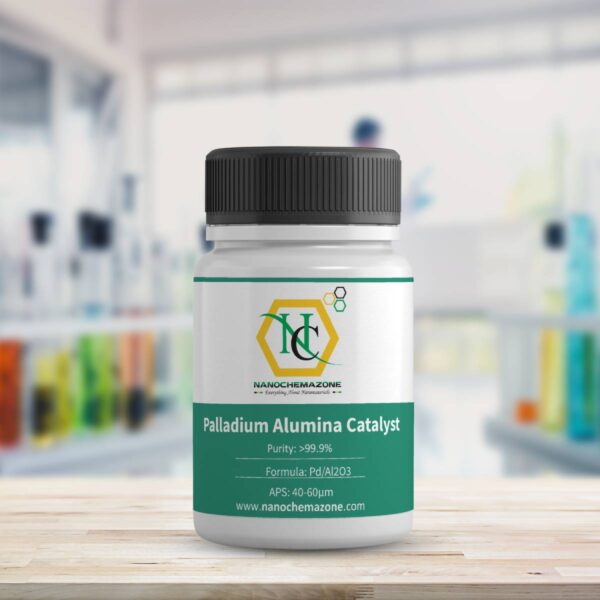
Palladium on Alumina Catalyst
Palladium on Alumina Catalyst
Product Name: Palladium on Alumina Catalyst (Pd/Al2O3, Purity: >99.9%, APS: 40-60µm)
| Product | Palladium on Alumina Catalyst |
| Cat No | NCZ-MN-151/20 |
| CAS No | 7440-05-3 |
| Purity | >99.9% |
| APS | 40-60µm |
| Molecular Formula | Pd/Al2O3 |
| Palladium on Alumina | 1%, 2%, 3%, 4%, 5%, 10% |
| Density | ≥0.55 g/ml |
| Surface Area, BET | ≥120 m²/g |
Please email us for the customization.
Email: contact@nanochemazone.com
Please contact us for customization and price inquiry
Note: We supply different size ranges of Nano and micron as per the client’s requirements and also accept customization in various parameters.
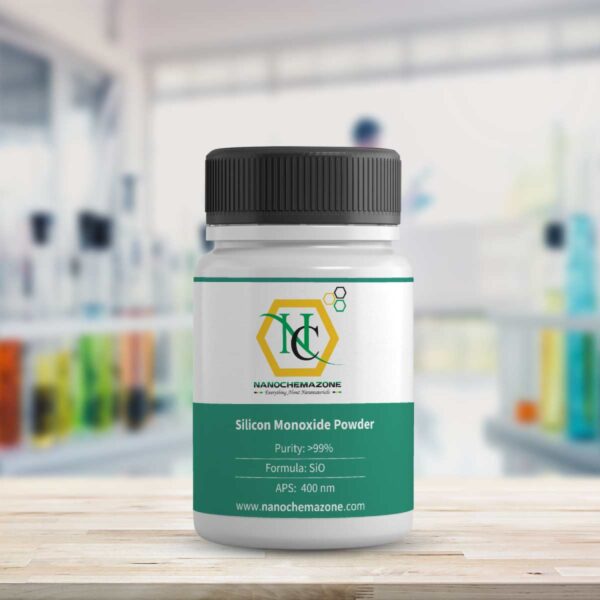
Silicon Monoxide Powder
Silicon Monoxide (SiO)
Product Name: Silicon Monoxide Powder
| Product Name | Silicon Monoxide |
| Cat No. | NCZ-MN-056/20 |
| CAS No. | 10097-28-6 |
| MF | SiO |
| Purity | >99% |
| APS | 400 nm (Customizable) |
| Appearance | Black Brown Powder |
| Molecular Weight | 44.08 |
| Melting Point | 1702°C |
| Boiling Point | 1880°C |
| Density | 2.13g/cm³ |
| Refractive index | 1.980 |
| Application | Plating of optical equipment such as lens |
| Crushing to submicron level below D50 | 500 nm is also available |
Silicon Monoxide Chemical component (standard value): ppm max
| Fe | <20 ppm |
| Al | <20 ppm |
| Cu | <10 ppm |
| Ti | <10 ppm |
| Ca | <10 ppm |
| Mn | <30 ppm |
Silicon Monoxide Application Fields:
Lithium-ion secondary battery anode material precursors to prepare silicon-based anode material Fine ceramic, synthetic raw materials; such as silicon nitride and silicon carbide Because silicon monoxide fine powder is very active, it can be used as fine ceramic, synthetic raw materials, such as silicon nitride and silicon carbide fine ceramic powder raw materials. Used for the preparation of optical glass and semiconductor materials.
Evaporate it in a vacuum and coat it on the metal mirror surface of the optical instrument as a protective film. Preparation of semiconductor materials.
The hunt is on advanced battery materials with enhanced storage capacity, higher energy density, and better cycle characteristics than traditional lithium-ion batteries. Conventional lithium-ion batteries rely on graphite-based anodes, whose well-established properties aren’t ideal for meeting the growing consumer demand for high-performance electronics, such as smartphones, laptops, and electric vehicles. Current research focuses on developing new alternatives that perform better and are safer than lithium-ion, and Nanochemazone is leading the way.
Silicon monoxide is a promising alternative to graphite because of its high specific gravity, low volume expansion, and small initial surface area. Silicon-based anodes can increase capacity ten times over standard graphite, allowing smaller batteries to produce the same amount of power or increasing the ability of a battery of the same size. This is possible because of the internal channels within the silicon monoxide Nanospheres. These channels allow lithium ions to flow rapidly for quick charging, and they shorten the paths for a boost in power.
Nanochemazone offers a 99.99% pure silicon monoxide powder prepared using chemical vapor deposition, suitable for secondary battery anode material precursors to prepare silicon-based anode materials and fine ceramic, synthetic raw materials. Our silicon monoxide battery material is prized by researchers and innovators around the world for its quality, purity, and consistency.
Silicon Monoxide SiO Related Information
Silicon Monoxide Powder Storage Conditions:
Airtight sealed, avoid light and keep dry at room temperature.
Please contact us for customization and price inquiry
Email: contact@nanochemazone.com
Note: We supply different size ranges of Nano and micron as per the client’s requirements and also accept customization in various parameters.
Reviews
There are no reviews yet.