
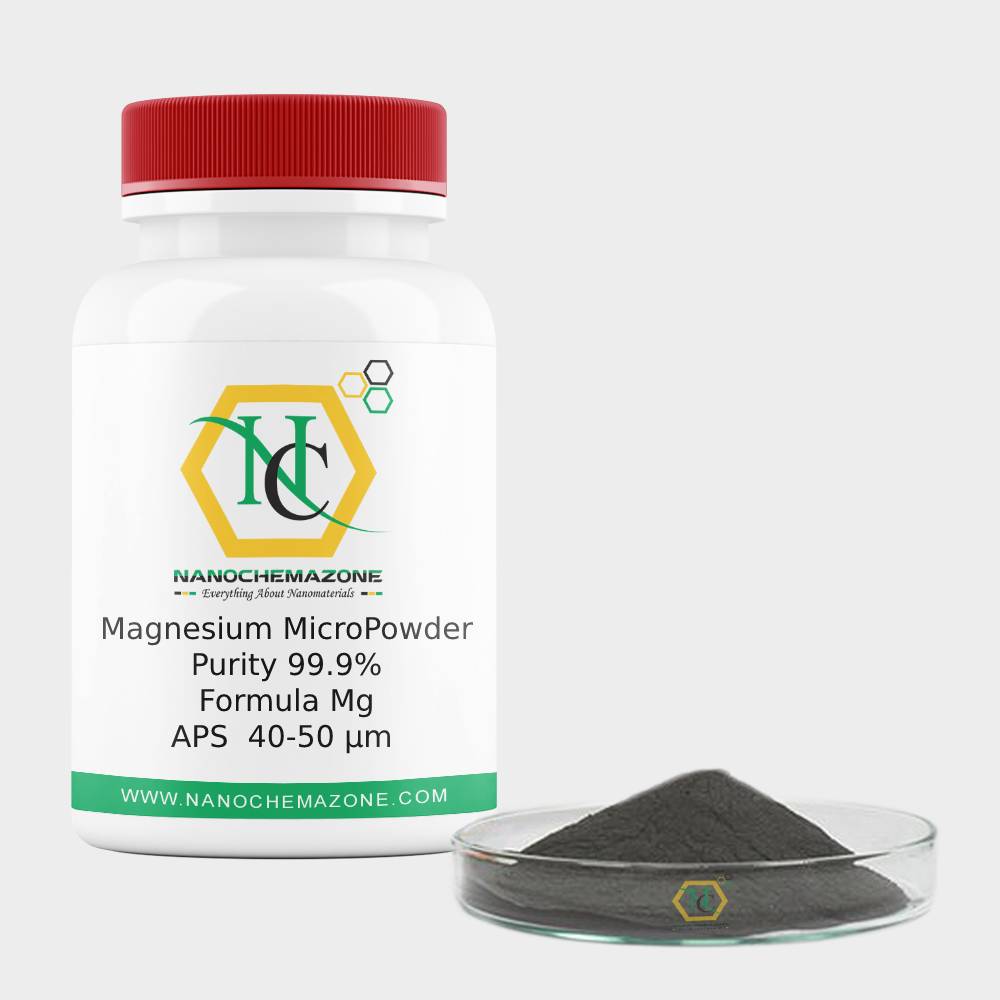

Magnesium Micro Powder
₹0.00
Magnesium Micro Powder
Product Name: Magnesium Micro Powder
| Product | Magnesium Micro Powder |
| CAS No. | 7439-95-4 |
| Appearance | Gray Powder |
| Purity | 99.9% |
| APS | 40-50 µm (Can be customized) |
| Ingredient | Mg |
| Product Code | NCZ-NSC338/20 |
Magnesium Micro Powder Description
Magnesium Micro Powder is a chemical element with the symbol Mg and atomic number. It is a shiny gray solid which bears a close physical resemblance to the other five elements in the second column or alkaline earth metals of the periodic table:
all group elements have the same electron configuration in the outer electron shell and a similar crystal structure. Magnesium is the ninth most abundant element in the universe. It is produced in large, aging stars from the sequential addition of three helium nuclei to a carbon nucleus. When such stars explode as supernovas, much of the magnesium is expelled into the interstellar medium where it may recycle into new star systems.
Magnesium is the eighth-most abundant element in the Earth’s crust and the fourth most common element in the Earth (after iron, oxygen, and silicon), making up 13% of the planet’s mass and a large fraction of the planet’s mantle. It is the third most abundant element dissolved in seawater, after sodium and chlorine. Magnesium occurs naturally only in combination with other elements, where it invariably has a +2 oxidation state. The free element (metal) can be produced artificially and is highly reactive (though in the atmosphere, it is soon coated in a thin layer of oxide that partly inhibits reactivity – see passivation). The free metal burns with a characteristic brilliant-white light.
The metal is now obtained mainly by electrolysis of magnesium salts obtained from brine and is used primarily as a component in aluminum-magnesium alloys, sometimes called magnalium or magnelium. Magnesium is less dense than aluminum, and the alloy is prized for its combination of lightness and strength. Magnesium is the eleventh most abundant element by mass in the human body and is essential to all cells and some 300 enzymes. Magnesium ions interact with polyphosphate compounds such as ATP, DNA, and RNA. Hundreds of enzymes require magnesium ions to function. Magnesium compounds are used medicinally as common laxatives, antacids e.g., milk of magnesia, and to stabilize abnormal nerve excitation or blood vessel spasm in such conditions as eclampsia.
Related Information of Magnesium Micro Powder
Storage Conditions:
Airtight sealed, avoid light and keep dry at room temperature.
Please contact us for customization and price inquiry
Email: contact@nanochemazone.com
Note: We supply different size ranges of Nano and micron as per the client’s requirements and also accept customization in various parameters.
Note: For pricing & ordering information, please contact us at sales@nanochemazone.com
Please contact us for quotes on Larger Quantities & Customization. E-mail: contact@nanochemazone.com
Customization:
You must be logged in to post a review.
Related products
Aluminum Powder
Aluminum Powder
Product Name: Al Powder
| Product | Al Powder |
| CAS No. | 7429-90-5 |
| Appearance | Grey |
| Purity | 99.9% |
| APS | 1 – 5 Micron (Can be customized) |
| Ingredient | Al+3 |
| Product Code | NCZ-NSC-163/20 |
Description of Al (Aluminum Powder)
| 3D printing metal Powder
Powder metallurgy, injection molding, spray painting, etc. |
Al Powder Related Information
Storage Conditions:
Airtight sealed, avoid light, and keep dry at room temperature.
Please email us for the customization.
Email: contact@nanochemazone.com
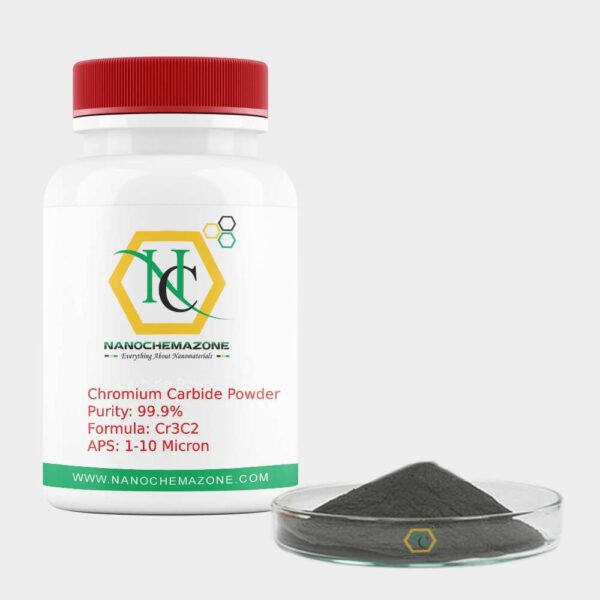
Chromium Carbide Cr3C2 Powder
Product Name: Chromium Carbide Cr3C2 Powder
| Product | Chromium Carbide |
| Colour | Gray Powder |
| Purity | ≥ 99.9% |
| Particle size | 1-10 µM (customizable) |
| Ingredient/MF | Cr3C2 |
| Product Code | NCZ-C-101/20 |
| CAS Number | 12012-35-0 |
Chromium Carbide Cr3C2 Powder APPLICATION FIELDS
Chromium Carbide Cr3C2 Powder is a ceramic compound that exists in several different chemical compositions: Cr3C2, Cr7C3, and Cr23C6. At standard conditions, it exists as a gray solid.
It is extremely hard and corrosion-resistant.
It is also a refractory compound, which means that it retains its strength at high temperatures as well.
These properties make use as an additive to metal alloys. When chromium carbide crystals are integrated into the surface of a metal it improves the wear resistance and corrosion resistance of the metal and maintains these properties at elevated temperatures.
Cr3C2 powder is mixed with solid nickel-chromium. This mixture is then heated to very high temperatures and sprayed onto the object being coated where it forms a protective layer. This layer is essentially its own metal matrix composite, consisting of hard ceramic Cr3C2 particles embedded in a nickel-chromium matrix.
Cr3C2 prevents large grains from forming in the composite, which results in a fine-grained structure of superior toughness.
Chromium Carbide Cr3C2 Application:
- Used as high temperature resistant and wear-resistant surface materials
- Used for welding and flux-cored wire
- Chromium carbide is useful in the surface treatment of metal components.
- Chromium carbide is used to coat the surface of another metal in a technique known as thermal spraying.
- Chromium carbide is used as an additive in cutting tools in order to improve toughness by preventing the growth of large grains.
Chromium Carbide Cr3C2 Properties:
There are three different crystal structures for chromium carbide corresponding to the three different chemical compositions. Cr23C6 has a cubic crystal structure and a Vickers hardness of 976 kg/mm2. Cr7C3 has a hexagonal crystal structure and a microhardness of 1336 kg/mm2.
Cr3C2 is the most durable of the three compositions and has an orthorhombic crystal structure with a microhardness of 2280 kg/mm2. For this reason, Cr3C2 is the primary form of chromium carbide used in surface treatment.
Please email us for the customization.
Email: contact@nanochemazone.com
Please contact us for customization and price inquiry
Note: We supply different size ranges of Nano and micron as per the client’s requirements and also accept customization in various parameters.
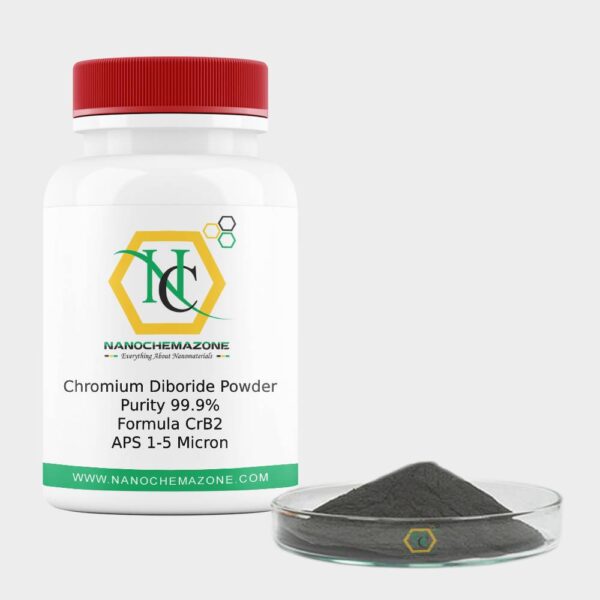
Chromium Diboride Powder
Chromium Diboride Powder
| MF: | CrB2 |
| Chemical Name |
Chromium Diboride Powder |
| Appearance | Silver, Ceramic Material |
| EINECS | 234-499-3 |
| Purity: | 99.9% |
| Density: | 5.20 g/cm3 |
| Product Number: | NCZ-NCD-117/20 |
| Cas Number: | 12007-16-8 |
RELATED INFORMATION
Please email us for the customization.
Email: contact@nanochemazone.com
Please contact us for customization and price inquiry
Note: We supply different size ranges of Nano and micron as per the client’s requirements and also accept customization in various parameters.
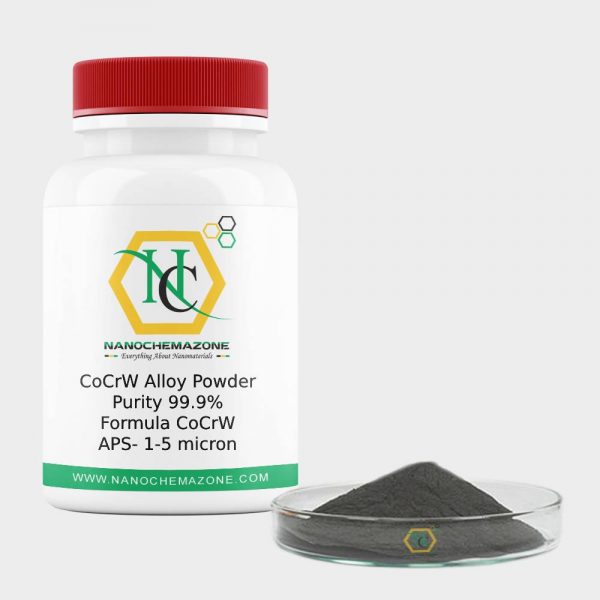
CoCrW Alloy Powder
Product Name: CoCrW Alloy Powder
| Product |
CoCrW Alloy Powder |
| CAS No. | 7440-50-8/7440-47-3 |
| Appearance | Grey |
| Purity | 99.9% |
| APS | 1 – 5 Microns (Can be customized) |
| Ingredient | CoCrW |
| Product Code | NCZ-NSC-164/20 |
Description:
| 3D printing metal Powder
Powder metallurgy(PM), injection molding(MIM), spray painting(SP) etc. |
RELATED INFORMATION
Storage Conditions:
Airtight sealed, avoid light, and keep dry at room temperature.
Please email us for the customization.
Email: contact@nanochemazone.com
Note: We supply different size ranges of Nano and micron as per the client’s requirements and also accept customization in various parameters.
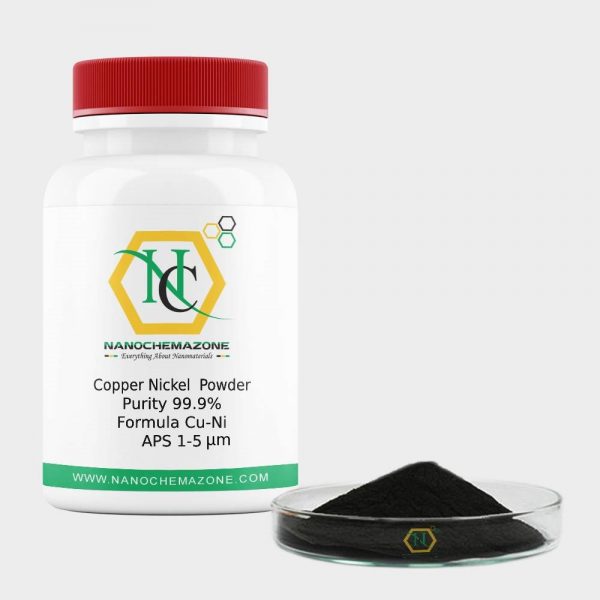
Copper Nickel Micron Powder
Copper Nickel Micron Powder
Product Name: Copper-Nickel Micron Powder
| Product | Copper Nickel Powder |
| CAS No. | 12357-13-0 |
| Appearance | Black Powder |
| Purity | 99.9% |
| APS | 1 – 5 Microns (Can be customized) |
| Ingredient | Cu-Ni |
| Product Code | NCZ-NSC-193/20 |
Copper Nickel Micron Powder Description:
- powder metallurgy for copper-based or nickel-based alloy
- the surface coating of maritime vessels seawater corrosion-resistant materials
- lubricant wear-resistant, anti-wear additives
- conductive, thermally conductive filler material
Copper Nickel Micron Powder RELATED INFORMATION
Storage Conditions:
Airtight sealed, avoid light and keep dry at room temperature.
Please contact us for customization and price inquiry
Email: contact@nanochemazone.com
Note: We supply different size ranges of Nano and micron as per the client’s requirements and also accept customization in various parameters.
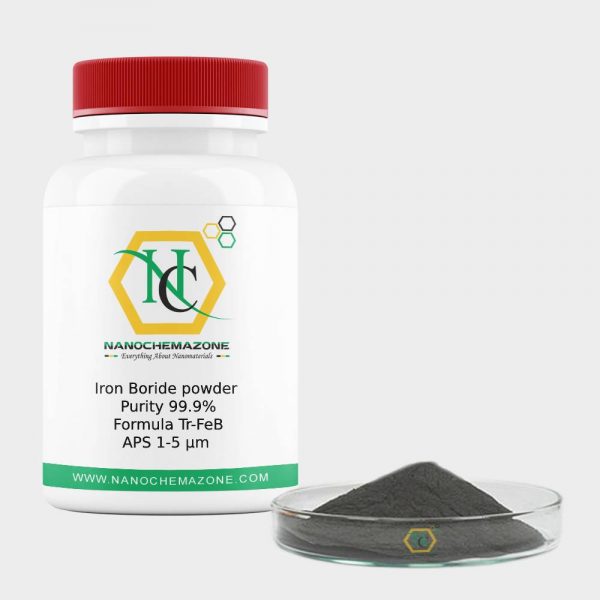
Iron Boride Powder
Product Name: Iron Boride Powder
| MF: | Tr-FeB |
| Chemical Name | Iron Boride Powder |
| Color | Grey Powder |
| EINECS Number: | 234-489-9 |
| Purity: | 99.9% |
| Density | ~7 g/cm3 |
| Product Number: | NCZ-NIB-112/20 |
| Cas Number: | 12006-84-8 |
Iron Boride Powder Description
Iron Boride Powder is often used to improve abrasion resistance, corrosion resistance, wear resistance, and oxidation resistance. It is used in oil and gas refinery, chemical extraction, automotive agricultural, stamping, textile extrusion, and injection molding industries. Iron-based coatings recently gained attention for their mechanical, frictional, and corrosion-resistant properties. As compared to the ceramic or cermet type of materials people have used before, iron-based materials are relatively inexpensive, less strategic, and can be produced economically by various thermal methods with ease of fabrication and machining.
Iron Boride Powder Related Information
Please email us for the customization.
Email: contact@nanochemazone.com
Please contact us for customization and price inquiry
Note: We supply different size ranges of Nano and micron as per the client’s requirements and also accept customization in various parameters.
Iron Boride Powder
Product Name: Iron Boride Powder
| MF: | Tr-FeB |
| Chemical Name | Iron Boride Powder |
| Color | Grey Powder |
| EINECS Number: | 234-489-9 |
| Purity: | 99.9% |
| Density | ~7 g/cm3 |
| Product Number: | NCZ-NIB-112/20 |
| Cas Number: | 12006-84-8 |
RELATED INFORMATION
Boriding is often used to improve abrasion resistance, corrosion resistance, wear resistance, and oxidation resistance. It is used in oil and gas refinery, chemical extraction, automotive agricultural, stamping, textile extrusion, and injection molding industries. Iron-based coatings recently gained attention for their mechanical, frictional, and corrosion-resistant properties. As compared to the ceramic or cermet type of materials people have used before, iron-based materials are relatively inexpensive, less strategic, and can be produced economically by various thermal methods with ease of fabrication and machining.
Please email us for the customization.
Email: contact@nanochemazone.com
Please contact us for customization and price inquiry
Note: We supply different size ranges of Nano and micron as per the client’s requirements and also accept customization in various parameters.
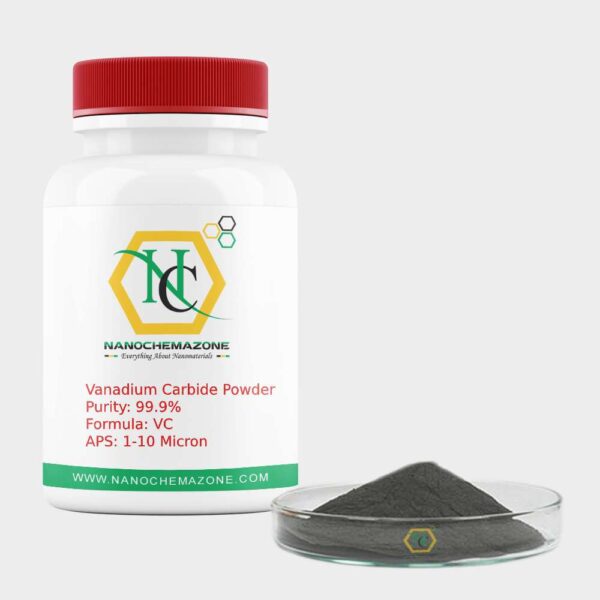
Vanadium Carbide Powder
Vanadium Carbide Powder
Product Name: Vanadium Carbide Powder
| Product | Vanadium Carbide Powder |
| Colour | Grey Powder |
| Purity | ≥ 99.9% |
| Particle size | 1-10 µM (customizable) |
| Ingredient/MF | VC |
| Product Code | NCZ-C-108/20 |
| CAS Number | 12070-10-9 |
Vanadium Carbide Description:
Vanadium carbide is the inorganic compound with the formula VC.
It is an extremely hard refractory ceramic material. With a hardness of 9-9.5 Mohs, it is possibly the hardest metal-carbide known.
It is of interest because it is prevalent in vanadium metal and alloys.
Vanadium carbide is Gray metallic powder with a cubic system structure of NaCl type, the crystalline constant is 4.182A.
The carbide is chemically stable and has excellent high-temperature property.
Application:
- Used in mechanical lapping
- Used as engineering ceramic materials
- Used for metallurgy refractory
- Used for temperature hot accidentally
- Used in faraday shield
- Applies in flinty domains and so on thin film, target material, welding material, hard alloy, cermet, aerospace
- May improve the hard alloy as the hard alloy and cermet’s chemical additive each performance.
- It can be used in cutting tool and steel industry,
- also can be used as an additive to fine the WC cemented carbide crystal to improve the property of alloy. 3. Used for erosion-resistant coatings; wear-resistance coatings; Corrosion-resistant coatings; Wear-resistant parts……
Vanadium Carbide Related Information
Please email us for the customization.
Email: contact@nanochemazone.com
Please contact us for customization and price inquiry
Note: We supply different size ranges of Nano and micron as per the client’s requirements and also accept customization in various parameters.
Reviews
There are no reviews yet.