


Molybdenum Disulfide Powder
₹0.00
Molybdenum Disulfide Powder
Product Name: Molybdenum Disulfide Powder
| Product Name | Molybdenum Disulfide Powder |
| Catalog No. | NCZ-NSC303/20 |
| CAS No. | 1317-33-5 |
| Purity | 99.9% |
| APS | 200 to 300 nm, 500 nm-800 nm, 1 – 5 µm (Customizable) |
| Molecular Formula | MoS2 |
| Molecular weight | 160.07 g/mol |
| Appearance | Powder |
| Color | Black Powder |
| Density | 5.06 g/cm³ |
| Melting Point | 1185 ° C (2165 ° F) |
Description of Molybdenum Disulfide Powder
Molybdenum disulfide (or moly) is an inorganic compound composed of molybdenum and sulfur. Its chemical formula is mos. The compound is classified as a transition metal dichalcogenide. It is a silvery black solid that occurs as the mineral molybdenite, the principal ore for molybdenum. is relatively unreactive. It is unaffected by dilute acids and oxygen. In appearance and feel, molybdenum disulfide is similar to graphite.
It is widely used as a dry lubricant because of its low friction and robustness. Bulk mos. is a diamagnetic, indirect bandgap semiconductor similar to silicon, with a bandgap MoS2 is naturally found as either molybdenite, a crystalline mineral, or jordanite, a rare low-temperature form of molybdenite. Molybdenite ore is processed by flotation to give relatively pure Mos. the main contaminant is carbon. MOs also arises by thermal treatment of virtually all molybdenum compounds with hydrogen sulfide or elemental sulfur and can be produced by metathesis reactions from molybdenum pentachloride.
MoS2 excels as a lubricating material (see below) due to its layered structure and low coefficient of friction. Interlayer sliding dissipates energy when shear stress is applied to the material. Extensive work has been performed to characterize the coefficient of friction and shear strength of MoS2 in various atmospheres.
The shear strength of MoS2 increases as the coefficient of friction increases. This property is called superlubricity. At ambient conditions, the coefficient of friction for MoS2 was determined to be 0.150, with a corresponding estimated shear strength of 56.0 MPa. Direct methods of measuring the shear strength indicate that the value is closer to the wear resistance of MoS2 in lubricating applications can be increased by doping MoS2 with chromium.
Flakes thinner than 5 layers undergo homogenous bending and rippling, while flakes around 10 layers are thickly delaminated through interlayer sliding. Flakes with more than 20 layers exhibited a kinking mechanism during micromechanical cleavage. The cleavage of these flakes was also determined to be reversible due to the nature of van der Waals bonding.
Related Information of Molybdenum Disulfide Powder:
Storage Conditions
Airtight sealed, avoid light, and keep dry at room temperature.
Please contact us for customization and price inquiry Email: contact@nanochemazone.com
Note: We supply different size ranges of Nano and micron as per the client’s requirements and also accept customization in various parameters.
Note: For pricing & ordering information, please contact us at sales@nanochemazone.com
Please contact us for quotes on Larger Quantities & Customization. E-mail: contact@nanochemazone.com
Customization:
You must be logged in to post a review.
Related products
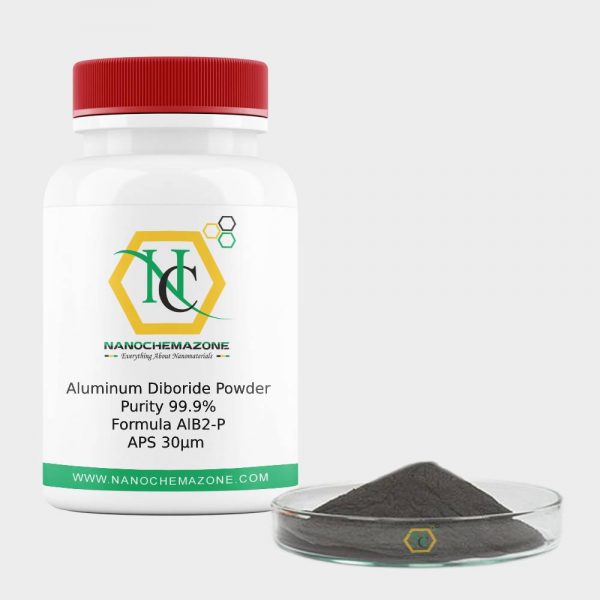
Aluminum Diboride Powder
Aluminum Diboride Powder
| MF: | AlB2-P |
| Chemical Name | Aluminum Diboride |
| Color | Gray Black |
| EINECS | 234-923-7 |
| Purity: | 99.9% |
| Particle size | 30µm |
| Product Number: | NCZ-SC-113/20 |
| Cas Number: | 12041-50-8 |
Aluminum Diboride Powder Description
Aluminum boride Powder is an ionic compound, with a hexagonal crystal structure. Aluminum boride at an absolute temperature slightly 40K (equivalent to -233 ℃) will be transformed into a superconductor. And its actual operating temperature is 20 ~ 30K. To reach this temperature, we can use liquid neon, liquid hydrogen, or closed-cycle refrigerator to finish cooling. Compared to the current industry using liquid helium to cool the niobium alloy (4K), these methods are simpler and more economical. Once it is doped with carbon or other impurities, magnesium diboride powder in a magnetic field, or there is a current passing, the ability to maintain the superconducting is as much as niobium alloys, or even better.
Aluminum Diboride Powder Related Information
Please email us for the customization. Email: contact@nanochemazone.com Please contact us for customization and price inquiry Note: We supply different size ranges of nano and micron size powder as per the client’s requirements and also accept customization in various parameters.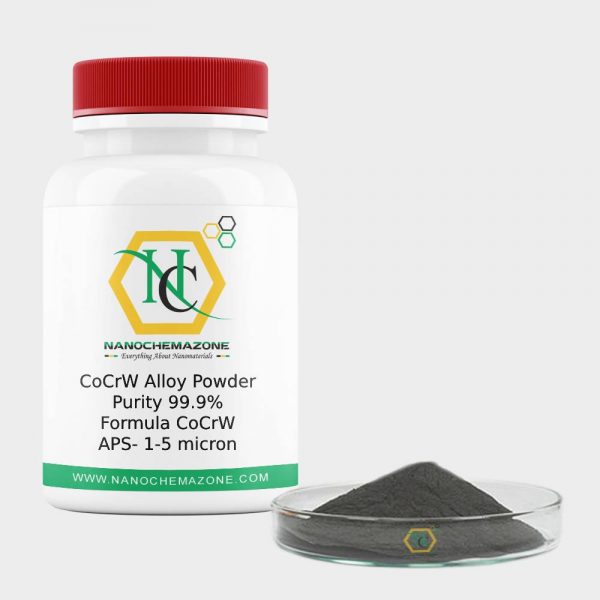
CoCrW Alloy Powder
Product Name: CoCrW Alloy Powder
| Product |
CoCrW Alloy Powder |
| CAS No. | 7440-50-8/7440-47-3 |
| Appearance | Grey |
| Purity | 99.9% |
| APS | 1 – 5 Microns (Can be customized) |
| Ingredient | CoCrW |
| Product Code | NCZ-NSC-164/20 |
Description:
| 3D printing metal Powder Powder metallurgy(PM), injection molding(MIM), spray painting(SP) etc. |
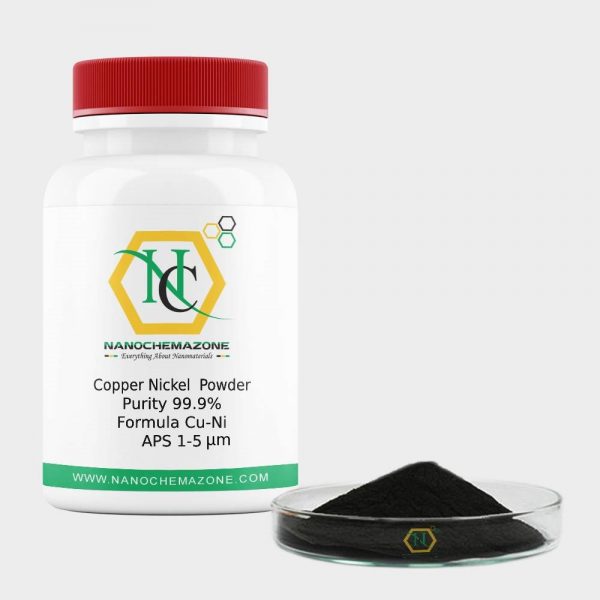
Copper Nickel Micron Powder
Copper Nickel Micron Powder
Product Name: Copper-Nickel Micron Powder
| Product | Copper Nickel Powder |
| CAS No. | 12357-13-0 |
| Appearance | Black Powder |
| Purity | 99.9% |
| APS | 1 – 5 Microns (Can be customized) |
| Ingredient | Cu-Ni |
| Product Code | NCZ-NSC-193/20 |
Copper Nickel Micron Powder Description:
- powder metallurgy for copper-based or nickel-based alloy
- the surface coating of maritime vessels seawater corrosion-resistant materials
- lubricant wear-resistant, anti-wear additives
- conductive, thermally conductive filler material
Copper Nickel Micron Powder RELATED INFORMATION
Storage Conditions: Airtight sealed, avoid light and keep dry at room temperature. Please contact us for customization and price inquiry Email: contact@nanochemazone.com Note: We supply different size ranges of Nano and micron as per the client’s requirements and also accept customization in various parameters.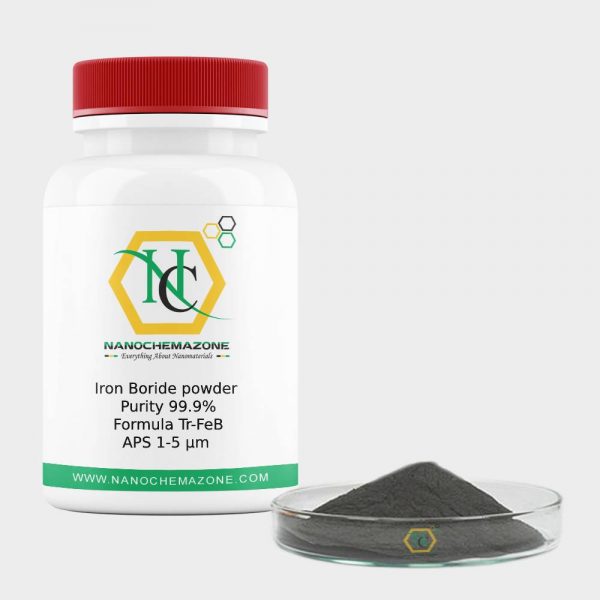
Iron Boride Powder
Product Name: Iron Boride Powder
| MF: | Tr-FeB |
| Chemical Name | Iron Boride Powder |
| Color | Grey Powder |
| EINECS Number: | 234-489-9 |
| Purity: | 99.9% |
| Density | ~7 g/cm3 |
| Product Number: | NCZ-NIB-112/20 |
| Cas Number: | 12006-84-8 |
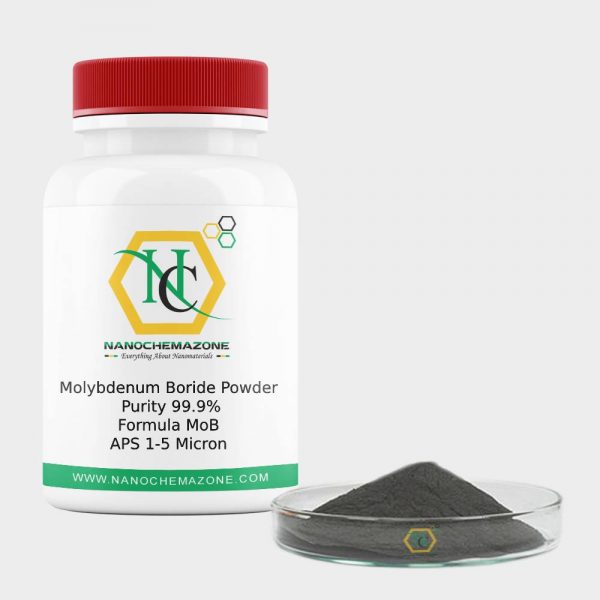
Molybdenum Boride Powder
Molybdenum Boride Powder
Product Name: Molybdenum Boride Powder
| MF: | Tr-MoB2 |
| Chemical Name | Molybdenum Boride Powder |
| Color | Yellow Gray |
| EINECS No.: | 234-502-8 |
| Purity: | 99.9% |
| Density: | 9.26 g/ cm3 |
| Product Number: | NCZ-NMB-112/20 |
| Cas Number: | 12006-99-4 |
Molybdenum Boride Powder
RELATED INFORMATION
It's mainly used as an additive of electronic tungsten, molybdenum alloy, etc., and can also be used in the manufacture of wear semiconductor thin film and coating materials. Please email us for the customization. Email: contact@nanochemazone.com Please contact us for customization and price inquiry Note: We supply different size ranges of Nano and micron as per the client’s requirements and also accept customization in various parameters.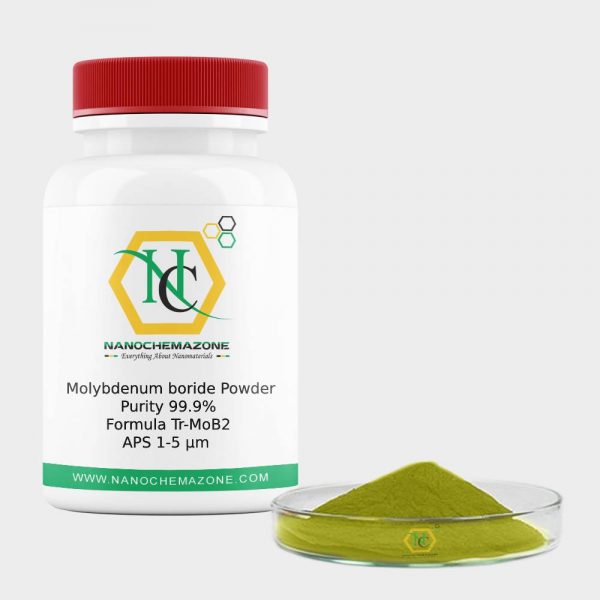
Molybdenum Boride Powder
Molybdenum Boride Powder
Product Name: Molybdenum Boride Powder
| MF: | Tr-MoB2 |
| Chemical Name | Boride Powder |
| Color | Yellow Gray |
| EINECS No.: | 234-502-8 |
| Purity: | 99.9% |
| Density: | 9.26 g/ cm3 |
| Product Number: | NCZ-NMB-112/20 |
| Cas Number: | 12006-99-4 |
RELATED INFORMATION
It's mainly used as an additive of electronic tungsten, molybdenum alloy, etc., and can also be used in the manufacture of wear semiconductor thin film and coating materials. Please email us for the customization. Email: contact@nanochemazone.com Please contact us for customization and price inquiry Note: We supply different size ranges of Nano and micron as per the client’s requirements and also accept customization in various parameters.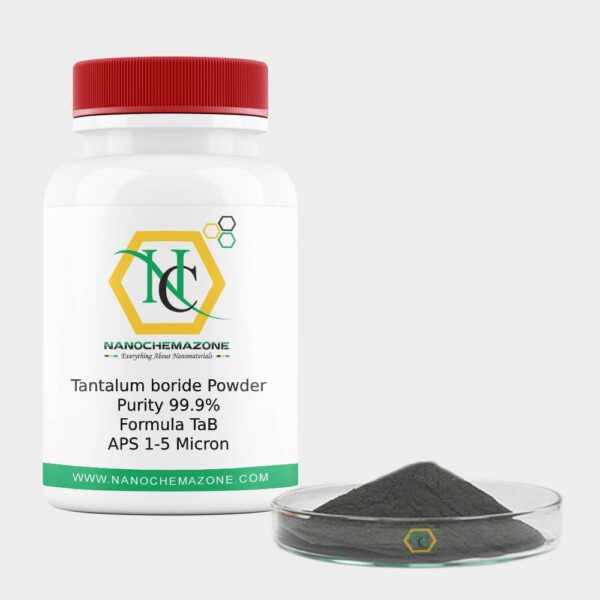
Tantalum boride Powder
Product Name: Tantalum boride Powder
| MF: | TaB |
| Chemical Name |
Tantalum boride Powder |
| Color | Gray |
| EINECS | 234-496-7 |
| Purity: | 99.9% |
| Molecular weight: | 191.76 |
| Product Number: | NCZ-SC-116/20 |
| Cas Number: | 12045-19-1 |
| Density: | 14.2 g/cm3 |
Tantalum boride Powder RELATED INFORMATION
Please email us for the customization. Email: contact@nanochemazone.com Please contact us for customization and price inquiry Note: We supply different size ranges of Nano and micron as per the client’s requirements and also accept customization in various parameters.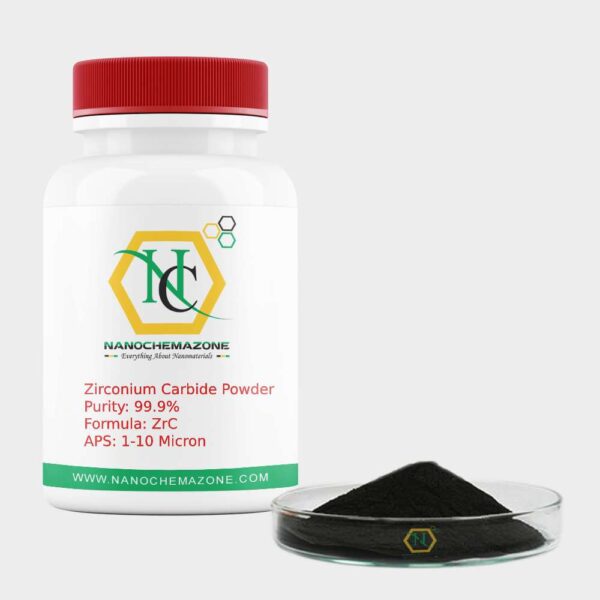
Zirconium Carbide Powder
Zirconium Carbide Powder
Product Name: Zirconium Carbide Powder
| Product | Zirconium Carbide Powder |
| Colour | Black |
| Purity | ≥ 99.9% |
| Particle size | 1-10 µM (customizable) |
| Ingredient/MF | ZrC |
| Product Code | NCZ-C-110/20 |
| CAS Number | 12070-14-3 |
Reviews
There are no reviews yet.