


Phthalocyanine Nano Powder
₹0.00
Phthalocyanine Nano Powder
Product Name: Phthalocyanine Nano Powder
| Product Name | Phthalocyanine Nano Powder |
| Stock No | NCZ-NSC299-/20 |
| CAS No | 574-93-6 |
| Purity | 99.9% |
| APS | 500nm (0.5um) (Can be customized) |
| Molecular Formula | C32H18N8 |
| Form | Powder |
| Color | Blue Powder |
| Molar mass | 514.552 g·mol−1 |
Phthalocyanine Nano Powder Description
Phthalocyanine Nano Powder is a large, aromatic, macrocyclic, organic compound with the and is of theoretical or specialized interest. It is composed of four isoindole units linked by nitrogen atoms. H2Pc has a two-dimensional geometry and a ring system consisting of 18 π-electrons. The extensive delocalization of the π-electrons affords the molecule useful properties, lending itself to applications in dyes and pigments. Metal complexes derived from Pc2.The conjugate base of H2Pc, are valuable in catalysis, organic solar cells, and photodynamic therapy. Phthalocyanine and derived metal complexes (MPc) tend to aggregate and, thus, have low solubility in common solvents. Benzene at 40 °C dissolves less than a milligram of H 2Pc or CuPc per liter. H 2Pc and CuPc dissolve easily in sulfuric acid due to the protonation of the nitrogen atoms bridging the pyrrole rings. Many phthalocyanine compounds are, thermally, very stable, and do not melt but can be sublimed. CuPc sublimes at above 500 °C under inert gases nitrogen, CO Substituted phthalocyanine complexes often have much higher solubility. They are less thermally stable and often can not be sublimed. Unsubstituted phthalocyanines strongly absorb light between 600 and 700 nm, thus these materials are blue or green. Substitution can shift the absorption towards longer wavelengths, changing color from pure blue to green to colorless (when the absorption is in the near-infrared). There are many derivatives of the parent phthalocyanine, where either carbon atoms of the macrocycle are exchanged for nitrogen atoms or the peripheral hydrogen atoms are substituted by functional groups like halogens, hydroxyl, amino, alkyl, aryl, thiol, alkoxy and nitrosyl groups. These modifications allow for the tuning of the electrochemical properties of the molecule such as absorption and emission wavelengths and conductance.
Phthalocyanine Nano Powder Related Information
Storage Conditions:
Airtight sealed, avoid light, and keep dry at room temperature.
Please contact us for customization and price inquiry
Email: contact@nanochemazone.com
Note: We supply different size ranges of Nano and micron as per the client’s requirements and also accept customization in various parameters.
Note: For pricing & ordering information, please contact us at sales@nanochemazone.com
Please contact us for quotes on Larger Quantities & Customization. E-mail: contact@nanochemazone.com
Customization:
You must be logged in to post a review.
Related products
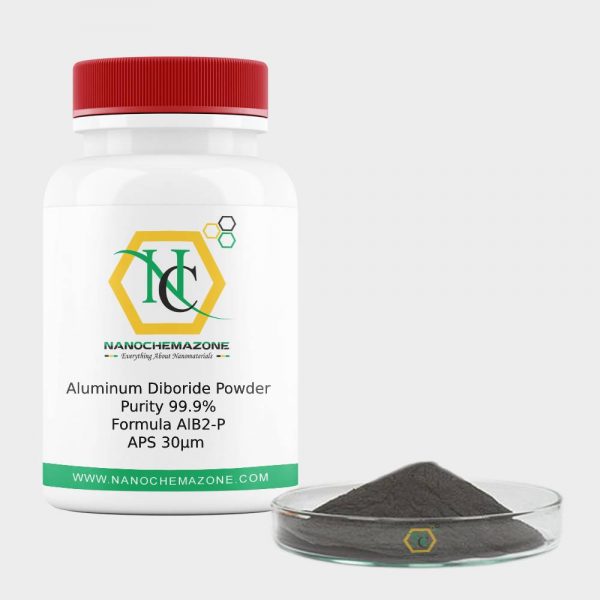
Aluminum Diboride Powder
Aluminum Diboride Powder
Product Name: Aluminum Diboride Powder
| MF: | AlB2-P |
| Chemical Name | Aluminum Diboride |
| Color | Gray Black |
| EINECS | 234-923-7 |
| Purity: | 99.9% |
| Particle size | 30 µm (Customizable) |
| Product Number: | NCZ-SC-113/20 |
| Cas Number: | 12041-50-8 |
Aluminum Diboride Powder RELATED INFORMATION
Aluminum boride is an ionic compound, with a hexagonal crystal structure. Aluminum boride at an absolute temperature slightly 40K (equivalent to -233 ℃) will be transformed into a superconductor. And its actual operating temperature is 20 ~ 30K. To reach this temperature, we can use liquid neon, liquid hydrogen, or closed-cycle refrigerator to finish cooling. Compared to the current industry using liquid helium to cool the niobium alloy (4K), these methods are simpler and more economical. Once it is doped with carbon or other impurities, magnesium diboride in a magnetic field, or there is a current passing, the ability to maintain the superconducting is as much as niobium alloys, or even better.
Please email us for the customization. Email: contact@nanochemazone.com Please contact us for customization and price inquiry Note: We supply different size ranges of nano and micron size powder as per the client’s requirements and also accept customization in various parameters.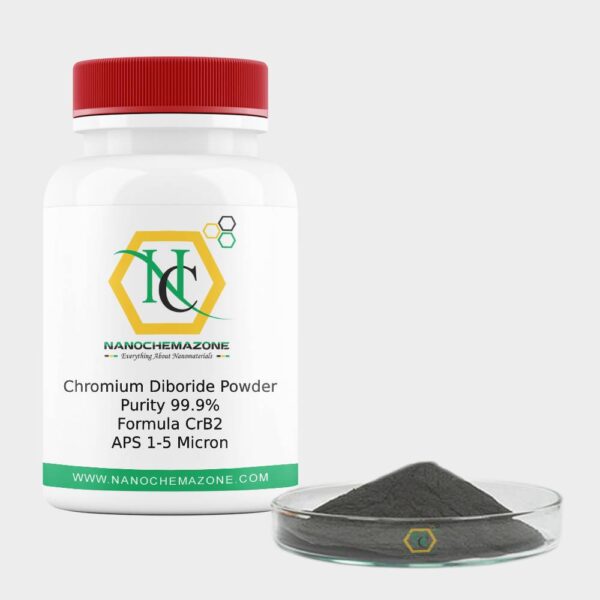
Chromium Diboride Powder
Chromium Diboride Powder
| MF: | CrB2 |
| Chemical Name |
Chromium Diboride Powder |
| Appearance | Silver, Ceramic Material |
| EINECS | 234-499-3 |
| Purity: | 99.9% |
| Density: | 5.20 g/cm3 |
| Product Number: | NCZ-NCD-117/20 |
| Cas Number: | 12007-16-8 |
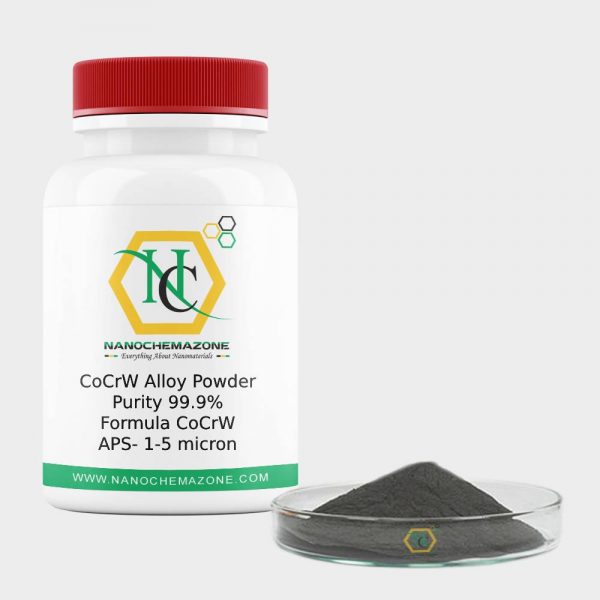
CoCrW Alloy Powder
Product Name: CoCrW Alloy Powder
| Product |
CoCrW Alloy Powder |
| CAS No. | 7440-50-8/7440-47-3 |
| Appearance | Grey |
| Purity | 99.9% |
| APS | 1 – 5 Microns (Can be customized) |
| Ingredient | CoCrW |
| Product Code | NCZ-NSC-164/20 |
Description:
| 3D printing metal Powder Powder metallurgy(PM), injection molding(MIM), spray painting(SP) etc. |
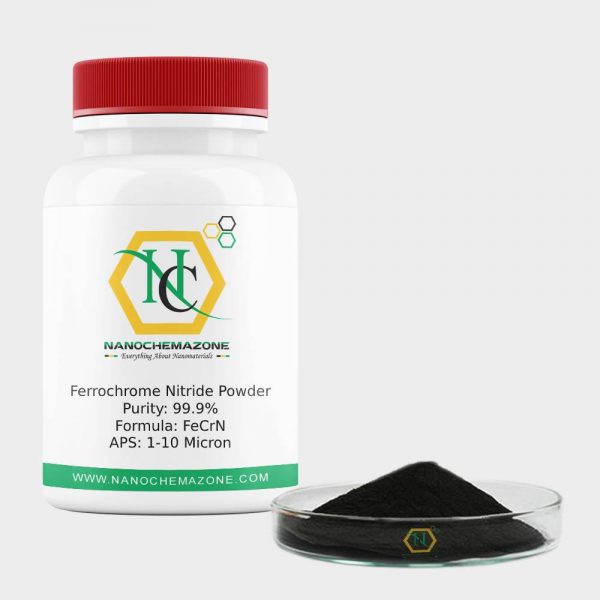
Ferrochrome Nitride Powder
Ferrochrome Nitride Powder
Product Name: Ferrochrome Nitride Powder
| Product | Ferrochrome Nitride Powder |
| Colour | Black Powder |
| Purity | ≥ 99.9% |
| Particle size | 1-10 µM (customizable) |
| Ingredient/MF | FeCrN |
| Product Code | NCZ-CN-151/20 |
| CAS Number | 7439-89-6, / 24094-93-7 |
Ferrochrome Nitride Powder Description:
Ferrochrome nitride is widely used in electric furnace and oxygen converter smelting nitrogen steel. Nitrogen is an element of austenite formation, It is used as a component to add chromium manganese and chromium manganese nickel stainless steel to replace the shortage of nickel.Ferrochrome Nitride Powder Application:
Ferrochrome, or ferrochromium (FeCr) is a type of ferroalloy, that is, an alloy of chromium and iron, generally containing 50 to 70% chromium by weight.
Ferrochrome is produced by electric arc carbothermic reduction of chromite. Most of the global output is produced in and India, which have large domestic chromite resources. Increasing amounts are coming from Russia and China.
Production of steel, especially that of stainless steel with a chromium content of 10 to 20%, is the largest consumer and the main application of ferrochrome.
Ferrochrome production is essentially a carbothermic reduction operation taking place at high temperatures. Chromium ore (an oxide of Cr and Fe) is reduced by coal and coke to form the iron-chromium alloy.
The heat for this reaction can come from several forms, but typically from the electric arc formed between the tips of electrodes at the bottom of the furnace and the furnace hearth.
This arc creates temperatures of about 2,800 °C (5,070 °F). In the process of smelting, huge amounts of electricity are consumed, making production very expensive in countries where power costs are high.
The tapping of the material from the furnace takes place intermittently. When enough smelted ferrochrome has accumulated in the furnace hearth.
The tap hole is drilled open and a stream of molten metal and slag rushes down a trough into a chill or ladle. Ferrochrome solidifies in large castings that are crushed for sale or further processed.
Ferrochrome is generally classified by the amount of carbon and chrome it contains.
The vast majority of FeCr produced is "charge chrome" from South Africa, with high carbon being the second largest segment followed by the smaller sectors of low carbon and intermediate carbon material.
Ferrochrome Nitride Powder Related Information
Please email us for the customization. Email: contact@nanochemazone.com Please contact us for customization and price inquiry Note: We supply different size ranges of Nano and micron as per the client’s requirements and also accept customization in various parameters.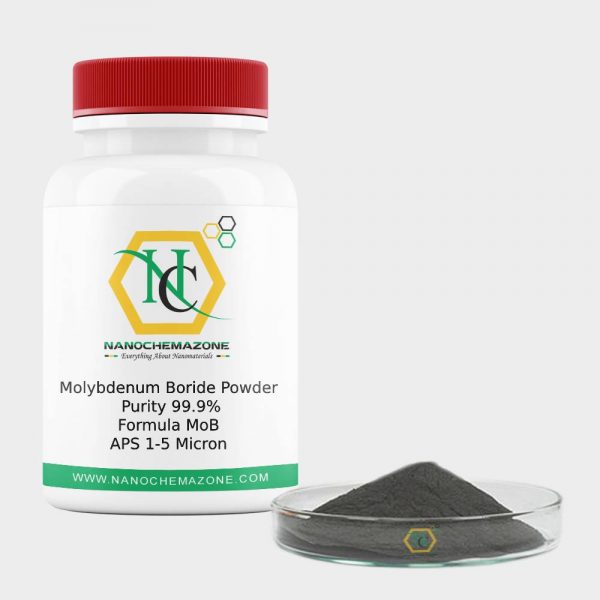
Molybdenum Boride Powder
Molybdenum Boride Powder
Product Name: Molybdenum Boride Powder
| MF: | Tr-MoB2 |
| Chemical Name | Molybdenum Boride Powder |
| Color | Yellow Gray |
| EINECS No.: | 234-502-8 |
| Purity: | 99.9% |
| Density: | 9.26 g/ cm3 |
| Product Number: | NCZ-NMB-112/20 |
| Cas Number: | 12006-99-4 |
Molybdenum Boride Powder
RELATED INFORMATION
It's mainly used as an additive of electronic tungsten, molybdenum alloy, etc., and can also be used in the manufacture of wear semiconductor thin film and coating materials. Please email us for the customization. Email: contact@nanochemazone.com Please contact us for customization and price inquiry Note: We supply different size ranges of Nano and micron as per the client’s requirements and also accept customization in various parameters.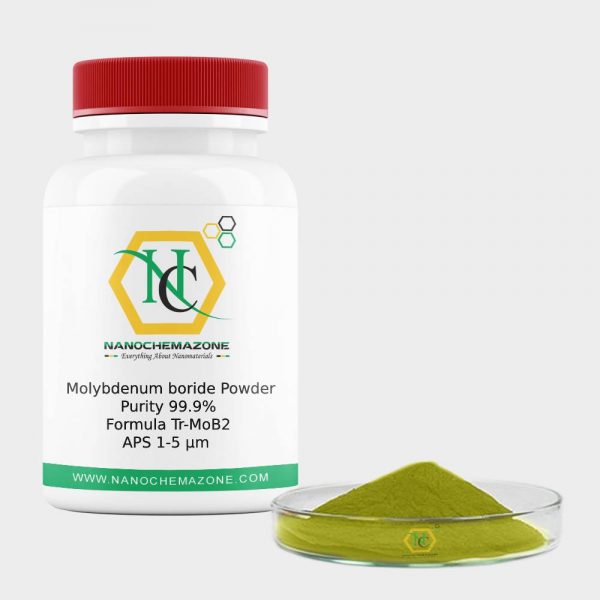
Molybdenum Boride Powder
Molybdenum Boride Powder
Product Name: Molybdenum Boride Powder
| MF: | Tr-MoB2 |
| Chemical Name | Boride Powder |
| Color | Yellow Gray |
| EINECS No.: | 234-502-8 |
| Purity: | 99.9% |
| Density: | 9.26 g/ cm3 |
| Product Number: | NCZ-NMB-112/20 |
| Cas Number: | 12006-99-4 |
RELATED INFORMATION
It's mainly used as an additive of electronic tungsten, molybdenum alloy, etc., and can also be used in the manufacture of wear semiconductor thin film and coating materials. Please email us for the customization. Email: contact@nanochemazone.com Please contact us for customization and price inquiry Note: We supply different size ranges of Nano and micron as per the client’s requirements and also accept customization in various parameters.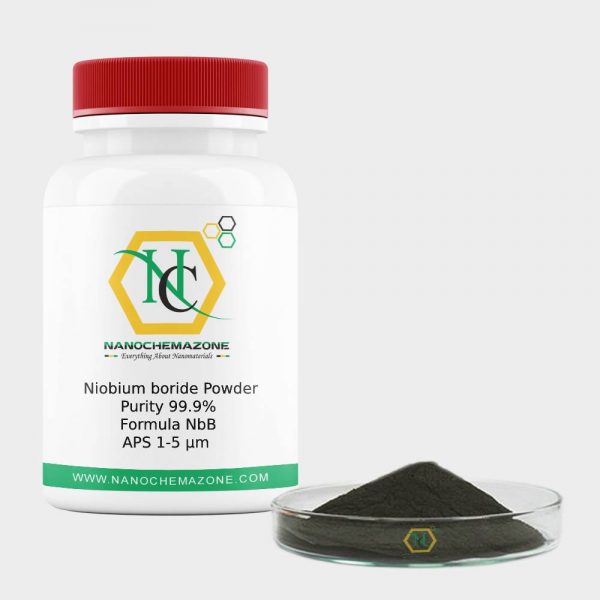
Niobium Boride Powder
Niobium Boride Powder
Product Name: Niobium Boride Powder
| MF | NbB |
| Chemical Name | Niobium Boride Powder |
| EINECS | 235-723-2 |
| Purity | 99.9% |
| Molecular weight | 103.72 |
| Product Number | NCZ-SC-112/20 |
| Cas Number | 12007-29-3 |
| Density | 7.39g/ml |
Niobium Boride Powder
Niobium boride Powders having NbB, NbB2, and Nb3B4 phases in various amounts and single-phase NbB powders were successfully synthesized by using powder metallurgy methods from related metal oxide raw materials in the presence of a strong reducing agent. Nb2O5, B2O3, and Mg powder blends were milled at room temperature by a high-energy ball mill for a different time. Subsequently, an undesired MgO phase was removed from the milled powders by HCl leaching to constitute NbB–NbB2–Nb3B4 as final products, and they were subjected to an annealing process at 1500 °C for 4 h to observe probable boride transformation. Characterization was carried out by XRD, DSC, PSA, SEM/EDX, TEM, and VSM.
The effects of milling time (up to 9 h) on the formation, microstructure, and thermal behavior of the final products were investigated. The reduction reaction took place after milling stoichiometric powder blends for 2 h. Nano-sized NbB–NbB2–Nb3B4 powders in high purity were obtained in the absence of any secondary phase and any impurity via mechanochemistry by milling for 5 h and leaching with 4 mol/L HCl. After annealing, pure and nano-sized NbB–NbB2–Nb3B4 powders transformed to a single NbB phase without leaving behind NbB2 and Nb3B4 phases.
RELATED INFORMATION Please email us for the customization. Email: contact@nanochemazone.com Please contact us for customization and price inquiry Note: We supply different size ranges of Nano and micron as per the client’s requirements and also accept customization in various parameters.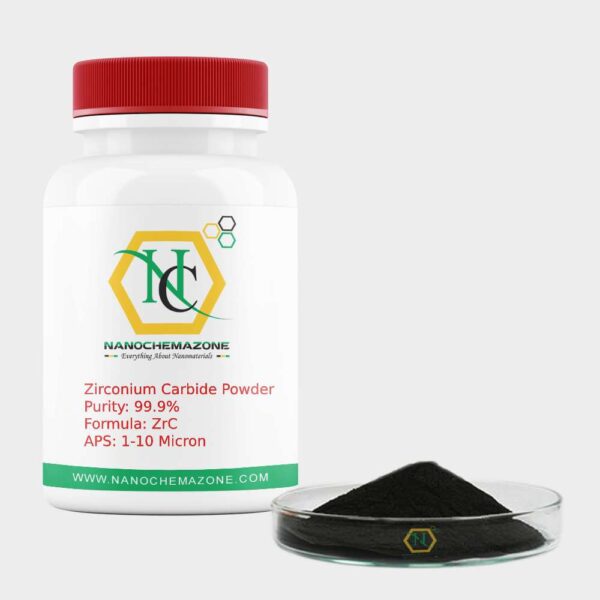
Zirconium Carbide Powder
Zirconium Carbide Powder
Product Name: Zirconium Carbide Powder
| Product | Zirconium Carbide Powder |
| Colour | Black |
| Purity | ≥ 99.9% |
| Particle size | 1-10 µM (customizable) |
| Ingredient/MF | ZrC |
| Product Code | NCZ-C-110/20 |
| CAS Number | 12070-14-3 |
Reviews
There are no reviews yet.