
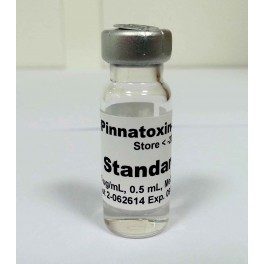

Pinnatoxin-G CAS: 1312711-74-2
₹0.00
Pinnatoxin-G
| Product Name | Pinnatoxin-G |
| Cat No | NCZ-000-101 |
| CAS No | 1312711-74-2 |
| Synonyms | Pinnatoxin G |
| Molecular Formula | C42H63NO7 |
| Molecular Weight | 693.95 |
Pinnatoxin-G CAS: 1312711-74-2
Note: For pricing & ordering information, please contact us at sales@nanochemazone.com
Please contact us for quotes on Larger Quantities & Customization. E-mail: contact@nanochemazone.com
Customization:
If you are planning to order large quantities for your industrial and academic needs, please note that customization of parameters (such as size, length, purity, functionalities, etc.) are available upon request.
You must be logged in to post a review.
Related products

Antimony Tin oxide Powder
Antimony Tin oxide Powder
Product Name: Antimony Tin oxide powder
| Product | Antimony Tin oxide powder |
| Colour | White |
| Purity | ≥ 99.9% |
| Particle size | 1-10 µM (customizable) |
| Ingredient/MF | SnO2, Sb2O3 |
| Product Code | NCZ-CM-176/20 |
| CAS Number | 18282-10-5/1309-64-4 |
Application:
ATO nanopowder is mainly used for antistatic plastics, coatings, fibers, radiation monitors with coatings, building energy-saving windows, solar cells, automobile windshields, optical display devices, transparent electrodes, catalysis and so on. In addition, Antimony Doped Tin Oxide (ATO)nanoparticle can also use in the microwave attenuation, computer rooms, radar shield protected areas, and shield electromagnetic fields.
- ATO has excellent electrical and optical properties that are widely used as good electrical conductivity, also as an antistatic agent widely used in paint, chemical fiber, polymer film field.
- ATO has good insulation properties. Used the ATO coating to be made of automotive glass is an excellent effect of shielding and reflecting infrared radiation.
- ATO with super fine conductive properties can be used in paints, textiles, plastics, and other fields, the direct mixing of liquid and configuration system, good compatibility.
- ATO has excellent electrical and optical properties. Used as an antistatic agent is widely used in paint, chemical fiber, polymer film field.
Please email us for the customization.
Email: contact@nanochemazone.com
Please contact us for customization and price inquiry
Note: We supply different size ranges of Nano and micron as per the client’s requirements and also accept customization in various parameters.

Bismuth Metal Polycrystalline Powder
Product Name: Bismuth Metal Polycrystalline Powder
| Product | polycrystalline |
| CAS No. | 7440-69-9 |
| Appearance | brown Powder |
| Purity | 99.9% |
| APS | 1 – 5 Microns (Can be customized) |
| Ingredient | Bi |
| Product Code | NCZ-NSC-275/20 |
Description :
Bismuth compounds account for about half the production of bismuth. They are used in cosmetics, pigments, and a few pharmaceuticals, notably bismuth subsalicylate, used to treat diarrhea. Bismuth's unusual propensity to expand as it solidifies is responsible for some of its uses, such as in the casting of printing type. Bismuth has unusually low toxicity for heavy metal. As the toxicity of lead has become more apparent in recent years, there is increasing use of bismuth alloys presently about a third of bismuth production) as a replacement for lead.
RELATED INFORMATION
Storage Conditions:
Airtight sealed, avoid light, and keep dry at room temperature.
Please contact us for customization and price inquiry
Email: contact@nanochemazone.com
Note: We supply different size ranges of Nano and micron as per the client’s requirements and also accept customization in various parameters.
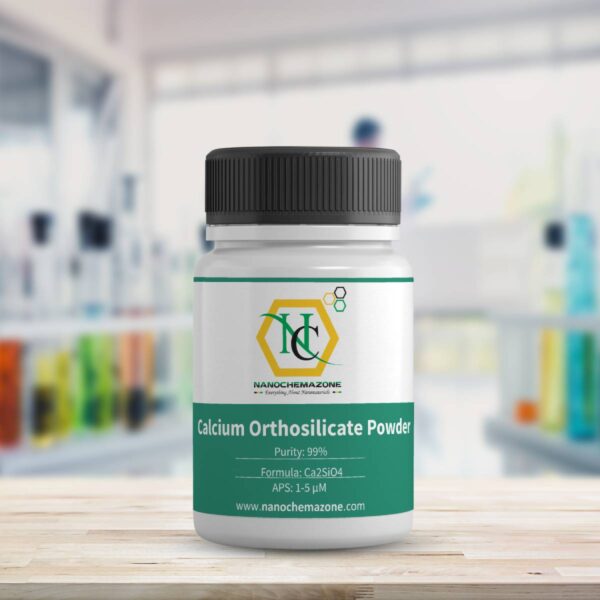
Calcium Magnesium Silicate
Calcium Magnesium Silicate
| Product |
Calcium Magnesium Silicate |
| CAS No. | N/A |
| Appearance | White |
| Purity | 99% |
| APS | 1-5µM (Can be customized) |
| Ingredient | CaMgSi2O6:Eu(2+) |
| Product Code | NCZ-NSC614/20 |
| Molecular Weight | 156.47 g/mol |
| Density | 2.9 g/cm3 |
| Melting Point | 2,130 °C (3,870 °F; 2,400 K) |
Calcium Magnesium Silicate Description
Calcium Chromate is generally immediately available in most volumes. Hydrate or anhydrous forms may be purchased. High purity, submicron and nanopowder forms may be considered. Nanochemazone produces to many standard grades when applicable, including Mil Spec (military grade); ACS, Reagent and Technical Grade; Food, Agricultural and Pharmaceutical Grade; Optical Grade, USP and EP/BP (European Pharmacopoeia/British Pharmacopoeia) and follows applicable ASTM testing standards. Typical and custom packaging is available. Additional technical, research and safety (MSDS) information is available as is a Reference Calculator for converting relevant units of measurement.
Related Information
Storage Conditions:
Airtight sealed, avoid light and keep dry at room temperature.
Please contact us for customization and price inquiry
Email: contact@nanochemazone.com
Note: We supply different size ranges of Nano and micron as per the client’s requirements and also accept customization in various parameters.
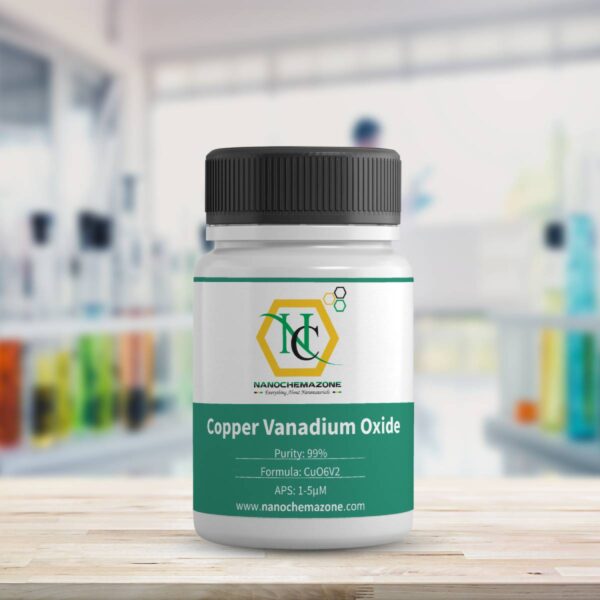
Copper Vanadium Oxide
Copper Vanadium Oxide
| Product |
Copper Vanadium Oxide |
| Colour | N/A |
| Purity | 99% |
| Particle Size | 1-5µM (customizable) |
| Ingredient/MF | CuO6V2 |
| Product Code | NCZ-CP-397/20 |
| CAS Number | 14958-34-0 |
| Density | N/A |
| Melting point | N/A |
| Boiling Point | N/A |
| Molecular Weight | 261.43 |
| Exact Mass | 260.787004 |
Copper Vanadium Oxide
Copper is a Block D, Group 11, Period 4 element with an atomic weight of 63.546. The number of electrons in each of copper's shells is 2, 8, 18, 1 and its electron configuration is [Ar] 3d10 4s1. The copper atom has a radius of 128 pm and a Van der Waals radius of 186 pm.
Copper was first discovered by Early Man prior to 9000 BC. In its elemental form, copper has a red-orange metallic luster appearance. Of all pure metals, only silver has a higher electrical conductivity.The origin of the word copper comes from the Latin word 'cuprium' which translates as "metal of Cyprus." Cyprus, a Mediterranean island, was known as an ancient source of mined copper.
Vanadium:
Vanadium is a Block D, Group 5, Period 4 element with an atomic weight of 50.9415. The number of electrons in each of Vanadium's shells is 2, 8, 11, 2 and its electron configuration is [Ar] 3d3 4s2. The vanadium atom has a radius of 134 pm and a Van der Waals radius of 179 pm.
Vanadium was discovered by Andres Manuel del Rio in 1801 and first isolated by Nils Gabriel Sefström in 1830. In its elemental form, vanadium has a bluish-silver appearance. It is a hard, ductile transition metal that is primarily used as a steel additive and in alloys such as Titanium-6AL-4V, which is composed of titanium, aluminum, and vanadium and is the most common titanium alloy commercially produced. Vanadium is found in fossil fuel deposits and 65 different minerals.
Vanadium is not found free in nature; however, once isolated it forms an oxide layer that stabilizes the free metal against further oxidation. Vanadium was named after the word "Vanadis" meaning goddess of beauty in Scandinavian mythology.
Related Information
Storage Conditions:
Airtight sealed, avoid light and keep dry at room temperature.
Please contact us for customization and price inquiry
Email: contact@nanochemazone.com
Note: We supply different size ranges of Nano and micron as per the client’s requirements and also accept customization in various parameters

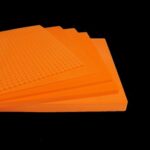
D3O 10 mm Solid Sheet 10″x14.5″ (AERO) Unskived
D3O Sheets
D3O Sheets Also available in 2mm, 4mm, and 6mm Thickness.
D3O Sheets with shock-absorbing properties
D3O® uses patented, patent-pending, and proprietary technologies to make rate-sensitive, soft, flexible materials with shock-absorbing properties.
D3O Sheets D3O® foam sheets can be cut to size and applied to the body as an under-wrap to provide added protection to select body parts or to contusions without leaving the field for more than a few seconds. D3O® foam is soft and flexible and can be cut to any shape to match your specific needs.
Add D3O®’s patented impact protection to existing equipment by cutting your own padding. D3O® foams are made from cutting-edge smart molecules that remain soft and flexible until a force is applied causing the material to react on the molecular level by seizing up and binding together providing uncompromising impact protection.
D3O® set solid and mesh sheets reduce up to three times as much force as similar foam padding without the added bulk. Only 4mm of solid D3O® AERO out preforms 20mm of EVA foam in transmitted force testing by up to 60%. More than doubling the protective layer 10mm unskived AERO sheets are the ultimate side-line wrap.
To learn more about D3O® foam sheets and to get a glimpse at the raw testing data click the link below.

Lead Telluride Powder
Product Name: Lead Telluride Powder
| Product | Lead Telluride Powder |
| CAS No. | 1314-91-6 |
| Appearance | Grey Powder |
| Purity | 99.9% |
| APS | 1 – 5 Microns (Can be customized) |
| Ingredient | PbTe |
| Product Code | NCZ-NSC-140/20 |
Lead Telluride Description :
Lead tin telluride is a ternary alloy of lead, tin, and tellurium, generally made by alloying either tin into lead telluride or lead into tin telluride. It is a narrow bandgap semiconductor material.
The bandgap is tuned by varying the composition(x) in the material. SnTe can be alloyed with Pb (or PbTe with Sn) to tune the bandgap from (SnTe). Lead Telluride Powder important to note that unlike chalcogenides, e.g. cadmium, mercury, and zinc chalcogenides, the bandgap in Te does not change linearly between the two extremes. In contrast, as the composition (x) is increased, the bandgap decreases approach zero in the concentration regime (0.32–0.65 corresponding to temperature 4-300 K, respectively) and further increases towards the bulk bandgap of SnTe. Therefore, the lead-tin telluride alloys have narrower band gaps than their endpoint counterparts making lead tin telluride an ideal candidate for mid-infrared, 3–14 μm optoelectronic application.
Lead Telluride Powder has a positive temperature coefficient i.e. for a given composition x, the bandgap increases with temperature. Therefore, temperature stability has to be maintained while working with lead-tin telluride based laser. However, the advantage is that the operating wavelength of the laser can simply be tuned by varying the operating temperature.
The optical absorption coefficient of lead-tin telluride is typical ~750 cm−1 as compared to ~50 cm−1 for the extrinsic semiconductors such as doped silicon. The higher optical coefficient value not only ensures higher sensitivity but also reduces the spacing required between individual detector elements to prevent optical cross-talk making integrated circuit technology easily.
Lead Telluride Related Information
Storage Conditions:
Airtight sealed, avoid light and keep dry at room temperature.
Please email us for the customization.
Email: contact@nanochemazone.com
Note: We supply different size ranges of nano and micron size powder as per the client’s requirements and also accept customization in various parameters.

Silicon oxide wafer P-Type (2 inch)
Product Name: Silicon oxide wafer P-Type (2 inches)
| Product Name | Silicon oxide wafer P-Type (2 inches) |
| Cat. No. | NCZ-NSC318/20
|
| Diameter | 50.8+- 0.2 mm (2 inch)
|
| Oxide Thickness | 300 +- 20 nm (dry)
|
| Resistivity | (1-10 Ohm/sq).
|
| Thickness | 300+ 15 µm
|
| Orientation | <100>+- 0.5
|
Silicon oxide wafer P-Type (2 inches) Description
Provided in Single wafer case
Single Crystal Silicon for solar energy applications includes p-type and n-type silicon. Silicon Silicon-based photovoltaic cells (PV Cells) for solar energy are fabricated from a positively charged or p-type silicon layer underneath a negatively charged or n-type silicon layer. These layers can be produced from single crystal silicon material sold under the AE Solar Energy group. Most silicon-based PV solar cells are produced from polycrystalline silicon with single-crystal systems the next most common. Silicon Metal is also available as a polycrystalline powder for casting, amorphous silicon for deposition, disc, granules, ingot, pellets, pieces, powder, rod, sputtering target, wire, and other forms and custom shapes. Ultra-high purity and high purity forms also include submicron powder and nanoscale powder. Single Crystal Silicon is generally immediately available in most volumes.
Silicon oxide wafer P-Type (2 inches) RELATED INFORMATION
Storage Conditions:
Airtight sealed, avoid light, and keep dry at room temperature.
Please email us for the customization.
Email: contact@nanochemazone.com
Note: We supply different size ranges of nano and micron size powder as per the client’s requirements and also accept customization in various parameters.
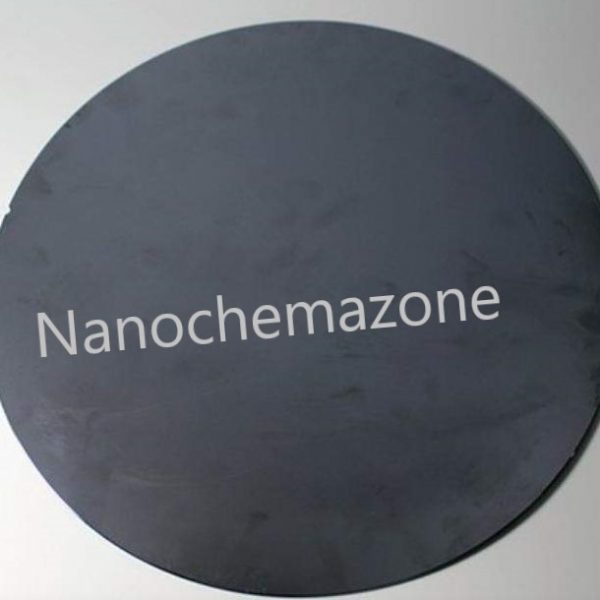
Single Crystal Silicon-Silicon dioxide Wafer
Single Crystal silicon-silicon dioxide Wafer
Product Name: Single Crystal silicon-silicon dioxide Wafer
| Product Name | Single Crystal silicon-silicon dioxide Wafer P-type (4 inches) |
| Cat No. | NCZ-NSC318/20 |
| Día | 100 mm (4 inches) |
| Orientation | <100> |
| Wafer thickness | 500 micrometer |
| Resistivity | <0.01 |
| Polished | Front Side Polished |
| Thickness | 300 nm (dry) |
| Purity | 99.9% |
| Formula | Si/SiO2 |
Single Crystal silicon-silicon dioxide Wafer P-type Description :
Provided in a single wafer case
Silicon oxide wafer SIO2 thin-film among semiconductor technology, SiO2 thin film layers are mainly used as dielectric material and more recently, they are integrated with MEMS (Micro Electro Mechanical Systems) devices. The simplest way to produce silicon oxide layers on silicon wafers is to oxidize silicon with oxygen.
Single Crystal silicon-silicon dioxide Wafer RELATED INFORMATION
Storage Conditions:
Airtight sealed, avoid light and keep dry at room temperature.
Please email us for the customization.
Email: contact@nanochemazone.com
Note: We supply different size ranges of nano and micron size powder as per the client’s requirements and also accept customization in various parameters.
Reviews
There are no reviews yet.