
Titanium Aluminum Alloy Spherical
₹0.00
Titanium Aluminum Alloy Spherical
| Product |
Titanium Aluminum Alloy Spherical |
| Colour | N/A |
| Purity | 99% |
| Particle size | 1-5μm (Customizable) |
| Ingredient/MF | Ti47Al2Cr2Nb |
| Product Code | NCZ-CP-297/20 |
| CAS No | N/A |
Titanium Aluminum Alloy Spherical Description
Aluminium alloys (or aluminum alloys; see spelling differences) are alloys in which aluminium (Al) is the predominant metal. The typical alloying elements are copper, magnesium, manganese, silicon, tin and zinc. There are two principal classifications, namely casting alloys and wrought alloys, both of which are further subdivided into the categories heat-treatable and non-heat-treatable. About 85% of aluminium is used for wrought products, for example rolled plate, foils and extrusions.
Cast aluminium alloys yield cost-effective products due to the low melting point, although they generally have lower tensile strengths than wrought alloys. The most important cast aluminium alloy system is Al–Si, where the high levels of silicon (4.0–13%) contribute to give good casting characteristics. Aluminium alloys are widely used in engineering structures and components where light weight or corrosion resistance is required.
Alloys composed mostly of aluminium have been very important in aerospace manufacturing since the introduction of metal-skinned aircraft. Aluminium-magnesium alloys are both lighter than other aluminium alloys and much less flammable than other alloys that contain a very high percentage of magnesium. Aluminium alloy surfaces will develop a white, protective layer of aluminium oxide if left unprotected by anodizing and/or correct painting procedures.
In a wet environment, galvanic corrosion can occur when an aluminium alloy is placed in electrical contact with other metals with more positive corrosion potentials than aluminium, and an electrolyte is present that allows ion exchange. Referred to as dissimilar-metal corrosion, this process can occur as exfoliation or as intergranular corrosion.
Aluminium alloys can be improperly heat treated. This causes internal element separation, and the metal then corrodes from the inside out. Aluminium alloy compositions are registered with The Aluminum Association. Many organizations publish more specific standards for the manufacture of aluminium alloy,
Related Information
Please email us for the customization.
Email: contact@nanochemazone.com
Please contact us for customization and price inquiry
Note: We supply different size ranges of Nano and micron as per the client’s requirements and also accept customization in various parameters.
Spherical High Speed Steel
Note: For pricing & ordering information, please contact us at sales@nanochemazone.com
Please contact us for quotes on Larger Quantities & Customization. E-mail: contact@nanochemazone.com
Customization:
If you are planning to order large quantities for your industrial and academic needs, please note that customization of parameters (such as size, length, purity, functionalities, etc.) are available upon request.
[/vc_column_text][/vc_column][/vc_row]
You must be logged in to post a review.
Related products
Cesium Selenide Powder
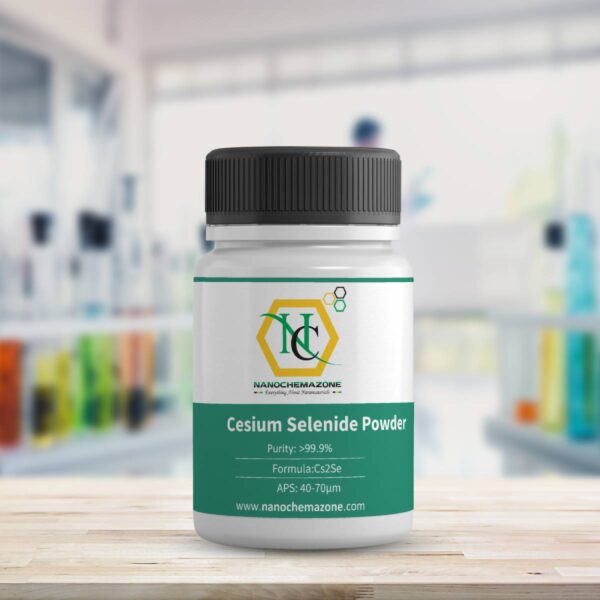
Cesium Selenide Powder
Product Name: Cesium Selenide Powder
| Product | Cesium Selenide Powder |
| Cat No | NCZ-NSC808/20 |
| CAS No | 31052-46-7 |
| Purity | >99.9 % |
| APS | 40-70µm |
| Molecular Formula | Cs2Se |
| Molecular Weight | 344.7709 g/mol |
| Form | Powder |
Cesium Selenide Description
Cesium Selenide is generally immediately available in most volumes. High purity, submicron and nanopowder forms may be considered. Nanochemazone produces to many standard grades when applicable, including Mil Spec (military grade); ACS, Reagent and Technical Grade; Food, Agricultural and Pharmaceutical Grade; Optical Grade, USP and EP/BP (European Pharmacopoeia/British Pharmacopoeia) and follows applicable ASTM testing standards. Typical and custom packaging is available. Additional technical, research and safety (MSDS) information is available as is a Reference Calculator for converting relevant units of measurement.
Cesium Selenide Related Information
Storage Conditions:
Airtight sealed, avoid light, and keep dry at room temperature.
Please contact us for customization and price inquiry
Email: contact@nanochemazone.com
Note: We supply different size ranges of Nano and micron as per the client’s requirements and also accept customization in various parameters.
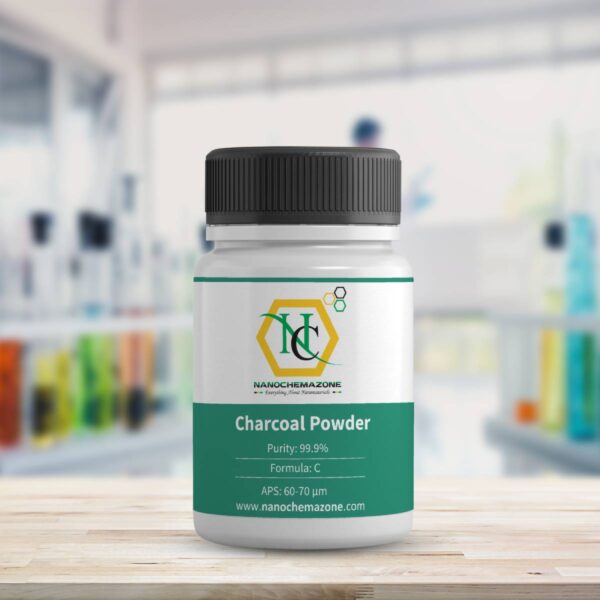
Charcoal Powder
Charcoal Powder
Product Name: Charcoal Powder (C, APS: 60-70µm, Purity: 99.9%)
| Product | Charcoal Powder |
| Cat No | NCZ-MN-162/20 |
| CAS No | 7440-44-0 |
| Purity | 99.9% |
| APS | 60-70µm |
| Molecular Formula | C |
| Form | Powder |
| Color | Black |
| Bulk Density | 0.34g/ml |
Please email us for the customization.
Email: contact@nanochemazone.com
Please contact us for customization and price inquiry
Note: We supply different size ranges of Nano and micron as per the client’s requirements and also accept customization in various parameters.
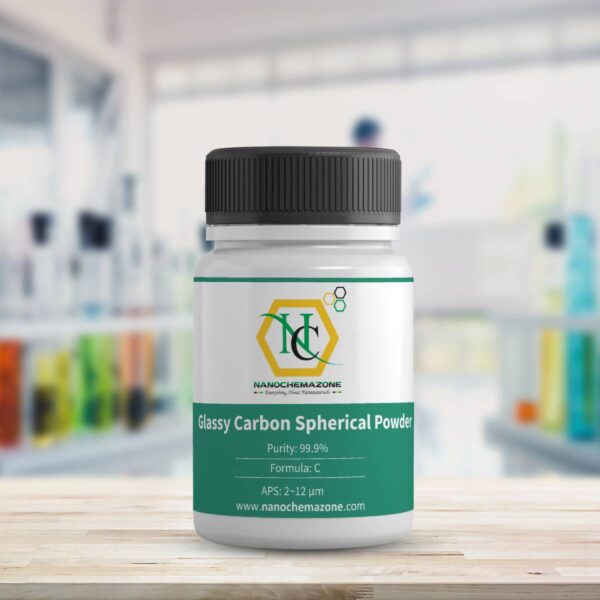
Glassy Carbon Spherical Powder
Glassy Carbon Spherical Powder
Product Name: Glassy Carbon Spherical Powder (C, Purity: 99.9%, APS: 2~12µm)
| Product | Glassy Carbon Spherical Powder |
| Cat No | NCZ-MN-163/20 |
| CAS No | 7440-44-0 |
| Purity | 99.9 % |
| APS | 2~12µm |
| Molecular Formula | C |
| Molecular Weight | 12.01 g/mol |
| Density | 2.267 g/cm³ |
| Appearance | Black solid |
| Melting Point | 3652 - 3697 °C (sublimes) |
| Boiling Point | 4200 °C |
| Thermal Conductivity | 119-165 W/m/K |
| Heat of Vaporization | 128 K-Cal/gm |
| Electronegativity | 2.55 Paulings |
| Solubility | Insoluble in water |
Please email us for the customization.
Email: contact@nanochemazone.com
Please contact us for customization and price inquiry
Note: We supply different size ranges of Nano and micron as per the client’s requirements and also accept customization in various parameters.
Indium Arsenide Nanopowder
Indium Arsenide Nanopowder
Product Name: Indium Arsenide Nanopowder (InAs, Purity: 99.9%)
| Product | Indium Arsenide Nanopowder |
| Cat No | NCZ-NSC812/20 |
| CAS No | 1303-11-3 |
| Purity | 99.9% |
| APS | 80-100nm |
| Molecular Formula | InAs |
| Molecular Weight | 189.740g/mol |
| Form | Powder |
| Color | Gray |
| Density | 5.67g/cm3 |
| Melting Point | 942°C |
| Refractive Index | 3.51 |
| Dielectric Constant | 15.15 |
| Electrton Mobility | 40000(cm2/(V*s)) |
| Storage | Normal Room Temperature |
| Thermal Conductivity | 0.27(300K (W/cm•K)) |
| Specific Heat Capacity | 47.8 J•mol-1•K-1 |
| Solubility in water | Insoluble in water |
Indium Arsenide Nanopowder Related Information
Storage Conditions:
Airtight sealed, avoid light, and keep dry at room temperature.
Please contact us for customization and price inquiry
Email: contact@nanochemazone.com
Note: We supply different size ranges of Nano and micron as per the client’s requirements and also accept customization in various parameters.
Indium Arsenide Powder
Indium Arsenide Powder
Product Name: Indium Arsenide Powder (InAs, Purity: 99.9%, APS: 40-50 µm)
| Product | Indium Arsenide Powder |
| Cat No | NCZ-NSC813/20 |
| CAS No | 1303-11-3 |
| Purity | 99.9% |
| APS | 40-50µm |
| Molecular Formula | InAs |
| Molecular Weight | 189.740g/mol |
| Form | Powder |
| Color | Gray |
| Density | 5.67g/cm3 |
| Melting Point | 942°C |
| Refractive Index | 3.51 |
| Dielectric Constant | 15.15 |
| Electrton Mobility | 40000(cm2/(V*s)) |
| Storage | Normal Room Temperature |
| Thermal Conductivity | 0.27(300K (W/cm•K)) |
| Specific Heat Capacity | 47.8 J•mol-1•K-1 |
| Solubility in water | Insoluble in water |
Indium Arsenide Powder Related Information
Storage Conditions:
Airtight sealed, avoid light, and keep dry at room temperature.
Please contact us for customization and price inquiry
Email: contact@nanochemazone.com
Note: We supply different size ranges of Nano and micron as per the client’s requirements and also accept customization in various parameters.
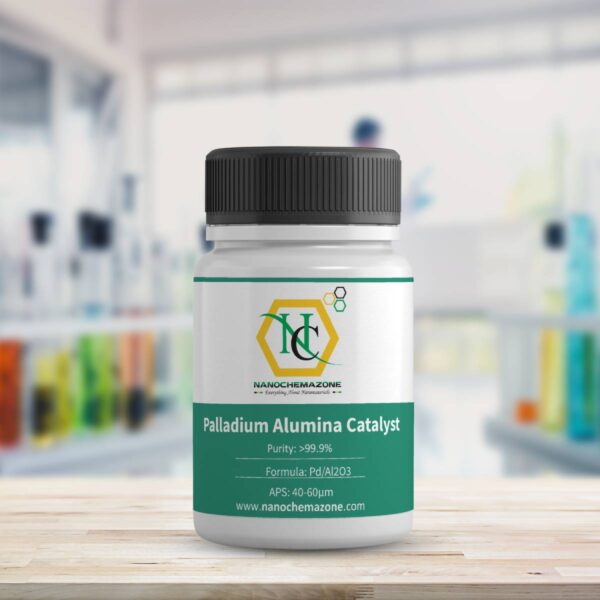
Palladium on Alumina Catalyst
Palladium on Alumina Catalyst
Product Name: Palladium on Alumina Catalyst (Pd/Al2O3, Purity: >99.9%, APS: 40-60µm)
| Product | Palladium on Alumina Catalyst |
| Cat No | NCZ-MN-151/20 |
| CAS No | 7440-05-3 |
| Purity | >99.9% |
| APS | 40-60µm |
| Molecular Formula | Pd/Al2O3 |
| Palladium on Alumina | 1%, 2%, 3%, 4%, 5%, 10% |
| Density | ≥0.55 g/ml |
| Surface Area, BET | ≥120 m²/g |
Please email us for the customization.
Email: contact@nanochemazone.com
Please contact us for customization and price inquiry
Note: We supply different size ranges of Nano and micron as per the client’s requirements and also accept customization in various parameters.
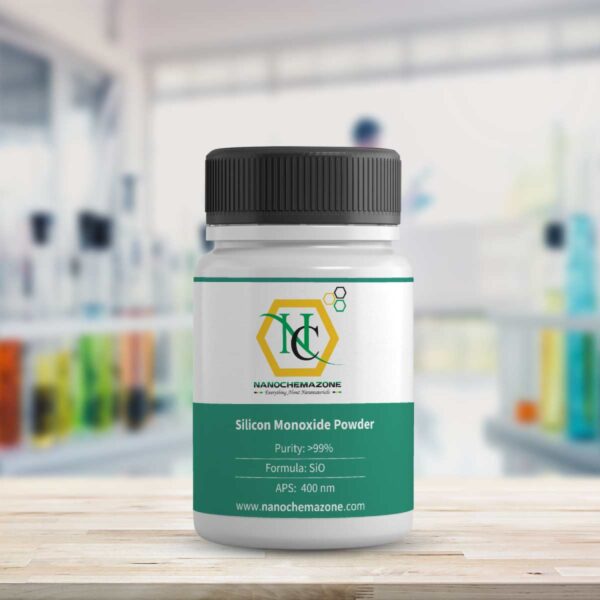
Silicon Monoxide Powder
Silicon Monoxide (SiO)
Product Name: Silicon Monoxide Powder
| Product Name | Silicon Monoxide |
| Cat No. | NCZ-MN-056/20 |
| CAS No. | 10097-28-6 |
| MF | SiO |
| Purity | >99% |
| APS | 400 nm (Customizable) |
| Appearance | Black Brown Powder |
| Molecular Weight | 44.08 |
| Melting Point | 1702°C |
| Boiling Point | 1880°C |
| Density | 2.13g/cm³ |
| Refractive index | 1.980 |
| Application | Plating of optical equipment such as lens |
| Crushing to submicron level below D50 | 500 nm is also available |
Silicon Monoxide Chemical component (standard value): ppm max
| Fe | <20 ppm |
| Al | <20 ppm |
| Cu | <10 ppm |
| Ti | <10 ppm |
| Ca | <10 ppm |
| Mn | <30 ppm |
Silicon Monoxide Application Fields:
Lithium-ion secondary battery anode material precursors to prepare silicon-based anode material Fine ceramic, synthetic raw materials; such as silicon nitride and silicon carbide Because silicon monoxide fine powder is very active, it can be used as fine ceramic, synthetic raw materials, such as silicon nitride and silicon carbide fine ceramic powder raw materials. Used for the preparation of optical glass and semiconductor materials.
Evaporate it in a vacuum and coat it on the metal mirror surface of the optical instrument as a protective film. Preparation of semiconductor materials.
The hunt is on advanced battery materials with enhanced storage capacity, higher energy density, and better cycle characteristics than traditional lithium-ion batteries. Conventional lithium-ion batteries rely on graphite-based anodes, whose well-established properties aren’t ideal for meeting the growing consumer demand for high-performance electronics, such as smartphones, laptops, and electric vehicles. Current research focuses on developing new alternatives that perform better and are safer than lithium-ion, and Nanochemazone is leading the way.
Silicon monoxide is a promising alternative to graphite because of its high specific gravity, low volume expansion, and small initial surface area. Silicon-based anodes can increase capacity ten times over standard graphite, allowing smaller batteries to produce the same amount of power or increasing the ability of a battery of the same size. This is possible because of the internal channels within the silicon monoxide Nanospheres. These channels allow lithium ions to flow rapidly for quick charging, and they shorten the paths for a boost in power.
Nanochemazone offers a 99.99% pure silicon monoxide powder prepared using chemical vapor deposition, suitable for secondary battery anode material precursors to prepare silicon-based anode materials and fine ceramic, synthetic raw materials. Our silicon monoxide battery material is prized by researchers and innovators around the world for its quality, purity, and consistency.
Silicon Monoxide SiO Related Information
Silicon Monoxide Powder Storage Conditions:
Airtight sealed, avoid light and keep dry at room temperature.
Please contact us for customization and price inquiry
Email: contact@nanochemazone.com
Note: We supply different size ranges of Nano and micron as per the client’s requirements and also accept customization in various parameters.
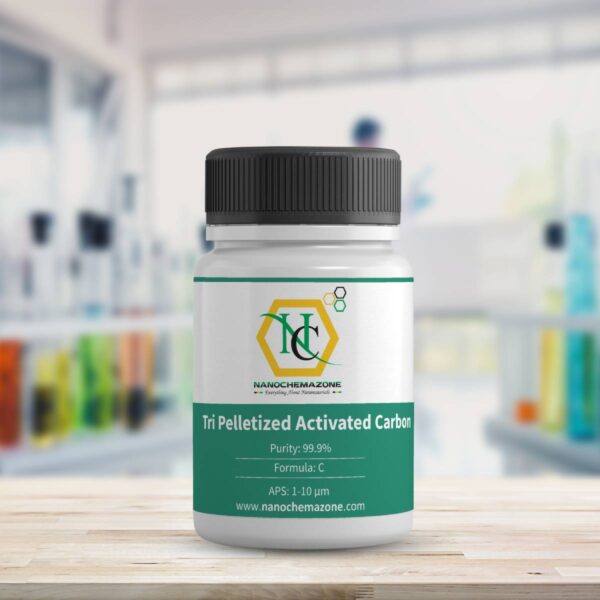
Tri Pelletized Activated Carbon
Tri Pelletized Activated Carbon
Product Name: Tri Pelletized Activated Carbon (c, APS: 1-10µm Purity: 99.9%)
| Product | Tri Pelletized Activated Carbon |
| Cat No | NCZ-MN-169/20 |
| CAS No | 7440-44-0 |
| Purity | 99.9% |
| APS | 1-10μm |
| Molecular Formula | C |
| Molecular Weight | 12-01g/mol |
| Form | Powder |
| Color | Black |
| Melting Point | 3550°C |
| Boiling Point | Sublimes |
| PH value | 5.0-10.0 |
| Vapor Density | 0.4 |
| Vapor pressure | 1 @ 3586C (6487F) |
| Solubility | Insoluble in water |
Please email us for the customization.
Email: contact@nanochemazone.com
Please contact us for customization and price inquiry
Note: We supply different size ranges of Nano and micron as per the client’s requirements and also accept customization in various parameters.
Reviews
There are no reviews yet.