Calcium Magnesium Silicate
₹0.00
Calcium Magnesium Silicate
| Product |
Calcium Magnesium Silicate |
| CAS No. | N/A |
| Appearance | White |
| Purity | 99% |
| APS | 1-5µM (Can be customized) |
| Ingredient | CaMgSi2O6:Eu(2+) |
| Product Code | NCZ-NSC614/20 |
| Molecular Weight | 156.47 g/mol |
| Density | 2.9 g/cm3 |
| Melting Point | 2,130 °C (3,870 °F; 2,400 K) |
Calcium Magnesium Silicate Description
Calcium Chromate is generally immediately available in most volumes. Hydrate or anhydrous forms may be purchased. High purity, submicron and nanopowder forms may be considered. Nanochemazone produces to many standard grades when applicable, including Mil Spec (military grade); ACS, Reagent and Technical Grade; Food, Agricultural and Pharmaceutical Grade; Optical Grade, USP and EP/BP (European Pharmacopoeia/British Pharmacopoeia) and follows applicable ASTM testing standards. Typical and custom packaging is available. Additional technical, research and safety (MSDS) information is available as is a Reference Calculator for converting relevant units of measurement.
Related Information
Storage Conditions:
Airtight sealed, avoid light and keep dry at room temperature. Â
Please contact us for customization and price inquiry
Email: contact@nanochemazone.com
Note: We supply different size ranges of Nano and micron as per the client’s requirements and also accept customization in various parameters.

Note: For pricing & ordering information, please contact us at sales@nanochemazone.com
Please contact us for quotes on Larger Quantities & Customization. E-mail: contact@nanochemazone.com
Customization:
If you are planning to order large quantities for your industrial and academic needs, please note that customization of parameters (such as size, length, purity, functionalities, etc.) are available upon request.
You must be logged in to post a review.
Related products
Ag-Doped Antibacterial Nanopowder Dispersion
| Product | Ag-Doped Antibacterial Nanopowder Dispersion |
| CAS No. | 7440-22-4 |
| Appearance | Gary |
| Purity | 99.9% |
| APS | 30 nm(Can be customized) |
| Ingredient | Ag |
| Product Code | NCZ-NSC430/20 |
Ag-Doped Antibacterial Nanopowder Dispersion Description :
Ag-Doped Antibacterial Nanopowder Dispersion is nanoparticles of silver of between 1 nm and 100 nm in size. While frequently described as being 'silver' some are composed of a large percentage of silver oxide due to their large ratio of surface to bulk silver atoms.
Numerous shapes of Ag-doped Antibacterial Nanopowder Dispersion can be constructed depending on the application at hand. Commonly used silver nanoparticles are spherical, but diamond, octagonal, and thin sheets are also common.
Their extremely large surface area permits the coordination of a vast number of ligands. The properties of silver nanoparticles applicable to human treatments are under investigation in laboratory and animal studies, assessing potential efficacy, toxicity, and costs.
The most common methods for nanoparticle synthesis fall under the category of wet chemistry or the nucleation of particles within a solution.
This nucleation occurs when a silver ion complex, usually Ag-Doped Antibacterial Nanopowder Dispersion, is reduced to colloidal silver in the presence of a reducing agent. When the concentration increases enough, dissolved metallic silver ions bind together to form a stable surface.
The surface is energetically unfavorable when the cluster is small because the energy gained by decreasing the concentration of dissolved particles is not as high as the energy lost from creating a new surface.
When the cluster reaches a certain size, known as the critical radius, it becomes energetically favorable, and thus stable enough to continue to grow.
This nucleus then remains in the system and grows as more silver atoms diffuse through the solution and attach it to the surface.
When the dissolved concentration of atomic silver decreases enough, it is no longer possible for enough atoms to bind together to form a stable nucleus.
At this nucleation threshold, new nanoparticles stop being formed, and the remaining dissolved silver is absorbed by diffusion into the growing nanoparticles in the solution.
As the particles grow, other molecules in the solution diffuse and attach to the surface. This process stabilizes the surface energy of the particle and blocks new silver ions from reaching the surface.
The attachment of these capping/stabilizing agents slows and eventually stops the growth of the particle.
The most common capping ligands are trisodium citrate and polyvinylpyrrolidone (PVP), but many others are also used in varying conditions to synthesize particles with particular sizes, shapes, and surface properties.
There are many different wet synthesis methods, including the use of reducing sugars, nitrate reduction, reduction via sodium borohydride.
The silver mirror reaction, the polyol process, seed-mediated growth, and light-mediated growth. Each of these methods, or a combination of methods, will offer differing degrees of control over the size distribution as well as distributions of geometric arrangements of the nanoparticle.
Ag-Doped Antibacterial Nanopowder Dispersion  Related Information
Storage Conditions:
Airtight sealed, avoid light and keep dry at room temperature. Â
Please contact us for customization and price inquiry
Email: contact@nanochemazone.com
Note: We supply different size ranges of Nano and micron as per the client’s requirements and also accept customization in various parameters.
Antimony Tin oxide Powder
Product Name: Antimony Tin oxide powder
| Product | Antimony Tin oxide powder |
| Colour | White |
| Purity | ≥ 99.9% |
| Particle size | 1-10 µM (customizable) |
| Ingredient/MF | SnO2, Sb2O3 |
| Product Code | NCZ-CM-176/20 |
| CAS Number | 18282-10-5/1309-64-4 |
Application:
ATO nanopowder is mainly used for antistatic plastics, coatings, fibers, radiation monitors with coatings, building energy-saving windows, solar cells, automobile windshields, optical display devices, transparent electrodes, catalysis and so on. In addition, Antimony Doped Tin Oxide (ATO)nanoparticle can also use in the microwave attenuation, computer rooms, radar shield protected areas, and shield electromagnetic fields.
- ATO has excellent electrical and optical properties that are widely used as good electrical conductivity, also as an antistatic agent widely used in paint, chemical fiber, polymer film field.
- ATO has good insulation properties. Used the ATO coating to be made of automotive glass is an excellent effect of shielding and reflecting infrared radiation.
- ATO with super fine conductive properties can be used in paints, textiles, plastics, and other fields, the direct mixing of liquid and configuration system, good compatibility.
- ATO has excellent electrical and optical properties. Used as an antistatic agent is widely used in paint, chemical fiber, polymer film field.
Please email us for the customization.
Email: contact@nanochemazone.com
Please contact us for customization and price inquiry
Note: We supply different size ranges of Nano and micron as per the client’s requirements and also accept customization in various parameters.
Â
Bismuth Metal Polycrystalline Powder
Product Name: Â Bismuth Metal Polycrystalline Powder
| Product | Â Â polycrystalline |
| CAS No. | 7440-69-9 |
| Appearance | brown Powder |
| Purity | 99.9% |
| APS | 1 – 5 Microns (Can be customized) |
| Ingredient | Bi |
| Product Code | NCZ-NSC-275/20 |
Description :
Bismuth compounds account for about half the production of bismuth. They are used in cosmetics, pigments, and a few pharmaceuticals, notably bismuth subsalicylate, used to treat diarrhea. Bismuth's unusual propensity to expand as it solidifies is responsible for some of its uses, such as in the casting of printing type. Bismuth has unusually low toxicity for heavy metal. As the toxicity of lead has become more apparent in recent years, there is increasing use of bismuth alloys presently about a third of bismuth production) as a replacement for lead.
RELATED INFORMATION
Storage Conditions:
Airtight sealed, avoid light, and keep dry at room temperature.
Please contact us for customization and price inquiry
Email: contact@nanochemazone.com
Note: We supply different size ranges of Nano and micron as per the client’s requirements and also accept customization in various parameters.
Copper Vanadium Oxide
| Product |
Copper Vanadium Oxide |
| Colour | N/A |
| Purity | 99% |
| Particle Size | 1-5µM (customizable) |
| Ingredient/MF | CuO6V2 |
| Product Code | NCZ-CP-397/20 |
| CAS Number | 14958-34-0 |
| Density | N/A |
| Melting point | N/A |
| Boiling Point | N/A |
| Molecular Weight      | 261.43 |
| Exact Mass     | 260.787004 |
 Copper Vanadium Oxide
Copper is a Block D, Group 11, Period 4 element with an atomic weight of 63.546. The number of electrons in each of copper's shells is 2, 8, 18, 1 and its electron configuration is [Ar] 3d10Â 4s1. The copper atom has a radius of 128 pm and a Van der Waals radius of 186 pm.
Copper was first discovered by Early Man prior to 9000 BC. In its elemental form, copper has a red-orange metallic luster appearance. Of all pure metals, only silver has a higher electrical conductivity.The origin of the word copper comes from the Latin word 'cuprium' which translates as "metal of Cyprus." Cyprus, a Mediterranean island, was known as an ancient source of mined copper.
Vanadium:
Vanadium is a Block D, Group 5, Period 4 element with an atomic weight of 50.9415. The number of electrons in each of Vanadium's shells is 2, 8, 11, 2 and its electron configuration is [Ar] 3d3 4s2. The vanadium atom has a radius of 134 pm and a Van der Waals radius of 179 pm.
Vanadium was discovered by Andres Manuel del Rio in 1801 and first isolated by Nils Gabriel Sefström in 1830. In its elemental form, vanadium has a bluish-silver appearance. It is a hard, ductile transition metal that is primarily used as a steel additive and in alloys such as Titanium-6AL-4V, which is composed of titanium, aluminum, and vanadium and is the most common titanium alloy commercially produced. Vanadium is found in fossil fuel deposits and 65 different minerals.
Vanadium is not found free in nature; however, once isolated it forms an oxide layer that stabilizes the free metal against further oxidation. Vanadium was named after the word "Vanadis" meaning goddess of beauty in Scandinavian mythology.
Related Information
Storage Conditions:
Airtight sealed, avoid light and keep dry at room temperature.Â
Please contact us for customization and price inquiry
Email: contact@nanochemazone.com
Note: We supply different size ranges of Nano and micron as per the client’s requirements and also accept customization in various parameters
Nickel Silicide Powder
Product Name: Â Nickel Silicide Powder
| Product | Nickel Silicide Powder |
| CAS No | 12059-14-2 |
| Appearance | White Powder |
| Purity | 99.9% |
| APS | 1 – 5 Microns (Can be customized) |
| Ingredient | Ni2Si |
| Product Code | NCZ-NSC-133/20 |
Nickel Silicide Powder Related Information:
Nickel Silicide Powder: The reaction between SiC with chemically plated nickel on its surface has been investigated. X-ray analysis gave a good number of lattice parameters for Ni 3Si, a = 0.3522nm, and has good agreement with the index. The surface layer of Ni diffuses into the SiC and exothermically forms Ni 3Si in a defined temperature range, producing free carbon which could be deleterious to the properties.
A reaction is evident at temperatures 900°C and 1350°C with an increasing trend. The mechanism of sintering which is shown to be a reaction sintered transient-liquid phase method was determined by thermal analysis and metallographic techniques. The strength, hardness, and density properties of sintered Ni /Al (Liquid) + SiC composites are also reported.
Storage Conditions:
Airtight sealed, avoid light and keep dry at room temperature.
Please email us for the customization.
Email: contact@nanochemazone.com
Note: We supply different size ranges of nano and micron size powder as per the client’s requirements and also accept customization in various parameters.
Perlite Nanoclay Powder
Product Name: Perlite Nanoclay Powder (Purity: > 99.9%, APS: 80-100 nm)
Product |
Perlite Nanoclay Powder |
| Cat No | NCZ-MN-142/20 |
| CAS No | 1332-58-7 |
| Purity | 99.9% |
| APS | 80-100 nm |
| Color | Gray/ off white |
| Specific Gravity | 2.2-2.4 |
| Melting Point | >2000 °F |
| pH | Neutral |
| MOHS Hardness | 5.5 |
| Water Absorption | 200-600 % by weight |
| Oil Adsorption | 50-100 grms |
| Softening Point | 1800 F or 980 |
| G.E. Brightness % | 70-80% |
| Apparent Density | 2.5-10.5 lb/ft3 |
| Wet Density | 5-20 lb/ft3 |
| Refractive Index | 1.47 |
Perlite Nanoclay Related Information
Storage Conditions:
Airtight sealed, avoid light and keep dry at room temperature.
Please contact us for customization and price inquiry
Email: contact@nanochemazone.com
Note: We supply different size ranges of Nano and micron as per the client’s requirements and also accept customization in various parameters.
Pinnatoxin-G CAS: 1312711-74-2
Pinnatoxin-G
| Product Name | Pinnatoxin-G |
| Cat No | NCZ-000-101 |
| CAS No | 1312711-74-2 |
| Synonyms | Pinnatoxin G |
| Molecular Formula | C42H63NO7 |
| Molecular Weight | 693.95 |
Pinnatoxin-G CAS: 1312711-74-2
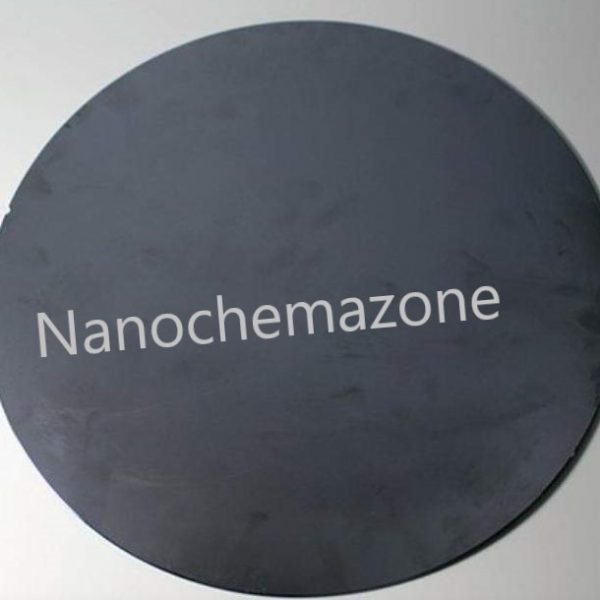
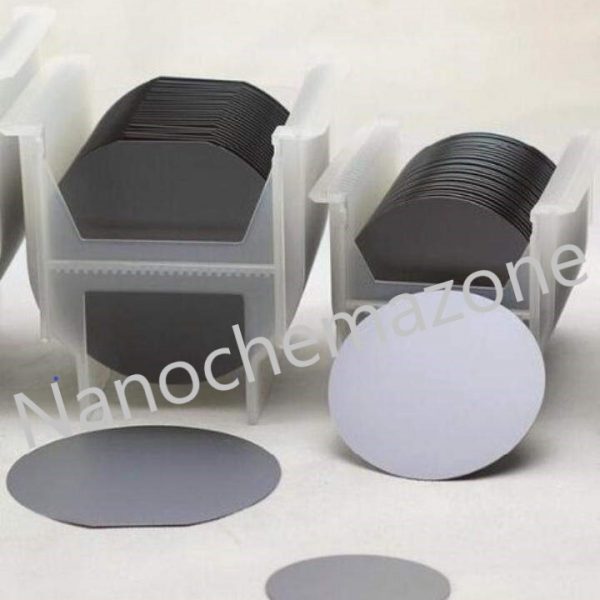
Single crystal silicon wafer N-type (2 inch)
Product Name: Single crystal silicon wafer N-type (2 inch)
| Product Name | Single crystal silicon wafer N-type (2 inch) |
| Cat No. | NCZ-NSC332/20 |
| Diameter | 2 inch |
| Doping | N type |
| Resistivity | (1-10 Ohm/sq). |
| Thickness | 290 + 10 µm |
| Orientation | 100 |
| Polished | Single side polished |
| Form | crystalline (cubic (a = 5.4037) |
| Polished | wafer (single side polished |
| does not contain | dopant |
| dia | 2 inch |
| Thickness | 0.5 mm |
| Boling Point | 2355 °C (lit.) |
| Melting Point | 1410 °C (lit.) |
| Density | 2.33 g/mL at 25 °C (lit.) |
| Semiconductor properties | <100>, N-type |
| SMILES string | [Si] |
Description:
Single crystal silicon wafer N-type (2 inch) NanoChemazone Supplies provides both standard and customized high-quality single crystals, wafers and substrates for a wide range of applications such as LED, ferroelectric, piezoelectric, electro-optical, photonics, high power electronics, and high-frequency power devices, just to name a few. Customized crystal growth, precision machining, and coating services are available. Please contact us today to discuss your project requirements.
Please email us for the customization.
Email: contact@nanochemazone.com
Please contact us for customization and price inquiry
Note: We supply different size ranges of Nano and micron as per the client’s requirements and also accept customization in the various parameters.

Reviews
There are no reviews yet.