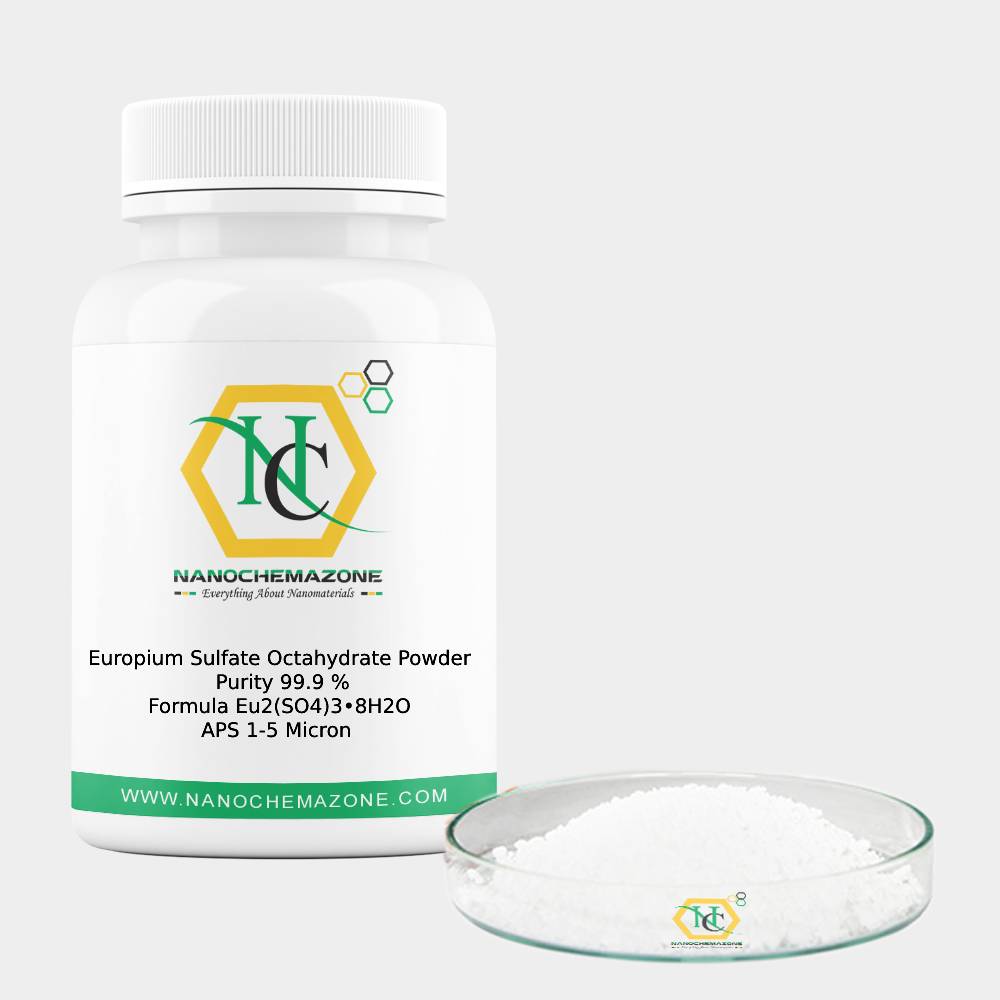

Gold Germanide Granules
₹0.00
Gold Germanide Granules
| Product |
Gold Germanide Granules |
| Colour | N/A |
| Purity | 99% |
| Size | 3-6 mm (Customizable) |
| Ingredient/MF | AuGe |
| Product Code | NCZ-CP-260/20 |
| Density | N/A |
| CAS No | N/A |
Gold Germanide Granules Description
Germanium is a chemical element with the symbol Ge and atomic number 32. It is a lustrous, hard-brittle, grayish-white metalloid in the carbon group, chemically similar to its group neighbors silicon and tin.
Pure germanium is a semiconductor with an appearance similar to elemental silicon. Like silicon, germanium naturally reacts and forms complexes with oxygen in nature.
Because it seldom appears in high concentration, germanium was discovered comparatively late in the history of chemistry. Germanium ranks near fiftieth in relative abundance of the elements in the Earth’s crust.
In 1869, Dmitri Mendeleev predicted its existence and some of its properties from its position on his periodic table, and called the element ekasilicon. Nearly two decades later, in 1886, Clemens Winkler found the new element along with silver and sulfur, in a rare mineral called argyrodite.Although the new element somewhat resembled arsenic and antimony in appearance, the combining ratios in compounds agreed with Mendeleev’s predictions for a relative of silicon. Winkler named the element after his country, Germany.
Today, germanium is mined primarily from sphalerite (the primary ore of zinc), though germanium is also recovered commercially from silver, lead, and copper ores. Elemental germanium is used as a semiconductor in transistors and various other electronic devices. Historically, the first decade of semiconductor electronics was based entirely on germanium. Presently, the major end uses are fibre-optic systems, infrared optics, solar cell applications, and light-emitting diodes (LEDs).
Germanium compounds are also used for polymerization catalysts and have most recently found use in the production of nanowires. This element forms a large number of organogermanium compounds, such as tetraethylgermanium, useful in organometallic chemistry. Germanium is considered a technology-critical element. Germanium is not thought to be an essential element for any living organism. Some complex organic germanium compounds are being investigated as possible pharmaceuticals, though none have yet proven successful. Similar to silicon and aluminium, naturally-occurring germanium compounds tend to be insoluble in water and thus have little oral toxicity. However, synthetic soluble germanium salts are nephrotoxic, and synthetic chemically reactive germanium compounds with halogens and hydrogen are irritants and toxins.
Related Informatioin
Please email us for the customization.
Email: contact@nanochemazone.com
Please contact us for customization and price inquiry
Note: We supply different size ranges of Nano and micron as per the client’s requirements and also accept customization in various parameters.
Spherical High Speed Steel
Note: For pricing & ordering information, please contact us at sales@nanochemazone.com
Please contact us for quotes on Larger Quantities & Customization. E-mail: contact@nanochemazone.com
Customization:
If you are planning to order large quantities for your industrial and academic needs, please note that customization of parameters (such as size, length, purity, functionalities, etc.) are available upon request.
[/vc_column_text][/vc_column][/vc_row]
You must be logged in to post a review.
Related products
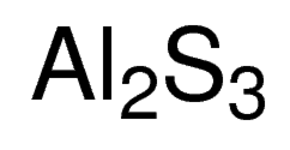
Aluminum Sulphide Powder
Aluminum Sulphide Powder
Product Name: Aluminum Sulphide Powder
| Product | Aluminum Sulphide |
| CAS No. | 1302-81-4 |
| Appearance | White Powder |
| Purity | 99.9% |
| APS | 1 – 5 Microns (Can be customized) |
| Ingredient | Al2S3 |
| Product Code | NCZ-MP-S101 |
| Molecular Weight | 150.16 g/mol |
| Theoretical Density | 2.02 g/cm³ |
| Melting Point | 1,100°C (2,012°F) |
Al2S3 Description :
Sulfides
Inorganic sulfides are ionic compounds containing the sulfide ion S2−. Sulfide compounds can be used in a wide variety of applications including solid-state electrolytes, cathode materials in lithium-ion and thermal batteries, semi-conductors in thermoelectric devices, as part of phosphor compositions, as photovoltaic materials, as pigments, and a variety of other applications. Nanochemazone is a world-leading manufacturer in the production of sulfide compounds with one of the most comprehensive selections of sulfides and extensive sulfide-manufacturing expertise. Most sulfides are manufactured as powders in large batch quantities but certain commercial sulfides are available in large metric-ton quantities. Additionally, Nanochemazone can custom synthesis sulfides that may not be listed in our catalog and can modify sulfides to customer's specifications including producing mixed sulfides, non-stoichiometric compositions, or special purities and particle sizes.
Aluminum Sulfide Applications:
Aluminum sulfide, also known as aluminium sulphide, is a compound of aluminum and sulfur with the formula Al2S3. A colorless or gray solid with an exceptional sensitivity to moisture, aluminum sulfide is not to be confused with the more widely used aluminum sulfate, Al2(SO4)3. Exposed to the atmosphere or other sources of moisture, aluminum sulfide will hydrolize into aluminum hydroxides and hydrogen sulfide gas. This makes careful storage and handling a priority.
Many of the most interesting applications of aluminum sulfide remain in the early research phases, with many researchers eager to explore its value in aluminum-sulfur energy story.
- Energy storage. A subject of research in the production of aluminum-sulfur batteries, a potentially superior alternative to lithium batteries.
- Like several similar metal sulfides, aluminum sulfide may be of value for its photovoltaic properties at smaller scales.
- Useful for its reactivity in producing several commercially or academically valuable compounds.
- Aluminum source. Moderately water and acid soluble source for aluminum.
RELATED INFORMATION
Storage Conditions:
Airtight sealed, avoid light and keep dry at room temperature.
Please contact us for customization and price inquiry
Email: contact@nanochemazone.com
Note: We supply different size ranges of Nano and micron as per the client’s requirements and also accept customization in various parameters.
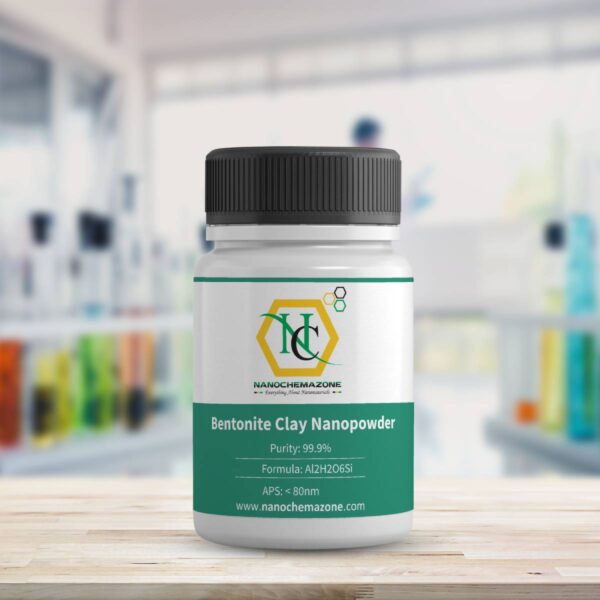
Bentonite Clay Nanopowder
Bentonite Clay Nanopowder
Product Name: Bentonite Clay Nanopowder (Purity: 99.9%, APS: < 80nm)
Product |
Bentonite Clay Nanopowder |
| Cat No | NCZ-MN-113/20 |
| CAS No | 1302-78-9 |
| Purity | 99.9% |
| APS | < 80nm |
| Molecular Weight | 108.1 g/mol |
| Form | Powder |
| Specific Gravity | 2.5(H2O) |
| Melting Point | Decomposes |
| Solubility | Slightly soluble in water Insoluble in methanol |
| Molecular Formula | Al2H2O6Si |
Bentonite Clay Related Information
Storage Conditions:
Airtight sealed, avoid light and keep dry at room temperature.
Please contact us for customization and price inquiry
Email: contact@nanochemazone.com
Note: We supply different size ranges of Nano and micron as per the client’s requirements and also accept customization in various parameters.
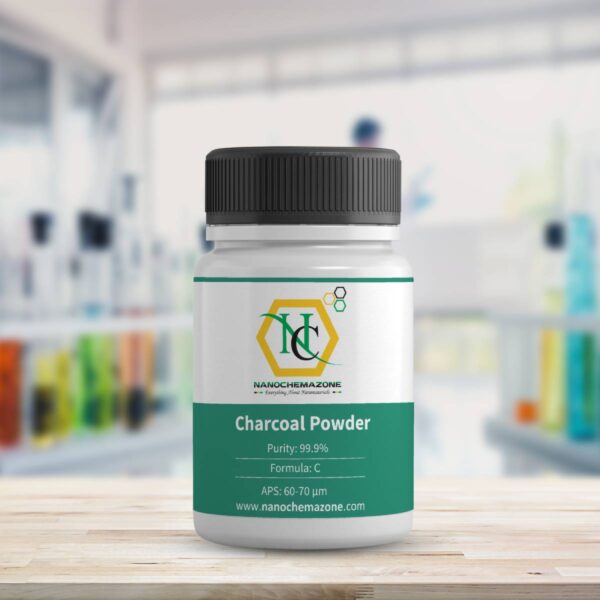
Charcoal Powder
Charcoal Powder
Product Name: Charcoal Powder (C, APS: 60-70µm, Purity: 99.9%)
| Product | Charcoal Powder |
| Cat No | NCZ-MN-162/20 |
| CAS No | 7440-44-0 |
| Purity | 99.9% |
| APS | 60-70µm |
| Molecular Formula | C |
| Form | Powder |
| Color | Black |
| Bulk Density | 0.34g/ml |
Please email us for the customization.
Email: contact@nanochemazone.com
Please contact us for customization and price inquiry
Note: We supply different size ranges of Nano and micron as per the client’s requirements and also accept customization in various parameters.
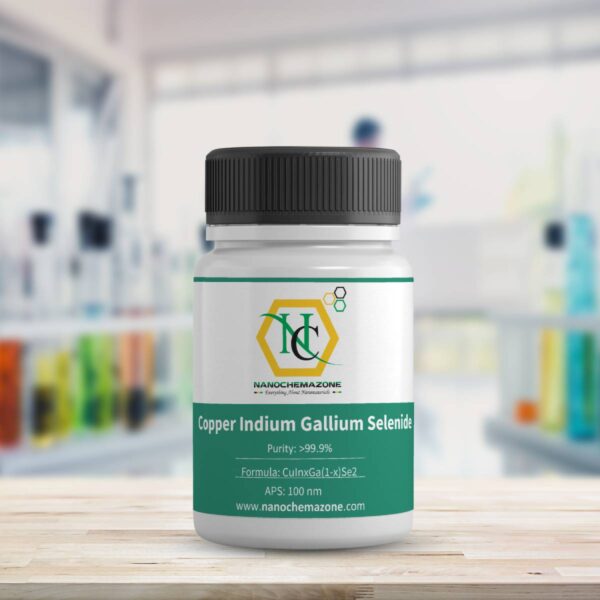
Copper Indium Gallium Selenide
Copper Indium Gallium Selenide
| Product | Copper Indium Gallium Selenide |
| Cat No | NCZ-NSC809/20 |
| CAS No | 12018-95-0 |
| Purity | 99.9% |
| APS | 1-2µm |
| Molecular Formula | CuInxGa(1-x)Se2 |
| Form | Powder |
| Color | Silver |
| Density | 5.7 g/cm3 |
| Melting Point | 990-1070 °C |
Copper Indium Gallium Selenide Description
Copper Indium Gallium Selenide Powder (CIGS) for solar energy applications is a p-type or absorber layer material. CIGS-based photovoltaic cells (PV Cells) for solar energy are fabricated from a positively charged or p-type CIGS layer underneath a negatively charged or n-type layer.
The p-type layer can be produced by thin film deposition of a Gallium doped Copper Indium Selenide (CIGS) Nanopowder sold under the Nanochemazone Solar Energy group. Most CIGS-based PV solar cells are produced from thin film deposition of CIGS using sputtering techniques.
Nanochemazone produces to many standard grades when applicable, including Mil Spec (military grade); ACS, Reagent and Technical Grade; Food, Agricultural and Pharmaceutical Grade; Optical Grade, USP and EP/BP (European Pharmacopoeia/British Pharmacopoeia) and follows applicable ASTM testing standards. Typical and custom packaging is available.
Copper Indium Gallium Selenide Related Information
Storage Conditions:
Airtight sealed, avoid light, and keep dry at room temperature.
Please contact us for customization and price inquiry
Email: contact@nanochemazone.com
Note: We supply different size ranges of Nano and micron as per the client’s requirements and also accept customization in various parameters.
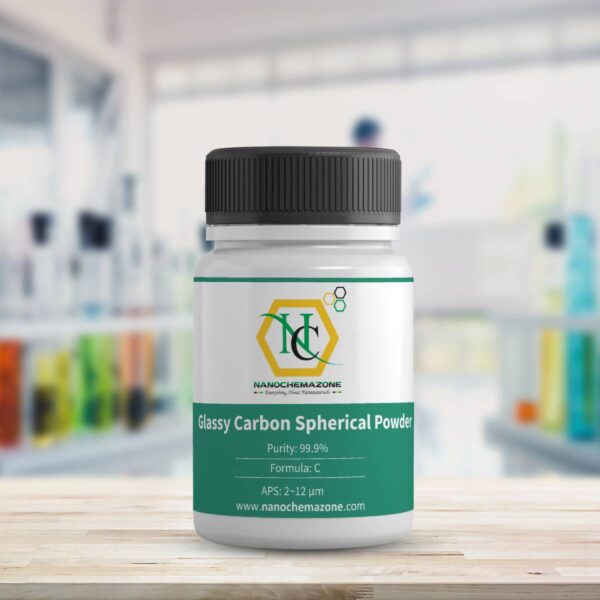
Glassy Carbon Spherical Powder
Glassy Carbon Spherical Powder
Product Name: Glassy Carbon Spherical Powder (C, Purity: 99.9%, APS: 2~12µm)
| Product | Glassy Carbon Spherical Powder |
| Cat No | NCZ-MN-163/20 |
| CAS No | 7440-44-0 |
| Purity | 99.9 % |
| APS | 2~12µm |
| Molecular Formula | C |
| Molecular Weight | 12.01 g/mol |
| Density | 2.267 g/cm³ |
| Appearance | Black solid |
| Melting Point | 3652 - 3697 °C (sublimes) |
| Boiling Point | 4200 °C |
| Thermal Conductivity | 119-165 W/m/K |
| Heat of Vaporization | 128 K-Cal/gm |
| Electronegativity | 2.55 Paulings |
| Solubility | Insoluble in water |
Please email us for the customization.
Email: contact@nanochemazone.com
Please contact us for customization and price inquiry
Note: We supply different size ranges of Nano and micron as per the client’s requirements and also accept customization in various parameters.
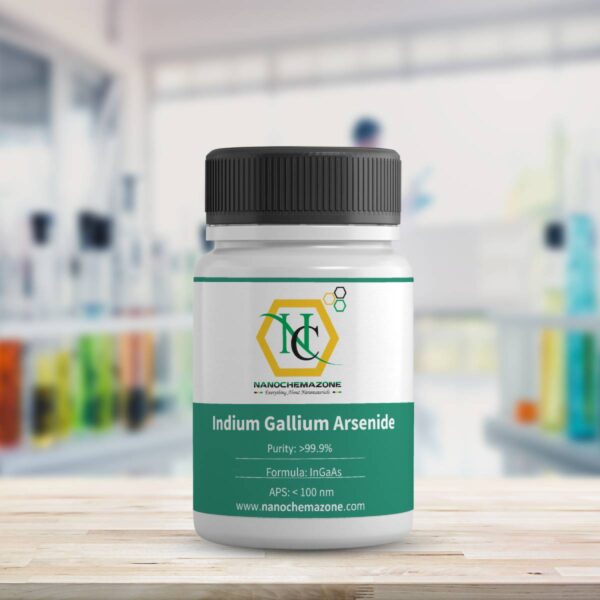
Indium Gallium Arsenide Nanopowder
Indium Gallium Arsenide Nanopowder
Product Name: Indium Gallium Arsenide Nanopowder (InGaAs, Purity: 99.9%, APS: < 100 nm)
| Product | Indium Gallium Arsenide Nanopowder |
| Cat No | NCZ-NSC814/20 |
| CAS No | 106097-59-0 |
| Purity | 99.9% |
| APS | < 100 nm |
| Molecular Formula | InGaAs |
| Molecular Weight | 259.46 g/mol |
| Form | Crystalline Powder |
| Color | White |
| Density | 5.68 g/cm³ |
| Melting Point | 844 °C |
| Conclusion | The specifications Confirm with enterprise standard |
Indium Gallium Arsenide Related Information
Storage Conditions:
Airtight sealed, avoid light, and keep dry at room temperature.
Please contact us for customization and price inquiry
Email: contact@nanochemazone.com
Note: We supply different size ranges of Nano and micron as per the client’s requirements and also accept customization in various parameters.
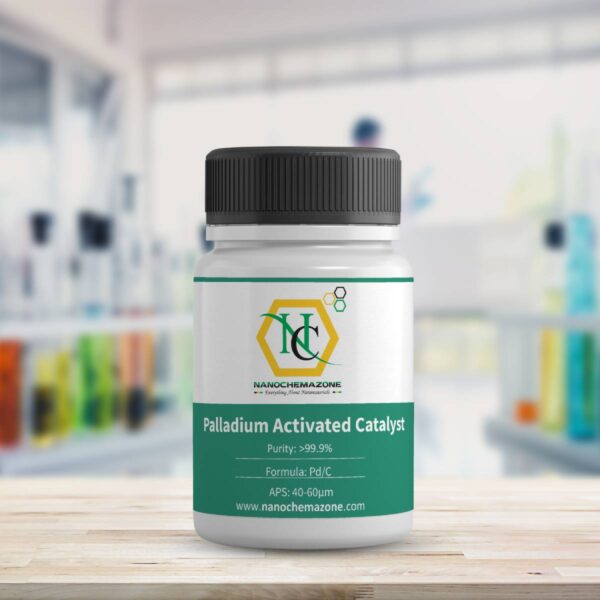
Palladium on Activated Charcoal Catalyst
Palladium on Activated Charcoal Catalyst
Product Name: Palladium on Activated Charcoal Catalyst (Pd/C, APS: 40-60µm, Purity: >99.9%)
| Product | Palladium on Activated Charcoal Catalyst |
| Cat No | NCZ-MN-150/20 |
| CAS No | 7440-05-3 |
| Purity | >99.9% |
| APS | 40-60µm |
| Molecular Formula | Pd/C |
| Color | Black |
| Pd on Activated Charcoal | 1%, 2%, 3%, 4%, 5%, 10% |
| Surface Area, BET | ≥950 m²/g |
| Impurity | ≤0.3 % |
| Water Content | 0.1 % |
| Ash Content | ≤0.5 % |
Please email us for the customization.
Email: contact@nanochemazone.com a
Please contact us for customization and price inquiry
Note: We supply different size ranges of Nano and micron as per the client’s requirements and also accept customization in various parameters.
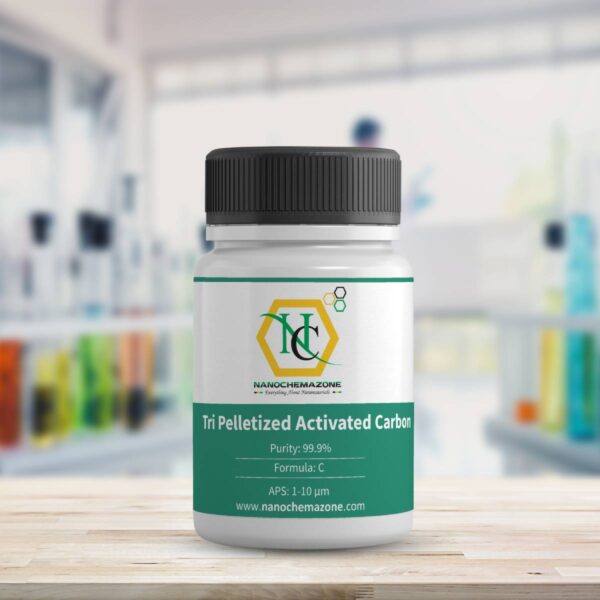
Tri Pelletized Activated Carbon
Tri Pelletized Activated Carbon
Product Name: Tri Pelletized Activated Carbon (c, APS: 1-10µm Purity: 99.9%)
| Product | Tri Pelletized Activated Carbon |
| Cat No | NCZ-MN-169/20 |
| CAS No | 7440-44-0 |
| Purity | 99.9% |
| APS | 1-10μm |
| Molecular Formula | C |
| Molecular Weight | 12-01g/mol |
| Form | Powder |
| Color | Black |
| Melting Point | 3550°C |
| Boiling Point | Sublimes |
| PH value | 5.0-10.0 |
| Vapor Density | 0.4 |
| Vapor pressure | 1 @ 3586C (6487F) |
| Solubility | Insoluble in water |
Please email us for the customization.
Email: contact@nanochemazone.com
Please contact us for customization and price inquiry
Note: We supply different size ranges of Nano and micron as per the client’s requirements and also accept customization in various parameters.
Reviews
There are no reviews yet.