Titanium Aluminum Alloy Spherical
₹0.00
Titanium Aluminum Alloy Spherical
| Product |
Titanium Aluminum Alloy Spherical |
| Colour | N/A |
| Purity | 99% |
| Particle size | 1-5μm (Customizable) |
| Ingredient/MF | Ti47Al2Cr2Nb |
| Product Code | NCZ-CP-297/20 |
| CAS No | N/A |
Titanium Aluminum Alloy Spherical Description
Aluminium alloys (or aluminum alloys; see spelling differences) are alloys in which aluminium (Al) is the predominant metal. The typical alloying elements are copper, magnesium, manganese, silicon, tin and zinc. There are two principal classifications, namely casting alloys and wrought alloys, both of which are further subdivided into the categories heat-treatable and non-heat-treatable. About 85% of aluminium is used for wrought products, for example rolled plate, foils and extrusions.
Cast aluminium alloys yield cost-effective products due to the low melting point, although they generally have lower tensile strengths than wrought alloys. The most important cast aluminium alloy system is Al–Si, where the high levels of silicon (4.0–13%) contribute to give good casting characteristics. Aluminium alloys are widely used in engineering structures and components where light weight or corrosion resistance is required.
Alloys composed mostly of aluminium have been very important in aerospace manufacturing since the introduction of metal-skinned aircraft. Aluminium-magnesium alloys are both lighter than other aluminium alloys and much less flammable than other alloys that contain a very high percentage of magnesium. Aluminium alloy surfaces will develop a white, protective layer of aluminium oxide if left unprotected by anodizing and/or correct painting procedures.
In a wet environment, galvanic corrosion can occur when an aluminium alloy is placed in electrical contact with other metals with more positive corrosion potentials than aluminium, and an electrolyte is present that allows ion exchange. Referred to as dissimilar-metal corrosion, this process can occur as exfoliation or as intergranular corrosion.
Aluminium alloys can be improperly heat treated. This causes internal element separation, and the metal then corrodes from the inside out. Aluminium alloy compositions are registered with The Aluminum Association. Many organizations publish more specific standards for the manufacture of aluminium alloy,
Related Information
Please email us for the customization.
Email: contact@nanochemazone.com
Please contact us for customization and price inquiry
Note: We supply different size ranges of Nano and micron as per the client’s requirements and also accept customization in various parameters.
Spherical High Speed Steel
Note: For pricing & ordering information, please contact us at sales@nanochemazone.com
Please contact us for quotes on Larger Quantities & Customization. E-mail: contact@nanochemazone.com
Customization:
If you are planning to order large quantities for your industrial and academic needs, please note that customization of parameters (such as size, length, purity, functionalities, etc.) are available upon request.
[/vc_column_text][/vc_column][/vc_row]
You must be logged in to post a review.
Related products
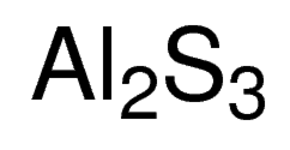
Aluminum Sulphide Powder
Aluminum Sulphide Powder
Product Name: Aluminum Sulphide Powder
| Product | Aluminum Sulphide |
| CAS No. | 1302-81-4 |
| Appearance | White Powder |
| Purity | 99.9% |
| APS | 1 – 5 Microns (Can be customized) |
| Ingredient | Al2S3 |
| Product Code | NCZ-MP-S101 |
| Molecular Weight | 150.16 g/mol |
| Theoretical Density | 2.02 g/cm³ |
| Melting Point | 1,100°C (2,012°F) |
Al2S3 Description :
Sulfides
Inorganic sulfides are ionic compounds containing the sulfide ion S2−. Sulfide compounds can be used in a wide variety of applications including solid-state electrolytes, cathode materials in lithium-ion and thermal batteries, semi-conductors in thermoelectric devices, as part of phosphor compositions, as photovoltaic materials, as pigments, and a variety of other applications. Nanochemazone is a world-leading manufacturer in the production of sulfide compounds with one of the most comprehensive selections of sulfides and extensive sulfide-manufacturing expertise. Most sulfides are manufactured as powders in large batch quantities but certain commercial sulfides are available in large metric-ton quantities. Additionally, Nanochemazone can custom synthesis sulfides that may not be listed in our catalog and can modify sulfides to customer's specifications including producing mixed sulfides, non-stoichiometric compositions, or special purities and particle sizes.
Aluminum Sulfide Applications:
Aluminum sulfide, also known as aluminium sulphide, is a compound of aluminum and sulfur with the formula Al2S3. A colorless or gray solid with an exceptional sensitivity to moisture, aluminum sulfide is not to be confused with the more widely used aluminum sulfate, Al2(SO4)3. Exposed to the atmosphere or other sources of moisture, aluminum sulfide will hydrolize into aluminum hydroxides and hydrogen sulfide gas. This makes careful storage and handling a priority.
Many of the most interesting applications of aluminum sulfide remain in the early research phases, with many researchers eager to explore its value in aluminum-sulfur energy story.
- Energy storage. A subject of research in the production of aluminum-sulfur batteries, a potentially superior alternative to lithium batteries.
- Like several similar metal sulfides, aluminum sulfide may be of value for its photovoltaic properties at smaller scales.
- Useful for its reactivity in producing several commercially or academically valuable compounds.
- Aluminum source. Moderately water and acid soluble source for aluminum.
RELATED INFORMATION
Storage Conditions:
Airtight sealed, avoid light and keep dry at room temperature.
Please contact us for customization and price inquiry
Email: contact@nanochemazone.com
Note: We supply different size ranges of Nano and micron as per the client’s requirements and also accept customization in various parameters.
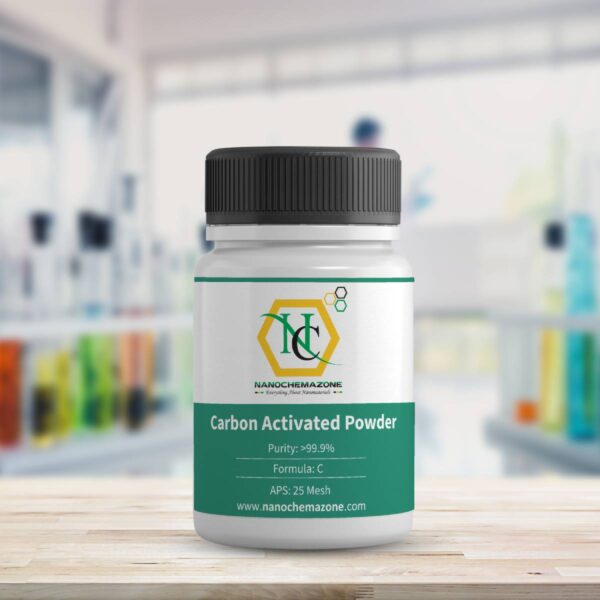
Carbon Activated Powder
Carbon Activated Powder
Product Name: Carbon Activated Powder (C, Purity: > 99.9% APS: 25 mesh)
| Product | Carbon Activated Powder |
| Cat No | NCZ-MN-158/20 |
| CAS No | 7440-44-0 |
| Purity | > 99.9% |
| APS | 25 mesh |
| Molecular Formula | C |
| Molecular Weight | 12.01g/mol |
| Form | Powder |
| Color | Black |
| Melting Point | 3550C (6422F) |
| Boiling Point | Sublimes |
| PH value | 5.0-10.0 |
| Specific Gravity | 250-600g/1 |
| % Volatiles by volume @ 21C (70F) | 0 |
| Vapor Density | 0.4 |
| Vapor pressure | 1 @ 3586C (6487F) |
| Solubility | Insoluble in water |
Please email us for the customization.
Email: contact@nanochemazone.com
Please contact us for customization and price inquiry
Note: We supply different size ranges of Nano and micron as per the client’s requirements and also accept customization in various parameters.
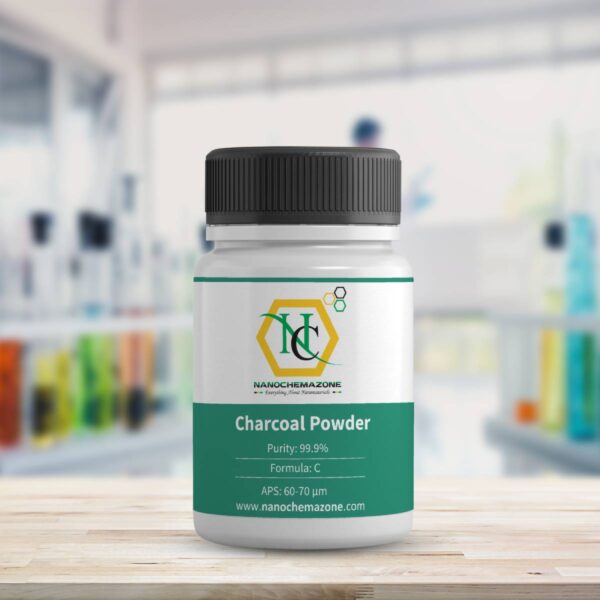
Charcoal Powder
Charcoal Powder
Product Name: Charcoal Powder (C, APS: 60-70µm, Purity: 99.9%)
| Product | Charcoal Powder |
| Cat No | NCZ-MN-162/20 |
| CAS No | 7440-44-0 |
| Purity | 99.9% |
| APS | 60-70µm |
| Molecular Formula | C |
| Form | Powder |
| Color | Black |
| Bulk Density | 0.34g/ml |
Please email us for the customization.
Email: contact@nanochemazone.com
Please contact us for customization and price inquiry
Note: We supply different size ranges of Nano and micron as per the client’s requirements and also accept customization in various parameters.
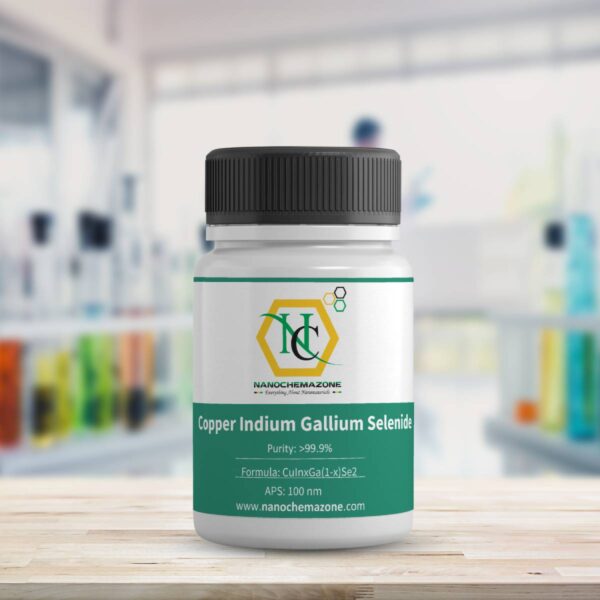
Copper Indium Gallium Selenide
Copper Indium Gallium Selenide
| Product | Copper Indium Gallium Selenide |
| Cat No | NCZ-NSC809/20 |
| CAS No | 12018-95-0 |
| Purity | 99.9% |
| APS | 1-2µm |
| Molecular Formula | CuInxGa(1-x)Se2 |
| Form | Powder |
| Color | Silver |
| Density | 5.7 g/cm3 |
| Melting Point | 990-1070 °C |
Copper Indium Gallium Selenide Description
Copper Indium Gallium Selenide Powder (CIGS) for solar energy applications is a p-type or absorber layer material. CIGS-based photovoltaic cells (PV Cells) for solar energy are fabricated from a positively charged or p-type CIGS layer underneath a negatively charged or n-type layer.
The p-type layer can be produced by thin film deposition of a Gallium doped Copper Indium Selenide (CIGS) Nanopowder sold under the Nanochemazone Solar Energy group. Most CIGS-based PV solar cells are produced from thin film deposition of CIGS using sputtering techniques.
Nanochemazone produces to many standard grades when applicable, including Mil Spec (military grade); ACS, Reagent and Technical Grade; Food, Agricultural and Pharmaceutical Grade; Optical Grade, USP and EP/BP (European Pharmacopoeia/British Pharmacopoeia) and follows applicable ASTM testing standards. Typical and custom packaging is available.
Copper Indium Gallium Selenide Related Information
Storage Conditions:
Airtight sealed, avoid light, and keep dry at room temperature.
Please contact us for customization and price inquiry
Email: contact@nanochemazone.com
Note: We supply different size ranges of Nano and micron as per the client’s requirements and also accept customization in various parameters.
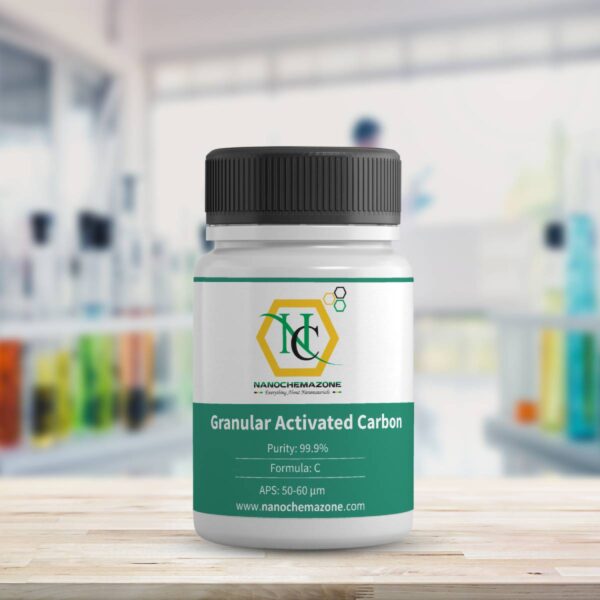
Granular Activated Carbon
Granular Activated Carbon
Product Name: Granular Activated Carbon (C, Purity: 99.9%, APS: 50-60µm)
| Product | Granular Activated Carbon |
| Cat No | NCZ-MN-164/20 |
| CAS No | 7440-44-0 |
| Purity | 99.9% |
| APS | 50-60 µm |
| Molecular Weight | 242.62 g/ mol |
| Form | Granules |
| Color | Black |
| PH value | 6-7 |
| SSA | 900-1100 m2/g |
| Bulk Density | 0.45 g/ cm3 |
| Solubility | Insoluble In Water |
Please email us for the customization.
Email: contact@nanochemazone.com
Please contact us for customization and price inquiry
Note: We supply different size ranges of Nano and micron as per the client’s requirements and also accept customization in various parameters.
Indium Arsenide Powder
Indium Arsenide Powder
Product Name: Indium Arsenide Powder (InAs, Purity: 99.9%, APS: 40-50 µm)
| Product | Indium Arsenide Powder |
| Cat No | NCZ-NSC813/20 |
| CAS No | 1303-11-3 |
| Purity | 99.9% |
| APS | 40-50µm |
| Molecular Formula | InAs |
| Molecular Weight | 189.740g/mol |
| Form | Powder |
| Color | Gray |
| Density | 5.67g/cm3 |
| Melting Point | 942°C |
| Refractive Index | 3.51 |
| Dielectric Constant | 15.15 |
| Electrton Mobility | 40000(cm2/(V*s)) |
| Storage | Normal Room Temperature |
| Thermal Conductivity | 0.27(300K (W/cm•K)) |
| Specific Heat Capacity | 47.8 J•mol-1•K-1 |
| Solubility in water | Insoluble in water |
Indium Arsenide Powder Related Information
Storage Conditions:
Airtight sealed, avoid light, and keep dry at room temperature.
Please contact us for customization and price inquiry
Email: contact@nanochemazone.com
Note: We supply different size ranges of Nano and micron as per the client’s requirements and also accept customization in various parameters.
Indium Gallium Arsenide Nanopowder
Indium Gallium Arsenide Nanopowder
Product Name: Indium Gallium Arsenide Nanopowder (InGaAs, Purity: 99.9%, APS: < 100 nm)
| Product | Indium Gallium Arsenide Nanopowder |
| Cat No | NCZ-NSC814/20 |
| CAS No | 106097-59-0 |
| Purity | 99.9% |
| APS | < 100 nm |
| Molecular Formula | InGaAs |
| Molecular Weight | 259.46 g/mol |
| Form | Crystalline Powder |
| Color | White |
| Density | 5.68 g/cm³ |
| Melting Point | 844 °C |
| Conclusion | The specifications Confirm with enterprise standard |
Indium Gallium Arsenide Related Information
Storage Conditions:
Airtight sealed, avoid light, and keep dry at room temperature.
Please contact us for customization and price inquiry
Email: contact@nanochemazone.com
Note: We supply different size ranges of Nano and micron as per the client’s requirements and also accept customization in various parameters.
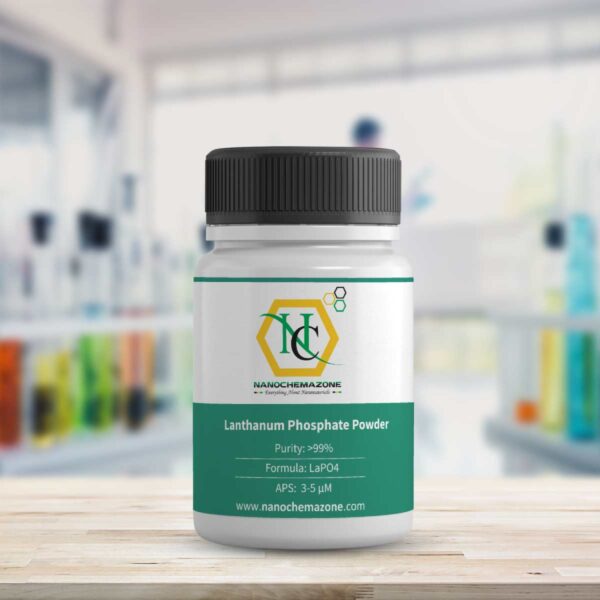
Lanthanum (III) Phosphate, Anhydrous Powder
Lanthanum Phosphate or Lanthanum (III) Phosphate, Anhydrous Powder
Product Name: Lanthanum (III) Phosphate, Anhydrous
| Product Name | Lanthanum (III) Phosphate, Anhydrous |
| Cat No | NCZ-MN-259/20 |
| CAS No | 13778-59-1 |
| Purity | 99.9% |
| APS | 40-50 µm |
| MF | LaPO4 |
| Molecular Weight | 233.875 g/mol |
| Appearance | White powder or chunks |
| Form | Powder |
| Non-Rare Earth Impurities | %Max. | %Max. | %Max. |
| Fe2O3 | 0.005 | 0.01 | 0.01 |
| SiO2 | 0.01 | 0.02 | 0.03 |
| CaO | 0.01 | 0.01 | 0.03 |
| Cl- | 0.005 | 0.01 | 0.05 |
| SO4- | 0.01 | 0.01 | 0.03 |
| K2O | 0.01 | 0.01 | 0.01 |
| Na2O | 0.005 | 0.01 | 0.01 |
Lanthanum (III) phosphate Applications:
Lanthanum Phosphate Widely used in microelectronics, catalysts, ferroelectric materials, lithium batteries, semiconductors, and other electronic fields.
Lanthanum (III) phosphate Related Information
Storage Conditions:
Airtight sealed, avoid light and keep dry at room temperature.
Please contact us for customization and price inquiry
Email: contact@nanochemazone.com
Note: We supply different size ranges of Nano and micron as per the client’s requirements and also accept customization in various parameters.
Also available as Lanthanum (III) phosphate hydrate form powder
Lanthanum (III) Phosphate Hydrate
Lanthanum Phosphate or Lanthanum (III) Phosphate Hydrate is highly insoluble in water and converts to the oxide when heated (calcined). Anhydrous Lanthanum (III) Phosphate is generally immediately available in most volumes. High purity, submicron, and nanopowder forms may be considered. Nanochemazone produces too many standard grades when applicable, including Mil Spec (military grade); ACS, Reagent and Technical Grade; Food, Agricultural and Pharmaceutical Grade; Optical Grade, USP and EP/BP (European Pharmacopoeia/British Pharmacopoeia) and follows applicable ASTM testing standards. Typical and custom packaging is available. Additional technical, research, and safety (MSDS) information are available. Please request a quote above to receive pricing information based on your specifications.
Reviews
There are no reviews yet.