
Shop

Gallium Sulfide Powder
Gallium Sulfide Powder
| Product |
Gallium Sulfide Powder |
| CAS No. | 12024-22-5 |
| Appearance | Powder |
| Purity | 99% |
| APS | 1-5 µM (Can be customized) |
| Ingredient | Ga2S3 |
| Product Code | NCZ-AP-1069/20 |
| Molecular Weight | N/A |
| Density | N/A |
| Melting Point | N/A |
Gallium Sulfide Description
Gallium Sulfide is a moderately water and acid soluble Gallium source for uses compatible with sulfates. Sulfate compounds are salts or esters of sulfuric acid formed by replacing one or both of the hydrogens with a metal. Gallium Sulfide is generally immediately available in most volumes.
Related Information
Storage Conditions:
Airtight sealed, avoid light and keep dry at room temperature.
Please contact us for customization and price inquiry
Email: contact@nanochemazone.com
Note: We supply different size ranges of Nano and micron as per the client’s requirements and also accept customization in various parameters.

Gallium Telluride Powder
Gallium Telluride Powder
| Product |
Gallium Telluride |
| CAS No. | 12024-27-0 |
| Appearance | Black |
| Purity | 99% |
| APS | 1-5µM (Can be customized) |
| Ingredient | Ga2Te3 |
| Product Code | NCZ-NSC676/20 |
| Molecular Weight | 522.25 g/mol |
| Density | 5.57 g/cm³ |
| Melting Point | 790ºC (1,454°F) |
Gallium Telluride Description:
Chemazone specializes in producing high purity Copper Gallium Telluride Granules and Powder with the highest possible density and smallest possible average grain sizes for use in Chemical Vapor Deposition (CVD) and Physical Vapor Deposition (PVD) processes including Thermal and Electron Beam (E-Beam) Evaporation, Low Temperature Organic Evaporation, Atomic Layer Deposition (ALD),
Metallic-Organic and Chemical Vapor Deposition (MOCVD). Our standard granules are amorphous uniform pieces in sizes ranging from < 1 mm, 1-2 mm, and 3-5 mm. Materials are produced using crystallization, solid state and other ultra high purification processes such as sublimation.
Chemazone specializes in producing custom compositions for commercial and research applications and for new proprietary technologies. Nanochemazone also casts any of the rare earth metals and most other advanced materials into rod, bar, or plate form, as well as other machined shapes and through other processes such as nanoparticles and in the form of solutions and organometallics. We also produce Copper Gallium Telluride Sputtering Targets.
Related Information
Storage Conditions:
Airtight sealed, avoid light and keep dry at room temperature.
Please contact us for customization and price inquiry
Email: contact@nanochemazone.com
Note: We supply different size ranges of Nano and micron as per the client’s requirements and also accept customization in various parameters.

Gallium Tin Alloy Nanopowder
| Product Formula | Ga: Sn |
| Product Number | NCZ-A-125-19 |
| Molecular Weight | 188.43 g/moL |
| APS | ≤ 80 nm (can be customized) |
| Purity | 99.9% |
| Color | Silver Grayish |
| Form | Nanopowder |
| Density | 1.9 g/cm3 |
| Melting Point | 600 °C |
| Boiling Point | 1421 °C |
Note: We can manufacture and supply different particle sizes (Nano size range, Micron, Submicron, and different Mesh size) products of Alloy powders (Multi-Element, Multi-Element Oxide and Mixture of Rare Earth Elements) according to client’s requirements. Kindly ask for the customization in size and Element ratio composition.

Gamma Oryzanol Powder
Gamma Oryzanol Powder
Product Name: Gamma Oryzanol Powder (C40H58O4, Purity >99%)
| Product |
Gamma Oryzanol Powder |
| Cat No | NCZ-NSC822/20 |
| CAS No | 11042-64-1 |
| Synonyms | Ferulic acid, Oliver |
| Purity | >99% |
| Molecular Formula | C40H58O4 |
| Molecular Weight | C40H58O4 |
| Appearance | White Crystalline Powder |
| Odor | Odorless |
| Density | 0.32g/cm3 |
| Melting Point | 136°C |
| Boiling Point | 663.2°C |
| Flash point | 193.8°C |
| Mold | < 10cfu |
| Loss on Drying | 0.6 % |
| Burring residue | 0.05 % |
| Bacteria | 10cfu |
| Storage | Store at 25 °C Protect from Moisture |
Gamma Oryzanol Related Information
Storage Conditions: Airtight sealed, avoid light and keep dry at room temperature. Please contact us for customization and price inquiry Email: contact@nanochemazone.com Note: We supply different size ranges of Nano and micron as per the client’s requirements and also accept customization in various parameters.
Gelatin Nanoparticles
Gelatin Nanoparticles
Product Name: Gelatin Nanoparticles (Purity: 99.9%, APS: < 60 nm)
Product |
Gelatin Nanoparticles |
| Cat No | NCZ-MN-122/20 |
| CAS No | 9000-70-8 |
| Purity | 99.9% |
| APS | < 60nm |
| Color | White to Amber |
| Density | 2.25g/cm³ |
| Boiling Point | >100°C |
| Loss on drying | 5.0% |
| pH | 6.5 ~6.8 |
| Standard Plate Count | 140 cfu/g |
| Yeast and Mould Count | 033 cfu/g |
| Acid insoluble substance | ≤0.1% |
| Stability | Stable under normal temp. |
| Solubility | Soluble in hot water |
Gelatin Related Information
Storage Conditions: Airtight sealed, avoid light and keep dry at room temperature. Please contact us for customization and price inquiry Email: contact@nanochemazone.com Note: We supply different size ranges of Nano and micron as per the client’s requirements and also accept customization in various parameters.
Germanium Dioxide Powder
| Product | Germanium Dioxide Powder |
| CAS No. | 1310-53-8 |
| Appearance | Powder |
| Purity | 99.9% |
| APS | 1 – 5 Microns (Can be customized) |
| Ingredient | GeO2 |
| Product Code | NCZ-AE-142 |
- Germanium Dioxide is the main commercial source of germanium. Heating germanium dioxide
- The refractive index of germanium dioxide and optical dispersion properties makes it useful as an optical material for wide-angle lenses and in optical microscope objective lenses.
- Germanium dioxide is also used as a catalyst in production of polyethylene terephthalate resin, and for production of other germanium compounds.
- Furthermore, germanium dioxide is used in algaculture, etc.

Germanium Nanopowder
Germanium Nanopowder
Product Name: Germanium Nanopowder (Ge, Purity: >99%, APS: < 10nm)
| Product | Germanium Nanopowder |
| Cat No | NCZ-MN-062/20 |
| CAS | 7440-56-4 |
| Purity | >99% |
| APS | < 10nm (Can be Customized) |
| Molecular Formula | Ge |
| Molecular Weight | 72.59g/ mol |
| Form | Powder |
| Color | Grey |
| Density | 5.35 g/ cm3 |
| Melting Point | 937 °C |
| Boiling Point | 2830 °C |
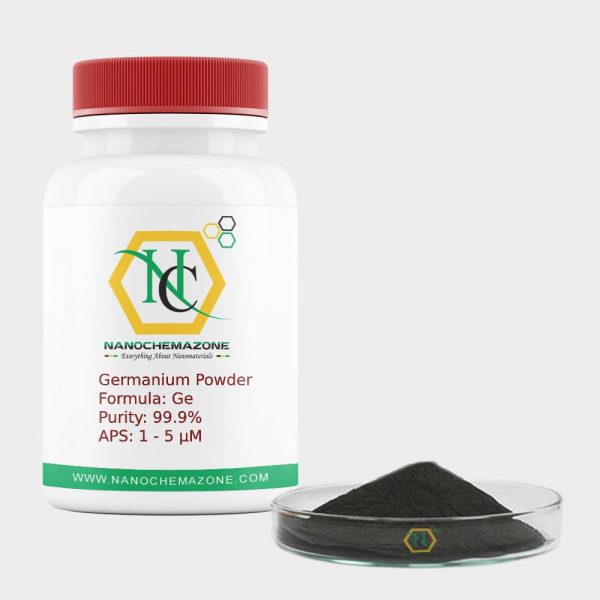
Germanium Powder
| Product | Germanium Powder |
| CAS No. | 7440-56-4 |
| Appearance | Powder |
| Purity | 99.9% |
| APS | 1 – 5 microns (can be customized) |
| Ingredient | Ge |
| Product Code | NCZ-AE-176 |

Germanium Telluride Powder
Product Name: Germanium Telluride Powder
| Product | Germanium Telluride Powder |
| CAS No. | 12025-39-7 |
| Appearance | Black Powder |
| Purity | 99.9% |
| APS | 1 – 5 Microns (Can be customized) |
| Ingredient | GeTe |
| Product Code | NCZ-NSC-228/20 |
Germanium Telluride Powder Description :
GermaniumTelluride Powder is a promising thermoelectric compound with uses in doping, alloying, and nanostructuring, non-stoichiometric defects. It is also an important semiconductor that can act as a low-temperature superconductor when doped. GeTe is also an important semiconductor material prototypical phase change material of high interest for applications in optical and electronic non-volatile memories.
Germanium Telluride Powder Related Information
Storage Conditions: Airtight sealed, avoid light, and keep dry at room temperature. Please contact us for customization and price inquiry Email: contact@nanochemazone.com Note: We supply different size ranges of Nano and micron as per the client’s requirements and also accept customization in various parameters.
Germanium Wafers
Germanium Wafer
| Product Name | Germanium Wafer |
| Product Code | NCZ-WM-0018 |
| CAS | 7440-56-4 |
| Diameter | 50.8 mm, also available in 3, 5, 6, 12″ (Customization possible) |
| Type | Un-doped (Customization possible) |
| Orientation | <100>/other orientations are also available |
| Surface | Both/Single Side Polished |
| Wafer Thickness | 500 /- 25 µm (Customization possible) |
| Resistivity | 5-40 Ω-cm (Customization possible) |
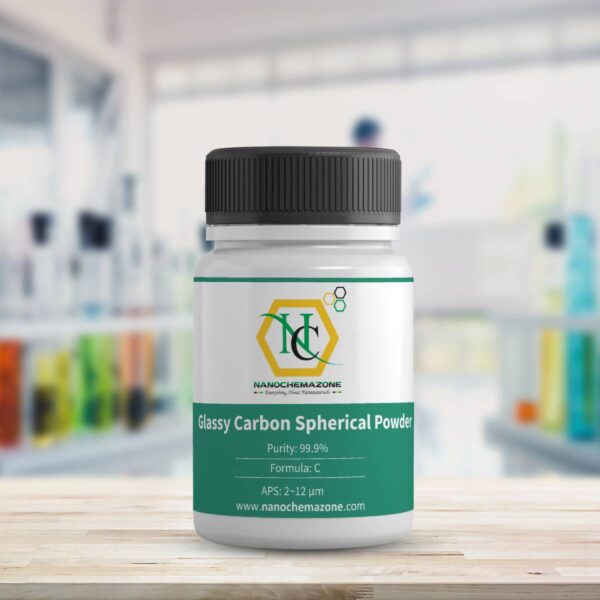
Glassy Carbon Spherical Powder
Glassy Carbon Spherical Powder
Product Name: Glassy Carbon Spherical Powder (C, Purity: 99.9%, APS: 2~12µm)
| Product | Glassy Carbon Spherical Powder |
| Cat No | NCZ-MN-163/20 |
| CAS No | 7440-44-0 |
| Purity | 99.9 % |
| APS | 2~12µm |
| Molecular Formula | C |
| Molecular Weight | 12.01 g/mol |
| Density | 2.267 g/cm³ |
| Appearance | Black solid |
| Melting Point | 3652 - 3697 °C (sublimes) |
| Boiling Point | 4200 °C |
| Thermal Conductivity | 119-165 W/m/K |
| Heat of Vaporization | 128 K-Cal/gm |
| Electronegativity | 2.55 Paulings |
| Solubility | Insoluble in water |

Glucosamine Phosphate Hydrate
Glucosamine Phosphate Hydrate
Product Name: Glucosamine Phosphate Hydrate (C6H16NO9P, Purity: >99%)
| Product |
Glucosamine Phosphate Hydrate |
| Cat No | NCZ-NSC849/20 |
| CAS No | 3616-42-0 |
| Purity | >99% |
| Molecular Formula | C6H16NO9P |
| Molecular Weight | 277.17g/mol |
| Form | Powder |
| Color | White |
| Melting Point | >127 °C |
| Solubility | Slightly soluble in water |
| APS | 1-5 µM (Can be customized) |
Related Information
Storage Conditions: Airtight sealed, avoid light and keep dry at room temperature. Please contact us for customization and price inquiry Email: contact@nanochemazone.com Note: We supply different size ranges of Nano and micron as per the client’s requirements and also accept customization in various parameters.
Glucosamine Sulphate Powder
Glucosamine Sulphate Powder
Product Name: Glucosamine Sulphate Powder (C6H13NO8S, Purity:>99%)
Product |
Glucosamine Sulphate Powder |
| Cat No | NCZ-NSC823/20 |
| CAS No | 91674-26-9 |
| Purity | >99% |
| Molecular Weight | 259.23 g/mol |
| Appearance | White Crystalline Powder |
| Melting Point | 160-162 °C |
| pH | 4.1 |
| Loss on Drying | 0.08 % |
| Residue on ignition | 27.80 % |
| Specific Rotation | (+)51.5 ° |
| Shelf Life | 3 years when properly stored Store at 25 °C Protect from Moisture |
| Solubility | Soluble in water |
Glucosamine Sulphate Related Information
Storage Conditions: Airtight sealed, avoid light and keep dry at room temperature. Please contact us for customization and price inquiry Email: contact@nanochemazone.com Note: We supply different size ranges of Nano and micron as per the client’s requirements and also accept customization in various parameters.
Glycine Sodium Hydrate
Glycine Sodium Hydrate
Product Name: Glycine Sodium Hydrate (C2H4NO2Na. XH2O, Purity: >99%)
| Product |
Glycine Sodium Hydrate |
| Cat No | NCZ-NSC854/20 |
| CAS No | 6000-44-8 |
| Purity | >99% |
| Molecular Formula | C2H4NO2Na. XH2O |
| Molecular Weight | 97.05g/mol |
| Form | Powder |
| Color | White to yellow |
| Density | 1.607 g/cm3 |
| Melting Point | 197 - 201 °C |
| pH | 11.1 to 12.0 (10% aq. soln.) |
| Odor | Tracer of NH³ |
| Specific gravity | 4.8 - 5.0 |
| Storage | kept sealed in dry, cool place |
| Solubility | Soluble in methanol |
| APS | 1 - 5 µm (Can be customized) |
Related Information
Storage Conditions: Airtight sealed, avoid light and keep dry at room temperature. Please contact us for customization and price inquiry Email: contact@nanochemazone.com Note: We supply different size ranges of Nano and micron as per the client’s requirements and also accept customization in various parameters.
Gold Aluminum Alloy
Gold Aluminum Alloy
| Product |
Gold Aluminum Alloy |
| Colour | N/A |
| Purity | 99% |
| size | 1 - 3 mm (Customizable) |
| Ingredient/MF | AuAl |
| Product Code | NCZ-CP-260/20 |
| Density | N/A |
| CAS No | N/A |
Gold Aluminum Alloy Description
Aluminium alloys (or aluminum alloys; see spelling differences) are alloys in which aluminium (Al) is the predominant metal. The typical alloying elements are copper, magnesium, manganese, silicon, tin and zinc. There are two principal classifications, namely casting alloys and wrought alloys, both of which are further subdivided into the categories heat-treatable and non-heat-treatable. About 85% of aluminium is used for wrought products, for example rolled plate, foils and extrusions. Cast aluminium alloys yield cost-effective products due to the low melting point, although they generally have lower tensile strengths than wrought alloys.
The most important cast aluminium alloy system is Al–Si, where the high levels of silicon (4.0–13%) contribute to give good casting characteristics. Aluminium alloys are widely used in engineering structures and components where light weight or corrosion resistance is required.
Alloys composed mostly of aluminium have been very important in aerospace manufacturing since the introduction of metal-skinned aircraft. Aluminium-magnesium alloys are both lighter than other aluminium alloys and much less flammable than other alloys that contain a very high percentage of magnesium.
Aluminium alloy surfaces will develop a white, protective layer of aluminium oxide if left unprotected by anodizing and/or correct painting procedures.
In a wet environment, galvanic corrosion can occur when an aluminium alloy is placed in electrical contact with other metals with more positive corrosion potentials than aluminium, and an electrolyte is present that allows ion exchange.
Referred to as dissimilar-metal corrosion, this process can occur as exfoliation or as intergranular corrosion. Aluminium alloys can be improperly heat treated. This causes internal element separation, and the metal then corrodes from the inside out.
Aluminium alloy compositions are registered with The Aluminum Association. Many organizations publish more specific standards for the manufacture of aluminium alloy, including the Society of Automotive Engineers standards organization, specifically its aerospace standards subgroups, and ASTM International.
Related Information
Please email us for the customization.
Email: contact@nanochemazone.com
Please contact us for customization and price inquiry
Note: We supply different size ranges of Nano and micron as per the client’s requirements and also accept customization in various parameters.
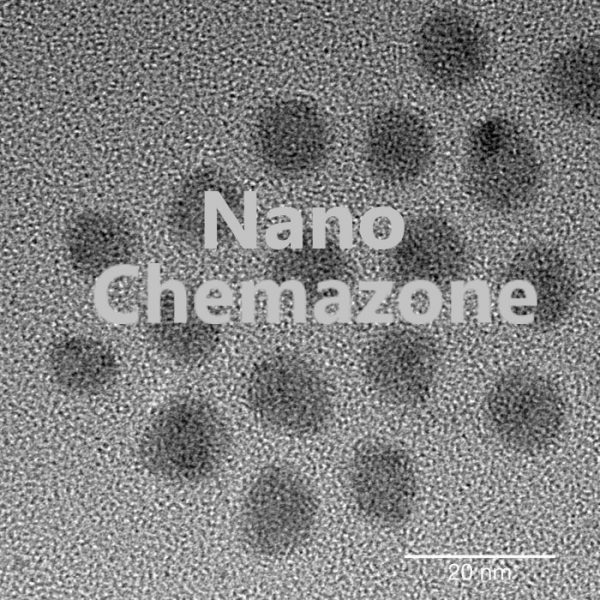
Gold Cadmium Selenium Core Shell Nanoparticles
Gold Cadmium Selenium Core Shell Nanoparticles
| MF: | Au/CdSe |
| Chemical Name: | Gold Cadmium Selenium Core Shell Nanoparticles |
| Purity: | >99.99% |
| APS: | 80-100 nm (Size Customization possible) |
| Form: | Nanopowder/Nanodispersion |
| Product Number: | NCZCS110 |
| CAS Number: | 7440-57-5 |

Gold Chloride Hydrate
Gold Chloride Hydrate
Product Name: Gold Chloride Hydrate (AuCl3, APS: < 10µm, Purity: >99%)
| Product |
Gold Chloride Hydrate |
| Cat No | NCZ-NSC855/20 |
| CAS No | 27988-77-8 |
| Purity | >99% |
| APS | < 10µm (Can be customized) |
| Molecular Formula | AuCl3 |
| Molecular Weight | 303.33g/mol |
| Form | Crystals and Lumps |
| Color | Yellow |
| Density | 3.9g/mol |
Related Information
Storage Conditions: Airtight sealed, avoid light and keep dry at room temperature. Please contact us for customization and price inquiry Email: contact@nanochemazone.com Note: We supply different size ranges of Nano and micron as per the client’s requirements and also accept customization in various parameters.
Gold Chloride Powder
Gold Chloride Powder
| Product |
Gold Chloride Powder |
| Colour | yellow solid |
| Purity | 99% |
| Particle size | 100-325 Mesh (Customizable) |
| Ingredient/MF | AuCl |
| Product Code | NCZ-CP-273/20 |
| Density | 7.6 g/cm3 |
| CAS No | 10294-29-8 |
| Melting point | 170 °C (338 °F; 443 K) |
| Boiling point | 298 °C (568 °F; 571 K) (decomposes) |
Gold Chloride Description
Gold Chloride, traditionally called auric chloride, is a chemical compound of gold and chlorine. With the molecular formula Au2Cl6, the name gold trichloride is a simplification, referring to the empirical formula, AuCl3. The Roman numerals in the name indicate that the gold has an oxidation state of +3, which is common for gold compounds.
There is also another related chloride of gold, gold(I) chloride (AuCl). Chloroauric acid, HAuCl4, the product formed when gold dissolves in aqua regia, is sometimes referred to as "gold chloride" or "acid gold trichloride". Gold chloride is very hygroscopic and highly soluble in water as well as ethanol.
It decomposes above 160 °C or in light. Gold chloride is used as a starting material for the preparation of Phosphine ligated gold(I) complexes, which is used as catalysts in synthetic chemistry. It is also used to prepare metallic gold and potassium auric bromide and potassium chloride.
Related information
Please email us for the customization.
Email: contact@nanochemazone.com
Please contact us for customization and price inquiry
Note: We supply different size ranges of Nano and micron as per the client’s requirements and also accept customization in various parameters.
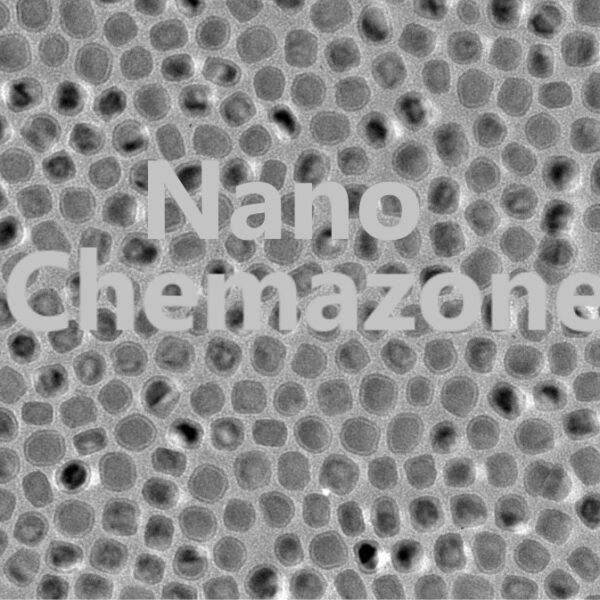
Gold Cobalt Core Shell Nanoparticles
Gold Cobalt Core Shell Nanoparticles
| MF: | Au/Co |
| Chemical Name: | Gold Cobalt Core Shell Nanoparticles |
| Purity: | >99.99% |
| APS: | 80-100 nm (Size Customization possible) |
| Form: | Nanopowder/Nanodispersion |
| Product Number: | NCZCS111 |
| CAS Number: | 7440-57-5 |

Gold Copper Alloy Nanopowder
| Product Formula | Au: Cu |
| Product Number | NCZ-A-126-19 |
| CAS Number | 7440-57-5/7440-50-8 |
| Molecular Weight | 260.51 g/moL |
| APS | ≤ 80 nm (can be customized) |
| Purity | 99.9% |
| Color | Golden Copper |
| Form | Nanopowder |
Note: We can manufacture and supply different particle sizes (Nano size range, Micron, Submicron, and different Mesh size) products of Alloy powders (Multi-Element, Multi-Element Oxide and Mixture of Rare Earth Elements) according to client’s requirements. Kindly ask for the customization in size and Element ratio composition.

Gold Copper Iodide Core Shell Nanoparticles
Gold Copper Iodide Core Shell Nanoparticles
| MF: | Au/CuI |
| Chemical Name: | Gold Copper Iodide Core Shell Nanoparticles |
| Purity: | >99.99% |
| APS: | 80-100 nm (Size Customization possible) |
| Form: | Nanopowder/Nanodispersion |
| Product Number: | NCZCS112 |
| CAS Number: | 7440-57-5 |

Gold Dispersion
Gold Dispersion
Product Name: Gold Dispersion (Au, Purity: 99.9 %, APS: 1-10 nm)
| Product | Gold Dispersion |
| Cat No | NCZ-MN-104/20 |
| CAS No | 7440-57-5 |
| Purity | 99.9 % |
| APS | 1 - 10 nm (Can be Customized) |
| Molecular Formula | Au |
| Molecular Weight | 196.97g/mol |
| Form | Liquid |
| Color | Brown/ Red Suspension |
| Concentration | 2-3 wt% (Available as per Customer requirement) |
| Dispersing Agent | Organic Solvent (DMF), IPA Ethanol, Water (ddH2O) |
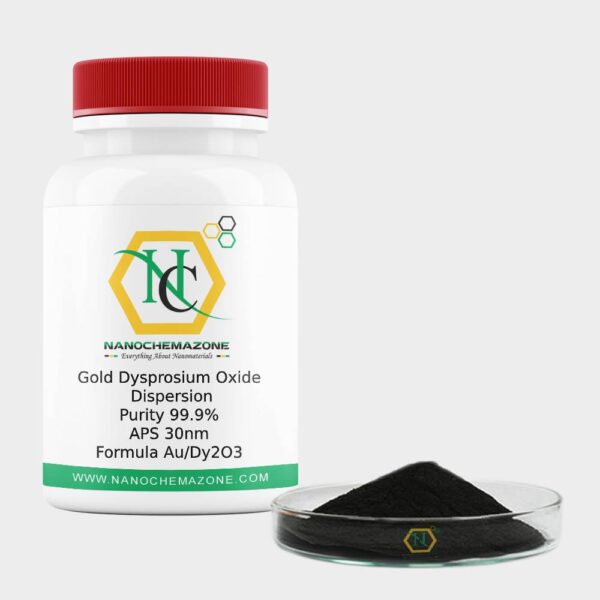
Gold Dysprosium Oxide Dispersion
Gold Dysprosium Oxide Dispersion
Gold Dysprosium Oxide Dispersion
| Product |
Gold Dysprosium Oxide Dispersion |
| CAS No. | 1308-87-8 |
| Appearance | Black Powder |
| Purity | 99.9% |
| APS | 30 nm (Can be customized) |
| Ingredient | Au/ Dy2O3 |
| Product Code | NCZ-NSC425/20 |
Platinum Cerium Oxide Dispersion Description:
Gold is a chemical element with the symbol Au (from Latin: aurum) and atomic number 79, making it one of the higher atomic number elements that occur naturally. In a pure form, it is a bright, slightly reddish yellow, dense, soft, malleable, and ductile metal. Chemically, gold is a transition metal and a group 11 element. It is one of the least reactive chemical elements and is solid under standard conditions. Gold often occurs in free elemental (native) form, as nuggets or grains, in rocks, in veins, and in alluvial deposits.
It occurs in a solid solution series with the native element silver (as electrum) and also naturally alloyed with copper and palladium. Less commonly, it occurs in minerals as gold compounds, often with tellurium (gold tellurides). Gold is resistant to most acids, though it does dissolve in aqua regia (a mixture of nitric acid and hydrochloric acid), which forms a soluble tetrachloroaurate anion. Gold is insoluble in nitric acid, which dissolves silver and base metals, a property that has long been used to refine gold and to confirm the presence of gold in metallic objects, giving rise to the term acid test.
Gold also dissolves in alkaline solutions of cyanide, which are used in mining and electroplating. Gold dissolves in mercury, forming amalgam alloys, but this is not a chemical reaction. A relatively rare element, gold is a precious metal that has been used for coinage, jewelry, and other arts throughout recorded history. In the past, a gold standard was often implemented as a monetary policy. A total of 190,040 tonnes of gold exists above ground.
This is equal to a cube with each side measuring roughly 21.3 metres. The world consumption of new gold produced is about 50% in jewelry, 40% in investments, and 10% in industry. Gold's high malleability, ductility, resistance to corrosion and most other chemical reactions, and conductivity of electricity have led to its continued use in corrosion resistant electrical connectors in all types of computerized devices (its chief industrial use). Gold is also used in infrared shielding, colored-glass production, gold leafing, and tooth restoration.
Whereas most metals are gray or silvery white, gold is slightly reddish-yellow. This color is determined by the frequency of plasma oscillations among the metal's valence electrons, in the ultraviolet range for most metals but in the visible range for gold due to relativistic effects affecting the orbitals around gold atoms. Similar effects impart a golden hue to metallic caesium. Common colored gold alloys include the distinctive eighteen-karat rose gold created by the addition of copper.
Alloys containing palladium or nickel are also important in commercial jewelry as these produce white gold alloys. Fourteen-karat gold-copper alloy is nearly identical in color to certain bronze alloys, and both may be used to produce police and other badges. Fourteen- and eighteen-karat gold alloys with silver alone appear greenish-yellow and are referred to as green gold. Blue gold can be made by alloying with iron, and purple gold can be made by alloying with aluminium. Less commonly, addition of manganese, indium, and other elements can produce more unusual colors of gold for various applications.
Colloidal gold, used by electron-microscopists, is red if the particles are small; larger particles of colloidal gold are blue.
Related Information
Storage Conditions:
Airtight sealed, avoid light and keep dry at room temperature.
Please contact us for customization and price inquiry
Email: contact@nanochemazone.com
Note: We supply different size ranges of Nano and micron as per the client’s requirements and also accept customization in various parameters.

Gold Erbium Oxide Dispersion
Gold Erbium Oxide Dispersion
Product |
Gold Erbium Oxide Dispersion |
| CAS No. | 7440-57-5 |
| Appearance | Yellow Powder |
| Purity | 99.9% |
| APS | 30 nm(Can be customized) |
| Ingredient | Au/ Er2O3 |
| Product Code | NCZ-NSC427/20 |
Gold Erbium Oxide Dispersion Description :
Gold is a chemical element with the symbol Au (from Latin: aurum) and atomic number 79, making it one of the higher atomic number elements that occur naturally. In a pure form, it is a bright, slightly reddish yellow, dense, soft, malleable, and ductile metal. Chemically, gold is a transition metal and a group element.
It is one of the least reactive chemical elements and is solid under standard conditions. Gold often occurs in free elemental (native) form, as nuggets or grains, in rocks, in veins, and in alluvial deposits. It occurs in a solid solution series with the native element silver (as electrum) and also naturally alloyed with copper and palladium. Less commonly, it occurs in minerals as gold compounds, often with tellurium (gold tellurides).
Gold is resistant to most acids, though it does dissolve in aqua regia (a mixture of nitric acid and hydrochloric acid), which forms a soluble tetrachloroaurate anion. Gold is insoluble in nitric acid, which dissolves silver and base metals, a property that has long been used to refine gold and to confirm the presence of gold in metallic objects, giving rise to the term acid test.
Gold also dissolves in alkaline solutions of cyanide, which are used in mining and electroplating. Gold dissolves in mercury, forming amalgam alloys, but this is not a chemical reaction. Gold's high malleability, ductility, resistance to corrosion and most other chemical reactions, and conductivity of electricity have led to its continued use in corrosion resistant electrical connectors in all types of computerized devices (its chief industrial use). Gold is also used in infrared shielding, colored-glass production, gold leafing, and tooth restoration.
Related Information
Storage Conditions:
Airtight sealed, avoid light and keep dry at room temperature.
Please contact us for customization and price inquiry
Email: contact@nanochemazone.com
Note: We supply different size ranges of Nano and micron as per the client’s requirements and also accept customization in various parameters.

Gold Foil Sheets
Gold Foil Sheets
Product: Gold Foil Sheets (Au foil, thickness 0.025 mm, ≥99.9% trace metals basis)| Materials | Gold Foil Sheets |
| Chemical Formula | Au |
| Stock No. | NCZ-F-00118 |
| CAS | 7440-57-5 |
| Purity | ≥99.9% |
| Thickness | 0.025 mm, 0.05 mm, 0.1 mm, 0.25 mm, 0.5 mm, 1 mm etc. (Customization is available on request) |
| Molecular Weight | 196.97 |
| EC Number | 231-165-9 |
| PubChem Substance ID | 24856107 |
| Resistivity | 2.05 μΩ-cm, 0°C |
| Boiling Point | 2808 °C(lit.) |
| Melting Point | 1063 °C(lit.) |
| Polished | Both Side Polished, one side polished, without Polish etc. (Customizable) |
| Appearance Quality | Foil/Sheet |
| Size | 25 × 25 mm; 50 × 50 mm, 100 x 100 mm (Customization is available on request) |

Gold Gallium Alloy
Gold Gallium Alloy
| Product |
Gold Gallium Alloy |
| Colour | N/A |
| Purity | 99% |
| size | 3-6 mm (Customizable) |
| Ingredient/MF | AuGa |
| Product Code | NCZ-CP-264/20 |
| Density | N/A |
| CAS No | N/A |
Gold Gallium Alloy Description
Gallium is a chemical element with the symbol Ga and atomic number 31. Elemental gallium is a soft, silvery metal at standard temperature and pressure; however in its liquid state it becomes silvery white. If too much force is applied, the gallium may fracture conchoidally. It is in group 13 of the periodic table, and thus has similarities to the other metals of the group, aluminium, indium, and thallium. Gallium does not occur as a free element in nature, but as gallium compounds in trace amounts in zinc ores and in bauxite. Elemental gallium is a liquid at emperatures greater than 29.76 °C (85.57 °F), and will melt in a person's hands at normal human body temperature of 37.0 °C (98.6 °F). The melting point of gallium is used as a temperature reference point. Gallium alloys are used in thermometers as a non-toxic and environmentally friendly alternative to mercury, and can withstand higher temperatures than mercury. An even lower melting point of −19 °C (−2 °F), well below the freezing point of water, is claimed for the alloy galinstan (62–95% gallium, 5–22% indium, and 0–16% tin by weight), but that may be the freezing point with the effect of supercooling. Since its discovery in 1875, gallium has been used to make alloys with low melting points. It is also used in semiconductors as a dopant in semiconductor substrates. Gallium is predominantly used in electronics. Gallium arsenide, the primary chemical compound of gallium in electronics, is used in microwave circuits, high-speed switching circuits, and infrared circuits. Semiconducting gallium nitride and indium gallium nitride produce blue and violet light-emitting diodes (LEDs) and diode lasers. Gallium is also used in the production of artificial gadolinium gallium garnet for jewelry. Gallium is considered a technology-critical element. Gallium has no known natural role in biology. Gallium behaves in a similar manner to ferric salts in biological systems and has been used in some medical applications, including pharmaceuticals and radiopharmaceuticals.Related Information
Please email us for the customization. Email: contact@nanochemazone.com Please contact us for customization and price inquiry Note: We supply different size ranges of Nano and micron as per the client’s requirements and also accept customization in various parameters.
Gold Germanide Granules
Gold Germanide Granules
| Product |
Gold Germanide Granules |
| Colour | N/A |
| Purity | 99% |
| Size | 3-6 mm (Customizable) |
| Ingredient/MF | AuGe |
| Product Code | NCZ-CP-260/20 |
| Density | N/A |
| CAS No | N/A |
Gold Germanide Granules Description
Germanium is a chemical element with the symbol Ge and atomic number 32. It is a lustrous, hard-brittle, grayish-white metalloid in the carbon group, chemically similar to its group neighbors silicon and tin. Pure germanium is a semiconductor with an appearance similar to elemental silicon. Like silicon, germanium naturally reacts and forms complexes with oxygen in nature. Because it seldom appears in high concentration, germanium was discovered comparatively late in the history of chemistry. Germanium ranks near fiftieth in relative abundance of the elements in the Earth's crust. In 1869, Dmitri Mendeleev predicted its existence and some of its properties from its position on his periodic table, and called the element ekasilicon. Nearly two decades later, in 1886, Clemens Winkler found the new element along with silver and sulfur, in a rare mineral called argyrodite.Although the new element somewhat resembled arsenic and antimony in appearance, the combining ratios in compounds agreed with Mendeleev's predictions for a relative of silicon. Winkler named the element after his country, Germany. Today, germanium is mined primarily from sphalerite (the primary ore of zinc), though germanium is also recovered commercially from silver, lead, and copper ores. Elemental germanium is used as a semiconductor in transistors and various other electronic devices. Historically, the first decade of semiconductor electronics was based entirely on germanium. Presently, the major end uses are fibre-optic systems, infrared optics, solar cell applications, and light-emitting diodes (LEDs). Germanium compounds are also used for polymerization catalysts and have most recently found use in the production of nanowires. This element forms a large number of organogermanium compounds, such as tetraethylgermanium, useful in organometallic chemistry. Germanium is considered a technology-critical element. Germanium is not thought to be an essential element for any living organism. Some complex organic germanium compounds are being investigated as possible pharmaceuticals, though none have yet proven successful. Similar to silicon and aluminium, naturally-occurring germanium compounds tend to be insoluble in water and thus have little oral toxicity. However, synthetic soluble germanium salts are nephrotoxic, and synthetic chemically reactive germanium compounds with halogens and hydrogen are irritants and toxins.Related Informatioin
Please email us for the customization. Email: contact@nanochemazone.com Please contact us for customization and price inquiry Note: We supply different size ranges of Nano and micron as per the client’s requirements and also accept customization in various parameters.
Gold hydroxide Powder
Gold hydroxide Powder
| Product |
Gold hydroxide Powder |
| Colour | Vivid, dark yellow crystals |
| Purity | 99% |
| Pack size | 100-325 Mesh (customizable) |
| Ingredient/MF | Au(OH)3 |
| Product Code | NCZ-CP-241/20 |
| CAS Number | 1303-52-2 |
Gold hydroxide Description
Gold hydroxide, gold trihydroxide, or gold hydroxide is an inorganic compound, a hydroxide of gold, with formula Au(OH)3. It is also called auric acid with formula H3AuO3. It is easily dehydrated above 140 °C to gold oxide. Salts of auric acid are termed aurates. Gold hydroxide is used in medicine, porcelain making, gold plating, and daguerrotypes. Gold hydroxide deposited on suitable carriers can be used for preparation of gold catalysts. Gold hydroxide is a product of electrochemical corrosion of gold metalization subjected to moisture and positive electric potential; it is one of the corrosion failure modes of microelectronics. Voluminous gold hydroxide is produced from gold metalization; after the layer grows thick it may spall, and the conductive particles may cause short circuits or leakage paths. The decreased thickness of the gold layer may also lead to an increase in its electrical resistance, which can also lead to electrical failure. Gold is a chemical element with the symbol Au (from Latin: aurum) and atomic number 79, making it one of the higher atomic number elements that occur naturally. In a pure form, it is a bright, slightly reddish yellow, dense, soft, malleable, and ductile metal. Chemically, gold is a transition metal and a group 11 element. It is one of the least reactive chemical elements and is solid under standard conditions. Gold often occurs in free elemental (native) form, as nuggets or grains, in rocks, in veins, and in alluvial deposits. It occurs in a solid solution series with the native element silver (as electrum), naturally alloyed with other metals like copper and palladium and also as mineral inclusions such as within pyrite. Less commonly, it occurs in minerals as gold compounds, often with tellurium (gold tellurides). Gold is resistant to most acids, though it does dissolve in aqua regia (a mixture of nitric acid and hydrochloric acid), which forms a soluble tetrachloroaurate anion. Gold is insoluble in nitric acid, which dissolves silver and base metals, a property that has long been used to refine gold and to confirm the presence of gold in metallic objects, giving rise to the term acid test. Gold also dissolves in alkaline solutions of cyanide, which are used in mining and electroplating. Gold dissolves in mercury, forming amalgam alloys, but this is not a chemical reaction.Related Information
Please email us for the customization. Email: contact@nanochemazone.com Please contact us for customization and price inquiry Note: We supply different size ranges of Nano and micron as per the client’s requirements and also accept customization in various parameters.
Gold Iodide Crystalline
Gold Iodide Crystalline
| Product |
Gold Iodide Crystalline |
| Colour | Yellowish to greenish-yellow |
| Purity | 99% |
| Pack size | 100 Mesh (customizable) |
| Ingredient/MF | AuI |
| Product Code | NCZ-CP-242/20 |
| CAS Number | 10294-31-2 |
| Density | 8.25 g/cm |
Gold Iodide Crystalline
Gold monoiodide is a chemical compound of gold and iodine. This compound is commercially available. It can be synthesized by heating gold and iodine in a sealed tube at 120°C for about four months. It decomposes when treated with hot water.
But its related complexes are much more stable. Iodine is a chemical element with the symbol I and atomic number. The heaviest of the stable halogens, it exists as a lustrous, purple-black non-metallic solid at standard conditions that melts to form a deep violet liquid at 114 degrees Celsius, and boils to a violet gas at 184 degrees Celsius.
However, it readily sublimes with gentle heat, resulting in a widespread misconception even taught in some science textbooks that it does not melt at standard pressure. The element was discovered by the French chemist Bernard Courtois in 1811, and was named two years later by Joseph Louis Gay-Lussac, after the Greek violet-coloured". and the various periodate anions.
It is the least abundant of the stable halogens, being the sixty-first most abundant element. It is the heaviest essential mineral nutrient. Iodine is essential in the synthesis of thyroid hormones.Iodine deficiency affects about two billion people and is the leading preventable cause of intellectual disabilities.
The dominant producers of iodine today are Chile and Japan. Iodine and its compounds are primarily used in nutrition. Due to its high atomic number and ease of attachment to organic compounds, it has also found favour as a non-toxic radiocontrast material. Because of the specificity of its uptake by the human body, radioactive isotopes of iodine can also be used to treat thyroid cancer. Iodine is also used as a catalyst in the industrial production of acetic acid and some polymers.
Related Information
Please email us for the customization.
Email: contact@nanochemazone.com
Please contact us for customization and price inquiry
Note: We supply different size ranges of Nano and micron as per the client’s requirements and also accept customization in various parameters.
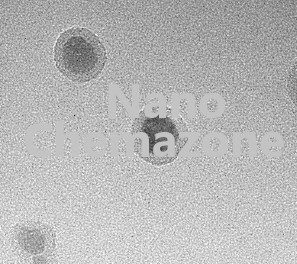
Gold Iron Oxide Core Shell Nanoparticles
Gold Iron Oxide Core Shell Nanoparticles
| MF: | Au/Fe2O3 |
| Chemical Name: | Gold Iron Oxide Core Shell Nanoparticles |
| Purity: | >99.99% |
| APS: | 80-100 nm (Size Customization possible) |
| Form: | Nanopowder/Nanodispersion |
| Product Number: | NCZCS113 |
| CAS Number: | 7440-57-5 |

Gold Nanoparticle Colloidal Solution
Gold Nanoparticle Colloidal Solution
Product Name: Gold Nanoparticle Colloidal Solution (Au, Colloidal, 99.9 %, APS: 50-100nm)
| Product | Gold Nanoparticles Dispersion |
| Cat No | NCZ-MN-105/20 |
| CAS No | 7440-57-5 |
| Purity | 99.9 % |
| APS | 50-100nm (Can be Customized) |
| Molecular Formula | Au |
| Form | Colloidal Suspension |
| Color | Red Brown |
| pH | 5-7 |
| Concentration | 2-3 wt% (Available as per Customer requirement) |
| Dispersing Agent | Organic Solvent (DMF), IPA Ethanol, Water (ddH2O) |

Gold Nanoparticles
Gold Nanoparticles
| MF: | Au |
| Chemical Name: |
Gold Nanoparticles |
| Purity: | > 99.99% |
| APS: | 30-40 nm (Size Customization possible) |
| Form: | Nanopowder/Dispersion |
| Product Number: | #NCZ2901 |
| CAS Number | 7440-57-5 |

Gold Nanoparticles Dispersion
| MF: | Au |
| Chemical Name: | Gold Nanoparticles Dispersion |
| Purity: | >99.99% |
| APS: | <10nm (Size Customization possible) |
| Form: | Nano dispersion |
| Product Number: | NCZD601 |
| CAS Number | 7440-57-5 |

Gold Nanorods


Gold Nanowire
| MF: | Au |
| Chemical Name: | Gold Nanowires |
| Purity: | > 99.99% |
| Diameter: | 10 nm (Customization is possible) |
| Length: | up to 200µm (Customization is possible) |
| Form: | Nanowire |
| Product Number: | NCZW106 |
| CAS Number | 7440-57-5 |

Gold Nickel Alloy
Gold Nickel Alloy
| Product |
Gold Nickel Alloy |
| Colour | N/A |
| Purity | 99% |
| Size | 3 mm - 6 mm.(Customizable) |
| Ingredient/MF | AuNi |
| Product Code | NCZ-CP-263/20 |
| Density | N/A |
| CAS No | N/A |
Gold Nickel Alloy Description
Nickel is a chemical element with the symbol Ni and atomic number 28. It is a silvery-white lustrous metal with a slight golden tinge. Nickel belongs to the transition metals and is hard and ductile. Pure nickel powdered to maximize.
The reactive surface area shows a significant chemical activity, but larger pieces are slow to react with air under standard conditions because an oxide layer forms on the surface and prevents further corrosion (passivation).
Even so, pure native nickel is found in Earth's crust only in tiny amounts, usually in ultramafic rocks, and in the interiors of larger nickel–iron meteorites that were not exposed to oxygen when outside Earth's atmosphere.
Meteoric nickel is found in combination with iron, a reflection of the origin of those elements as major end products of supernova nucleosynthesis. An iron–nickel mixture is thought to compose Earth's outer and inner cores.
Use of nickel (as a natural meteoric nickel–iron alloy) has been traced as far back as 3500 BCE. Nickel was first isolated and classified as a chemical element in 1751 by Axel Fredrik Cronstedt, who initially mistook the ore for a copper mineral, in the cobalt mines of Los, Hälsingland, Sweden.
The element's name comes from a mischievous sprite of German miner mythology, Nickel (similar to Old Nick), who personified the fact that copper-nickel ores resisted refinement into copper. An economically important source of nickel is the iron ore limonite, which often contains 1–2% nickel. Nickel's other important ore minerals include pentlandite and a mixture of Ni-rich natural silicates known as garnierite. Major production sites include the Sudbury region in Canada (which is thought to be of meteoric origin), New Caledonia in the Pacific, and Norilsk in Russia.
Nickel is slowly oxidized by air at room temperature and is considered corrosion-resistant. Historically, it has been used for plating iron and brass, coating chemistry equipment, and manufacturing certain alloys that retain a high silvery polish, such as German silver.
About 9% of world nickel production is still used for corrosion-resistant nickel plating. Nickel-plated objects sometimes provoke nickel allergy. Nickel has been widely used in coins, though its rising price has led to some replacement with cheaper metals in recent years.
Nickel is one of four elements (the others are iron, cobalt, and gadolinium) that are ferromagnetic at approximately room temperature. Alnico permanent magnets based partly on nickel are of intermediate strength between iron-based permanent magnets and rare-earth magnets.
The metal is valuable in modern times chiefly in alloys; about 68% of world production is used in stainless steel. A further 10% is used for nickel-based and copper-based alloys, 7% for alloy steels, 3% in foundries, 9% in plating and 4% in other applications, including the fast-growing battery sector,including those in electric vehicles (EVs).
As a compound, nickel has a number of niche chemical manufacturing uses, such as a catalyst for hydrogenation, cathodes for batteries, pigments and metal surface treatments. Nickel is an essential nutrient for some microorganisms and plants that have enzymes with nickel as an active site.
Related Information
Please email us for the customization.
Email: contact@nanochemazone.com
Please contact us for customization and price inquiry
Note: We supply different size ranges of Nano and micron as per the client’s requirements and also accept customization in various parameters.
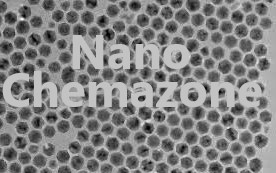
Gold Palladium Core Shell Nanoparticles
Gold Palladium Core-Shell Nanoparticles
| MF: | Au/Pd |
| Chemical Name: | Gold Palladium Core-Shell Nanoparticles |
| Purity: | >99.99% |
| APS: | 80-100 nm (Size Customization possible) |
| Form: | Nanopowder/Nanodispersion |
| Product Number: | NCZCS117 |
| CAS Number: | 7440-57-5 |

Gold Paste for Screen Printing
Gold Paste Screen Print Ink
Gold Paste Conductive
NanoChemazone provides a wide range of working electrodes Screen Printing Paste and Inks for all forms of electrochemical analysis including cyclic voltammetry, chrono-amperometry, and potentiometric methods. The Gold paste is highly thixotropic which gives it a very good definition on printing.Gold Paste Benefits:
- Low coefficient of variation (CV%).
- This product has no significant hazardous materials.
- It gives an excellent electrochemical performance with good reversibility when using cyclic voltammetry.
- high adhesion to ceramic substrates.
- Stable electrical properties on repeat firing.
- Suitable for fine line printing.
Special Features of Gold Paste:
It is a screen printable gold paste designed for printing high definition electrodes in sensor applications. The paste is designed for firing at high temperatures on ceramic substrates.| MF: | Au |
| Chemical Name: |
Gold Ink, Gold Paste |
| Purity: | >99.99% |
| Molecular Weight | 196.97 |
| Product Number: | NCZ-SPI-106 |
| Form: | Ink/Paste |
| CAS Number: | 7440-57-5 |
| Storage | 15ºC to 25ºC |
| Substrate | Suitable for Polyester, PVC, Polycarbonate or ceramic, zirconia |
| Solids Content at 700°C | 80-82 % (Customizable) |
| Viscosity Haake RS1 C20/2º TiL at 230 sec-1 at 25°C. | 56.00 – 62.00 Pa s (Customizable) |
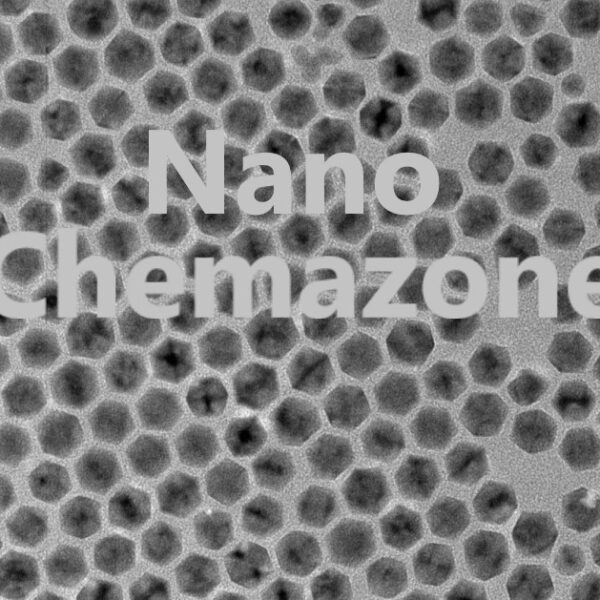
Gold Platinum Core Shell Nanoparticles
Gold Platinum Core-Shell Nanoparticles
| MF: | Au/Pt |
| Chemical Name: | Gold Platinum Core-Shell Nanoparticles |
| Purity: | >99.99% |
| APS: | 80-100 nm (Size Customization possible) |
| Form: | Nanopowder/Nanodispersion |
| Product Number: | NCZCS114 |
| CAS Number: | 7440-57-5 |

Gold Powder
| Product | Gold Powder |
| Product Number | NCZM136-18 |
| CAS | 7440-57-5 |
| APS | 40-50 µm (Size customization is available) |
| Purity | 99 % |
| Molecular Weight | 196.97 g/ mol |
| Form | Powder |
| Colour | Yellow Powder |
| Density | 19.30 g/ cm³ |
| Melting Point | 1064.43 ºC |
| Boiling Point | 2970 ºC |
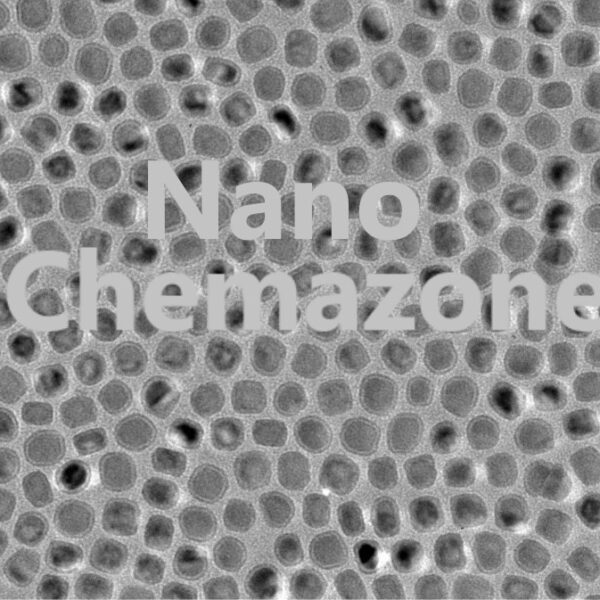
Gold Silicon Oxide Core-Shell Nanoparticles
Gold Silica Core-Shell Nanoparticles
| MF: | Au/SiO2 |
| Chemical Name: | Gold Silicon Oxide Core-Shell Nanoparticles |
| Purity: | >99.99% |
| APS: | 80-100 nm (Size Customization possible) |
| Form: | Nanopowder/Nanodispersion |
| Product Number: | NCZCS115 |
| CAS Number: | 7440-57-5 / 7631-86-9 |
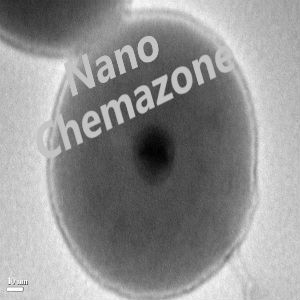
Gold Silver Core Shell Nanoparticles
Gold Silver Core-Shell Nanoparticles
| MF: | Au/Ag |
| Chemical Name: | Gold Silver Core-Shell Nanoparticles |
| Purity: | >99.99% |
| APS: | 80-100 nm (Size Customization possible) |
| Form: | Nanopowder/Nanodispersion |
| Product Number: | NCZCS116 |
| CAS Number: | 7440-57-5 |
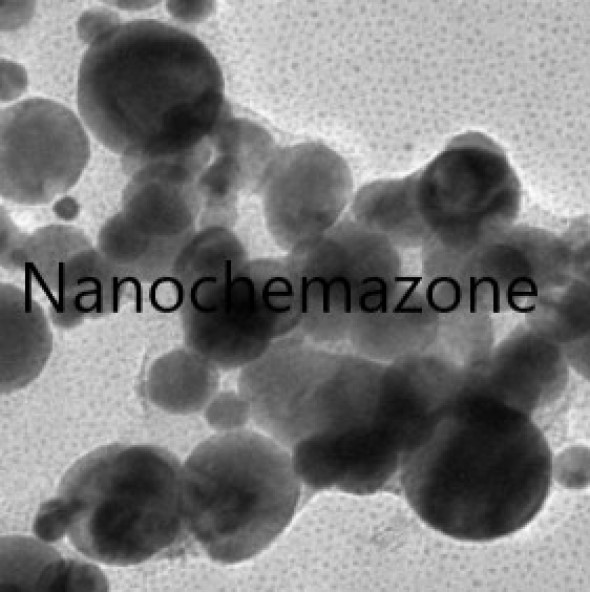
Gold Tin Alloy Nanopowder
| Product Formula | Au: Sn |
| Product Number | NCZ-A-127-19 |
| CAS Number | 7440-57-5/7440-31-5 |
| Molecular Weight | 315.67 g/moL |
| APS | ≤ 80 nm (can be customized) |
| Purity | 99.9% |
| Color | Gray |
| Form | Nanopowder |
Note: We can manufacture and supply different particle sizes (Nano size range, Micron, Submicron, and different Mesh size) products of Alloy powders (Multi-Element, Multi-Element Oxide and Mixture of Rare Earth Elements) according to client’s requirements. Kindly ask for the customization in size and Element ratio composition.
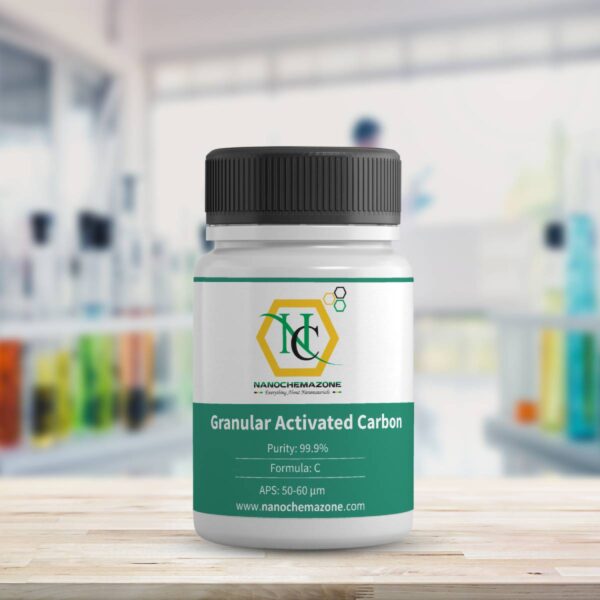
Granular Activated Carbon
Granular Activated Carbon
Product Name: Granular Activated Carbon (C, Purity: 99.9%, APS: 50-60µm)
| Product | Granular Activated Carbon |
| Cat No | NCZ-MN-164/20 |
| CAS No | 7440-44-0 |
| Purity | 99.9% |
| APS | 50-60 µm |
| Molecular Weight | 242.62 g/ mol |
| Form | Granules |
| Color | Black |
| PH value | 6-7 |
| SSA | 900-1100 m2/g |
| Bulk Density | 0.45 g/ cm3 |
| Solubility | Insoluble In Water |


GRAPHDIYNE FILM
Product Name: GRAPHDIYNE FILM
| Product | Graphdiyne film |
| Thickness | 50-200 nm ± 20 nm |
| Size | 2 cm×2 cm, 2 cm× 10 cm |
| Base Template | Cu |
| CAS No. | 154702-15-5 |
| Product Code | NCZ-GD-101 |

Graphdiyne Monomer HEB-TMS
Graphdiyne Monomer HEB-TMS
Product Name: Graphdiyne Monomer HEB-TMS
| Product | hexaethynylbenzeneHEB-TMS) |
| Color | White to Yellow Color powder |
| CAS No.100516-62-9 | 100516-62-9 |
| Product Code | NCZ-GD-103 |
| Pack Size | 100 mg, 250 mg, 500 mg, 1 gram, 2 grams |
Graphidyne (GDY) is a new type of two-dimensional carbon allotrope. It is a new all-carbon nanostructured material after fullerenes, carbon nanotubes, and graphene. In 2010, Li Yuliang, Academician Group For the first time, a high-quality graphene film was successfully synthesized on the surface of Cu foil by the cross-coupling reaction of hexamethylene benzene precursor. Graphene has a rich carbon chemical bond, a large conjugated system, wide interplanar spacing, and excellent chemical stability. It is known as the most stable allotrope of synthetic diacetylene. Its unique sp-sp2 carbon atoms, uniform pores, and high π-conjugated structure have shown broad application prospects in gas separation, catalysis, water treatment, humidity sensors, and energy.
Storage Conditions: Sealed, avoid light, keep dry at moisture free and a cool place temperature (2 to 8 Deg C).
Recommended Temp. Storage conditions for Prolong Use: -20 Deg C
Transportation: At Room Temperature, immediate store at -20 Deg C for prolong storage.
Graphdiyne Nanowalls
Product Name: Graphdiyne Nanowalls
| Product | Graphdiyne Nanowalls |
| Thickness | 300-500 nm |
| Size | 1.5cm*1.5cm/1cm*1cm |
| Template | Cu |
| CAS No. | 154702-15-5 |
| Product Code | NCZ-GD-102 |

Graphdiyne Oxide Powder
Product Name: Graphdiyne Oxide Powder
| Product | Graphdiyne Oxide Powder |
| Pack Size | 10 mg, 20 mg, 50 mg, 100 mg & 1 gram |
| CAS No. | 154702-15-5 |
| Product Code | NCZ-GD-105 |
Graphdiyne (GDY) is a new type of two-dimensional carbon allotrope. It is a new all-carbon nanostructured material after fullerenes, carbon nanotubes and graphene. In 2010, Li Yuliang, Academician Group For the first time, a high-quality graphene film was successfully synthesized on the surface of Cu foil by the cross-coupling reaction of hexamethylene benzene precursor. Graphene has a rich carbon chemical bond, a large conjugated system, wide interplanar spacing, and excellent chemical stability. It is known as the most stable allotrope of synthetic diacetylene. Its unique sp-sp2 carbon atoms, uniform pores and high π-conjugated structure have shown broad application prospects in gas separation, catalysis, water treatment, humidity sensors and energy.
The synthesis of Graphdiyne was reported as a 1 mm film on a copper surface. Graphdiyne was predicted to exhibit a nanoweb-like structure, characterized by triangular and regularly distributed pores, thus forming a nanoporous membrane. Due to the effective size of its pores, which almost matches the van der Waals radius of the helium atom, graphdiyne could behave as an ideal two-dimensional membrane for helium chemical and isotopic separation. The application of a graphdiyne based membrane as an efficient two-dimensional sieve for water filtration and purification technologies has been proposed.
RELATED INFORMATION Storage Conditions: Sealed, avoid light, keep dry at room temperature.

Graphdiyne Powder
Product Name: Graphdiyne Powder
| Product | Graphdiyne Powder |
| Pack Size | 10 mg, 20 mg, 50 mg, 100 mg & 1 gram |
| CAS No. | 154702-15-5 |
| Product Code | NCZ-GD-104 |
Graphdiyne (GDY) is a new type of two-dimensional carbon allotrope. It is a new all-carbon nanostructured material after fullerenes, carbon nanotubes and graphene. In 2010, Li Yuliang, Academician Group For the first time, a high-quality graphene film was successfully synthesized on the surface of Cu foil by the cross-coupling reaction of hexamethylene benzene precursor. Graphene has a rich carbon chemical bond, a large conjugated system, wide interplanar spacing, and excellent chemical stability. It is known as the most stable allotrope of synthetic diacetylene. Its unique sp-sp2 carbon atoms, uniform pores and high π-conjugated structure have shown broad application prospects in gas separation, catalysis, water treatment, humidity sensors and energy.
The synthesis of Graphdiyne was reported as a 1 mm film on a copper surface. Graphdiyne was predicted to exhibit a nanoweb-like structure, characterized by triangular and regularly distributed pores, thus forming a nanoporous membrane. Due to the effective size of its pores, which almost matches the van der Waals radius of the helium atom, graphdiyne could behave as an ideal two-dimensional membrane for helium chemical and isotopic separation. The application of a graphdiyne based membrane as an efficient two-dimensional sieve for water filtration and purification technologies has been proposed.
RELATED INFORMATION Storage Conditions: Sealed, avoid light, keep dry at room temperature.
Graphene & Carbon Nanotubes Water Paste
| MF | C |
| Chemical Name |
Graphene and Carbon Nanotubes Dispersion Mixture |
| Purity | ≥99.5% |
| Diameter | Graphene 5-7 μm, CNT Outside Diameter: 50-80 nm, Inside Diameter: 5-15 nm (Customization possible) |
| Length | 10-20 μm (Customization possible) |
| Number of Layers | <30 (Customization possible) |
| Color | Black |
| Form | Dispersion/Paste/Solution |
| Product Number | NCZC1010 |
| CAS Number | 7782-42-5 |
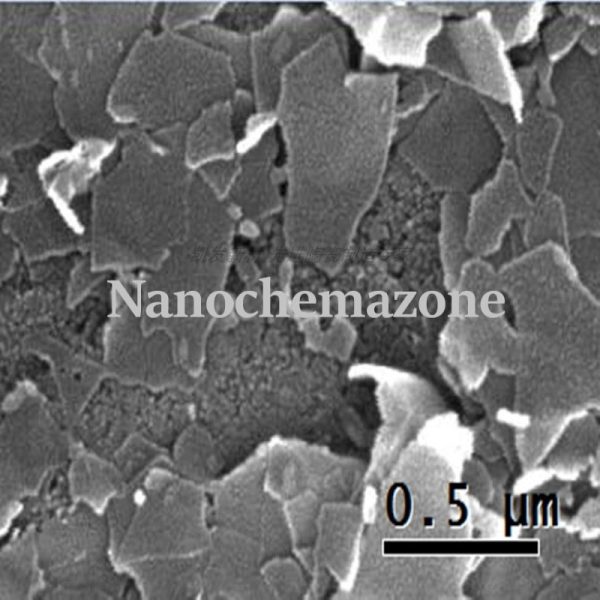
Graphene Carbon Nanotubes Dispersion
Graphene Carbon Nanotubes Dispersion
| Product |
Graphene Carbon Nanotubes Dispersion |
| CAS No. | 1034343-98-0 |
| Appearance | Black |
| Purity | 99.9% |
| Dia Size | 1μm - 12μm (Can be customized) |
| Ingredient | C |
| Product Code | NCZ-NSC496/20 |
Graphene Carbon Nanotubes Dispersion
Carbon Nanotubes (CNT), Single-Walled, Double Walled and Multi-Walled - are black nanoscale cylindrical tubes of graphitic carbon with numerous applications as the stiffest and strongest known fibers and because of their unique electrical properties. When used as reinforcement fibers, carbon nanotubes can improve the quality and properties of metal, polymer and ceramics.
When combined with Aluminum, Copper, Magnesium, Nickel, Titanium, and Tin, Single-Walled Carbon Nanotube materials reveal enhanced tensile strength, hardness and elastic modulus characteristics. Titanium/Carbon Nanotube composites, research shows demonstrate a considerable increase in tensile stress, hardness and yield stress. In an additional study, when compared to pure Titanium, Titanium/Carbon Nanotube composites displayed increased property hardness of the metal as well as improved elastic modulus.
Carbon nanotubes are available in single-walled, double-walled and multi-walled forms, bundled and unbundled, with tube lengths from 5 to 30 nanometers (nm) and specific surface area (SSA) in the 50 to 500 m2/g range. Carbon Nanotubes are also available in coated,dispersed, and functionalized forms. Surface functionalized nanoparticles allow for the particles to be preferentially adsorbed at the surface interface using chemically bound polymers. Nanochemazone can produce CNTs in technical grade, analytical grade, and in various volumes per customer specifications.
Related Product
Graphene Nanoplatelets (99.5%) Water dispersion
Graphene Nanoplatelets (99.5%)
Graphene Nanoplatelets (95+%) Water dispersion
Graphene Nanoplatelets (95+%)
Single Layer Graphene Oxide Water Dispersion
Single Layer Graphene Oxide Dry Nanopowder
Single Layer Graphene Water Dispersion
Single Layer Graphene Dry Nanopower
Graphene & Carbon Nanotubes Water Dispersion
Graphene & Carbon Nanotubes Mixed Dry Powder
Graphene CNTs Carbon Black Mixed Water Dispersion
Graphene CNTs Carbon Black Mixed Dry Powder
Graphene Carbon Black Mixed Water Dispersion
Graphene Carbon Black Mixed Dry Powder
Graphene CNTs Silicon Mixed Water Dispersion
Graphene CNTs Silicon Mixed Dry Powder
Graphene CNTs Silver Mixed Water Dispersion
Single Layer Graphene with N Doped Dry Nanopower
Related Information
Storage Conditions:
Airtight sealed, avoid light and keep dry at room temperature.
Please contact us for customization and price inquiry
Email: contact@nanochemazone.com
Note: We supply different size ranges of Nano and micron as per the client’s requirements and also accept customization in various parameters.

Graphene Carbon Nanotubes Dispersion
Graphene Carbon Nanotubes Dispersion
| Product |
Graphene Carbon Nanotubes Dispersion |
| CAS No. | 1034343-98-0 |
| Appearance | Black |
| Purity | 99.9% |
| Dia Size | 1μm - 12μm (Can be customized) |
| Ingredient | C |
| Product Code | NCZ-NSC496/20 |
Graphene Carbon Nanotubes Dispersion
Carbon Nanotubes (CNT), Single-Walled, Double Walled and Multi-Walled - are black nanoscale cylindrical tubes of graphitic carbon with numerous applications as the stiffest and strongest known fibers and because of their unique electrical properties. When used as reinforcement fibers, carbon nanotubes can improve the quality and properties of metal, polymer and ceramics.
When combined with Aluminum, Copper, Magnesium, Nickel, Titanium, and Tin, Single-Walled Carbon Nanotube materials reveal enhanced tensile strength, hardness and elastic modulus characteristics. Titanium/Carbon Nanotube composites, research shows demonstrate a considerable increase in tensile stress, hardness and yield stress. In an additional study, when compared to pure Titanium, Titanium/Carbon Nanotube composites displayed increased property hardness of the metal as well as improved elastic modulus.
Carbon nanotubes are available in single-walled, double-walled and multi-walled forms, bundled and unbundled, with tube lengths from 5 to 30 nanometers (nm) and specific surface area (SSA) in the 50 to 500 m2/g range. Carbon Nanotubes are also available in coated,dispersed, and functionalized forms. Surface functionalized nanoparticles allow for the particles to be preferentially adsorbed at the surface interface using chemically bound polymers.
Nanochemazone can produce CNTs in technical grade, analytical grade, and in various volumes per customer specifications.
Related Product
Graphene Nanoplatelets (99.5%) Water dispersion
Graphene Nanoplatelets (99.5%)
Graphene Nanoplatelets (95+%) Water dispersion
Graphene Nanoplatelets (95+%)
Single Layer Graphene Oxide Water Dispersion
Single Layer Graphene Oxide Dry Nanopowder
Single Layer Graphene Water Dispersion
Single Layer Graphene Dry Nanopower
Graphene & Carbon Nanotubes Water Dispersion
Graphene & Carbon Nanotubes Mixed Dry Powder
Graphene CNTs Carbon Black Mixed Water Dispersion
Graphene CNTs Carbon Black Mixed Dry Powder
Graphene Carbon Black Mixed Water Dispersion
Graphene Carbon Black Mixed Dry Powder
Graphene CNTs Silicon Mixed Water Dispersion
Graphene CNTs Silicon Mixed Dry Powder
Graphene CNTs Silver Mixed Water Dispersion
Related Information
Storage Conditions:
Airtight sealed, avoid light and keep dry at room temperature.
Please contact us for customization and price inquiry
Email: contact@nanochemazone.com
Note: We supply different size ranges of Nano and micron as per the client’s requirements and also accept customization in various parameters.
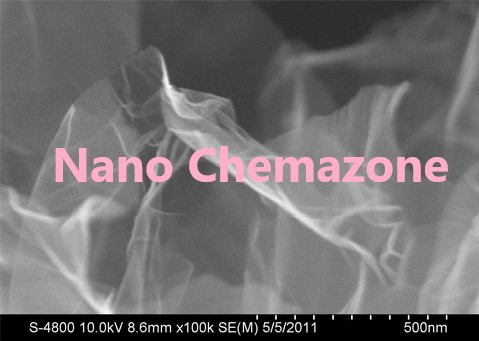
Graphene Dispersion
| MF | C |
| Chemical Name |
Graphene Dispersion |
| Purity | ≥99.9% |
| Diameter | 4-6 μm |
| Thickness | 0.55- 3.74 nm |
| Number of Layers | 1-10 (Customization possible) |
| Color | Black |
| Specific Area | 500-700 m2/g |
| Form | Dispersion/Solution |
| Product Number | #NCZC1003 |
| CAS Number | 7782-42-5 |
| Content of Graphene in Water | 1.0-1.5 wt% (Customization is possible) |
| Content of Dispersants in Water | 0.2-0.75 wt% |
Graphene Dispersion Organic Solvent
| Product | Graphene Dispersion Organic Solvent |
| Product Number | NCZ-D-107N |
| CAS | 7782-42-5 |
| Purity | > 98 % |
| Molecular Formula | C |
| Molecular Weight | 12.01 g/mol |
| Form | Liquid |
| Color | Brown/black |
| Density | ~ 2.1 g/cm³ at 20 °C |
| Concentration | 1 mg/ml (Customization is possible) |


Graphene Nanoplatelets
| MF | C |
| Chemical Name |
Graphene Nanoplatelets |
| Purity | ≥99.5% |
| Diameter | 5-10 µm (ask for Customization) |
| Thickness | 1-20 nm (ask for Customization) |
| Number of Layers | <30 (Customization possible) |
| Color | Black |
| Form | Dispersion/Paste/Solution/Powder |
| Product Number | NCZC1012 |
| CAS Number | 7782-42-5 |
Graphene Nanoplatelets
Graphene Nanoplatelets
| MF: | C |
| Chemical Name: |
Graphene Nanoplatelets |
| Purity: | > 99.99% |
| APS: | 5-10 µm, 20-50 layers (Size Customization possible) |
| Form: | Nanopowder |
| Product Number: | #NCZ3001 |
| CAS Number | 99685-96-8 |

Graphene Nanoplatelets & Carbon Nanotubes Mix Paste
| MF: | C |
| Chemical Name: |
Graphene and CNT Paste |
| Purity: | ≥99.5% |
| Diameter | GNP 5-7 μm, CNT Outside Diameter: 50-80 nm, Inside Diameter: 5-15 nm (Customization possible) |
| Length | 10-20 μm (Customization possible) |
| Number of Layers: | <30 (Customization possible) |
| Color | Black |
| Form: | Dispersion/Paste/Solution |
| Product Number: | #NCZC1011 |
| CAS Number | 7782-42-5 |
| Solvent | NMP, DMF, DMSO, Acetonitrile, etc. |

Graphene Nanoplatelets & Carbon Nanotubes Water/NMP Dispersion
Graphene and CNT Dispersion
| MF | C |
| Chemical Name | Graphene and CNT Dispersion |
| Purity | ≥99.5% |
| Diameter | GNP 5-7 μm, CNT Outside Diameter: 50-80 nm, Inside Diameter: 5-15 nm, customization available. |
| Length | 10-20 μm |
| Number of Layers | < 10 to 30 (Customization possible) |
| Color | Black |
| Form | Dispersion/Paste/Solution |
| Product Number | NCZC1016 |
| CAS Number | 7782-42-5 |

Graphene Nanoplatelets Dispersion
| M | C |
| Chemical Name |
Graphene Nanoplatelets Paste and Dispersion |
| Purity | ≥99.5% |
| Diameter | 1-10 µm (Customization possible) |
| Thickness | 2-20 nm (Customization possible) |
| Number of Layers | <30 (Customization possible) |
| Color | Black |
| Form | Dispersion/Paste/Solution |
| Product Number | NCZC1009 |
| CAS Number | 7782-42-5 |

Graphene Nanoplatelets Industrial Grade

Graphene Nanoplatelets Paste

Graphene Nanoplatelets Powder
Graphene Nanoplatelets Powder
| MF | C |
| Chemical Name |
Graphene Nanoplatelets |
| Purity | ≥99.5% |
| Diameter | 5-10 µm |
| Thickness | 4-20 nm |
| Number of Layers | <30 (Customization possible) |
| Color | Black |
| Form | Dispersion/Paste/Solution/Powder |
| Product Number | NCZC1007 |
| CAS Number | 7782-42-5 |

Graphene on Lacey Carbon 300 Mesh Copper TEM Grids
Graphene On Lacey Carbon 300 Mesh Copper TEM Grids
| Product Name | Graphene On Lacey Carbon 300 Mesh Copper TEM Grids |
| Stock No. | NCZ-GSW-0015 |
| Purity | > 99.9% |
| Graphene Film | |
| FET Electron Mobility on Al2O3 | 2000 cm2/Vs |
| Hall Electron Mobility on SiO2/Si | 4000 cm2/Vs |
| Sheet Resistance | 450±40 Ω/sq (1cm x1cm) |
- Four thicknesses of CVD graphene: Available in either 1, 2, 3-5 or 6-8 layers
- TEM Substrate: Lacey carbon support film on 300 mesh copper TEM grid
- Graphene coverage of the TEM grid is better than 75%
| Type | Thickness of the Graphene | Transparency | TEM Grid/AFM Substrate | Support Film |
| 1 Layer | ~0.35 nm | ~96.4% | 300 Mesh Copper Grid | N/A |
| 2 Layers | ~0.7 nm | ~92.7% | 300 Mesh Copper Grid | N/A |
| 3-5 Layers | 1.0-1.7 nm | ~85.8-90.4% | 300 Mesh Copper Grid | N/A |
| 6-8 Layers | 2.1-2.8 nm | ~78.5-83.2% | 300 Mesh Copper Grid | N/A |

Graphene on Silicon Nitride TEM Grids
Graphene on Silicon Nitride TEM Grids
| Product Name | Graphene on Silicon Nitride TEM Grids |
| Stock No. | NCZ-GSW-0012 |
| Purity | > 99.9% |
| Graphene Film | |
| FET Electron Mobility on Al2O3 | 2000 cm2/Vs |
| Hall Electron Mobility on SiO2/Si | 4000 cm2/Vs |
| Sheet Resistance | 450±40 Ω/sq (1cm x1cm) |
- Four thicknesses of CVD graphene: Available in either 1, 2, 3-5 or 6-8 layers
- TEM Substrate: 200 µm thick 3.0mm hexagonal silicon substrate with a 0.5x0.5mm aperture and 200nm thick silicon nitride membrane with approximately 6,400 2.5µm holes
- Graphene coverage of the TEM grid is > 75%
| Type | Thickness of the Graphene | Transparency | TEM Grid/AFM Substrate | Support Film |
| 1 Layer | ~ 0.35 nm | ~ 96.4% | 2.5 μm Hole Silicon Nitride | Silicon Nitride |
| 2 Layers | ~0.7 nm | ~92.7% | 2.5 μm Hole Silicon Nitride | Silicon Nitride |
| 3-5 Layers | 1.0-1.7 nm | ~85.8-90.4% | 2.5 μm Hole Silicon Nitride | Silicon Nitride |
| 6-8 Layers | 2.1-2.8 nm | ~78.5-83.2% | 2.5 μm Hole Silicon Nitride | Silicon Nitride |

Graphene on SiO2 Substrate
Graphene on Ultra-Flat Thermal SiO2 Substrate
| Product Name | Graphene on Ultra-Flat Thermal SiO2 Substrate |
| Stock No. | NCZ-GSW-0011 |
| Purity | > 99.9% |
| Graphene Film | |
| FET Electron Mobility on Al2O3 | 2000 cm2/Vs |
| Hall Electron Mobility on SiO2/Si | 4000 cm2/Vs |
| Sheet Resistance | 450±40 Ω/sq (1cm x1cm) |
- Four thicknesses of CVD graphene: Available in either 1, 2, 3-5 or 6-8 layers
- The Ultra-flat Thermal SiO2 Substrate consists of a 200 nm thermally grown SiO2 film on an ultra-flat silicon wafer with a normal thickness of 675 µm. The size is 5mm x 5mm.
- Graphene coverage of the TEM grid is 75-95 %
| Type | Thickness of the Graphene | Transparency | Support Film |
| 1 Layer | ~0.35nm | ~96.4% | Ultra-flat Silicon |
| 2 Layers | ~0.7nm | ~92.7% | Ultra-flat Silicon |
| 3-5 Layers | 1.0-1.7nm | ~85.8-90.4% | Ultra-flat Silicon |
| 6-8 Layers | 2.1-2.8nm | ~78.5-83.2% | Ultra-flat Silicon |

Graphene on Ultra-Fine 200 Mesh Copper TEM Grids
Graphene coated TEM Grids
| Product Name | Graphene On Ultra-Fine 200 Mesh Copper TEM Grids |
| Stock No. | NCZ-GSW-0014 |
| Purity | > 99.9% |
| Graphene Film | |
| FET Electron Mobility on Al2O3 | 2000 cm2/Vs |
| Hall Electron Mobility on SiO2/Si | 4000 cm2/Vs |
| Sheet Resistance | 450±40 Ω/sq (1cm x1cm) |
- Four thicknesses of CVD graphene: Available in either 1, 2, 3-5 or 6-8 layers
- TEM Substrate: Microporous Copper TEM Grids with Beryllium-Copper Support Aperture
- Graphene coverage of the TEM grid is better than 75%
| Type | Thickness of the Graphene | Transparency | TEM Grid/AFM Substrate | Support Film |
| 1 Layer | ~0.35 nm | ~96.4% | 200 Mesh Copper Grid | N/A |
| 2 Layers | ~0.7 nm | ~92.7% | 200 Mesh Copper Grid | N/A |
| 3-5 Layers | 1.0-1.7 nm | ~85.8-90.4% | 200 Mesh Copper Grid | N/A |
| 6-8 Layers | 2.1-2.8 nm | ~78.5-83.2% | 200 Mesh Copper Grid | N/A |

Graphene Oxide Powder
Graphene Oxide
Graphene Oxide Powder
| MF | C |
| Chemical Name | Graphene Oxide, GO |
| Purity | ≥ 99% |
| Diameter | 0.5 – 3 μm |
| Thickness | 0.3- 2 nm |
| Number of Layers | 1-10 (Customization possible) |
| Color | Brown |
| Specific Area | 500-700 m2/g |
| Form | Dried Powder |
| Product Number | NCZC200120 |
| CAS Number | 7782-42-5 |
| Application | For Research Use Only |
What Is the Difference Between Graphene Oxide (GO) And Reduced Graphene Oxide (rGO)?

Graphene Oxide Superconductor
Graphene Oxide Superconductor
Product Name: Graphene Oxide Superconductor (CxHyOz, Purity: 99%, Lateral Size: 10µm)
| Product |
Graphene Oxide Superconductor |
| Cat No | NCZ-NSC826/20 |
| CAS No | 1034343-98-0 |
| Purity | 99% |
| Lateral size | 1-10µm (Can be customized) |
| Thickness | 0.5-0.6nm |
| Molecular Formula | CxOyHz |
| Molecular Weight | 12.01g/mol |
| Form | Powder |
| Color | Black |
| Density | 1.9-2.2 g/cm³ |
| Bulk Density | 0.5-1.0 g/cm³ |
| Melting Point | 3600 °C |
| Solubility | NMP, DCB, DMF |
Related Information
Storage Conditions: Airtight sealed, avoid light and keep dry at room temperature. Please contact us for customization and price inquiry Email: contact@nanochemazone.com Note: We supply different size ranges of Nano and micron as per the client’s requirements and also accept customization in various parameters.
Graphene Oxides Solution
Graphene Oxide
| MF | C |
| Chemical Name | Graphene Oxide, GO |
| Purity | ≥ 99.9% |
| Diameter | 0.5 – 3 μm |
| Thickness | 0.55- 2 nm |
| Number of Layers | 1-10 (Customization possible) |
| Color | Brown |
| Specific Area | 500-700 m2/g |
| Form | Dispersion/Solution |
| Product Number | NCZC2001 |
| CAS Number | 7782-42-5 |
| Solvent | H2O (Ask for customization) |

Graphene Paste
Graphene Paste and Dispersion
| MF | C |
| Chemical Name | Graphene |
| Purity | ≥ 99.9% |
| Diameter | 4-6 μm |
| Thickness | 0.55- 3.74 nm (Customization possible) |
| Number of Layers | 1-10 (Customization possible) |
| Color | Black |
| Specific Area | 500-700 m2/g |
| Form | Dispersion/Solution/Paste |
| Product Number | NCZC1005 |
| CAS Number | 7782-42-5 |
| Content of Graphene in Water | 1.0-1.5 wt% |
| Content of Dispersants in Water | 0.2-0.75 wt% |
| Solvents | Water, NMP, DMF, Acetonitrile, DMSO, etc. |

Graphene Polymer Nanopowder
Graphene Polymer Nanopowder
Product Name: Graphene Polymer Nano powder (C, Purity: >99%, Polymer Composite Material)
| Product |
Graphene Polymer Nanopowder |
| Cat No | NCZ-NSC827/20 |
| CAS No | 1034343-98-0 |
| Purity | >99% |
| Thickness | 1.6nm (8-10monolayers) |
| Molecular Formula | C |
| Molecular Weight | 12.01g/mol |
| Form | Powder |
| Color | Black |
| Density | 1.9-2.2 g/cm³ |
| Melting Point | 3,452-3,697 °C |
| Boiling Point | 4830 °C |
| APS | 60-70nm (Can be customized) |
Related Information
Storage Conditions: Airtight sealed, avoid light and keep dry at room temperature. Please contact us for customization and price inquiry Email: contact@nanochemazone.com Note: We supply different size ranges of Nano and micron as per the client’s requirements and also accept customization in various parameters.
Graphene Sheets Powder
Pure Pristine Graphene Powder
| MF | C |
| Chemical Name | Pure Pristine Graphene Powder |
| Purity | ≥99.9% |
| Diameter | 2-10 µm (Customization possible) |
| Thickness | 0.55- 3.74 nm (Customization possible) |
| Number of Layers | 1-10 (Customization possible) |
| Color | Black |
| Specific Area | >500 m2/g |
| Form | Nanopowder |
| Product Number | #NCZC1001 |
| CAS Number | 7782-42-5 |
Graphene Solution
Pristine Graphene Dispersion
| MF | C |
| Chemical Name |
Graphene Dispersion |
| Purity | ≥99.9% |
| Diameter | 0.5 – 3 μm |
| Thickness | 0.55- 3.74 nm |
| Number of Layers | 1-10 (Customization possible) |
| Color | Black |
| Specific Area | 500-700 m2/g |
| Form | Dispersion/Solution |
| Product Number | NCZC1004 |
| CAS Number | 7782-42-5 |
| Content of Graphene in Water | 0.4-0.5 wt% (Customization possible) |
| Content of Dispersants in Water | 0.5 wt% |
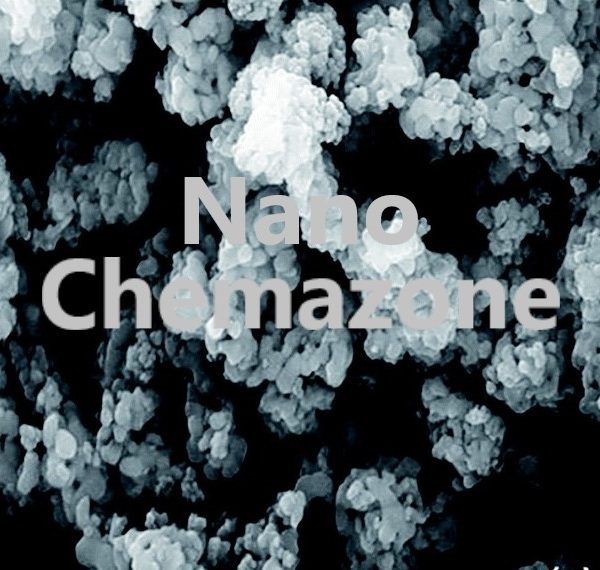
Graphite nanoparticles
Graphite Nanoparticles
Graphite Nanopowder
Nano Graphite Powder
| MF: | C |
| Chemical Name: | Graphite |
| Purity: | > 99.99% |
| APS: | APS 80 nm (Size Customization possible) |
| Form: | Nanopowder |
| Product Number: | #NCZ3101 |
| CAS Number | 7782-42-5 |

Graphite Oxide Powder
Graphite Oxide Powder
Product Name: Graphite Oxide Powder (C:O, Purity: >99 %)
Product |
Graphite Oxide Powder |
| Cat No | NCZ-NSC828/20 |
| CAS No | 1034343-98-0 |
| Purity | >99% |
| Molecular Formula | C:O |
| Molecular Weight | 12.01g/mol |
| Form | Powder |
| Color | Gray/Black |
| High Young’s modulus | 21 GPa |
| C:O Ratio | 2.1-2.9 |
| Thermal Expansion | 4.9 µm/m-K |
| Thermal Conductivity | 6.0 W/m-K |
| Tensile Strength | 18 MPa |
| Solubility | Soluble in water |
| APS | 1-5 µM(Can be customized) |
Related Information
Storage Conditions: Airtight sealed, avoid light and keep dry at room temperature. Please contact us for customization and price inquiry Email: contact@nanochemazone.com Note: We supply different size ranges of Nano and micron as per the client’s requirements and also accept customization in various parameters.

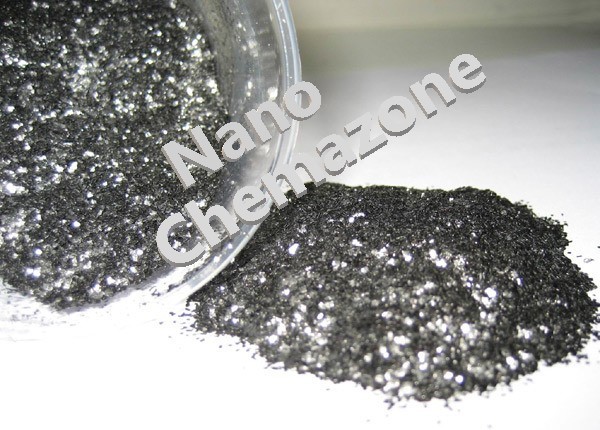
Graphite Powder
| Product | Graphite Powder |
| CAS No. | 7782-42-5 |
| Appearance | Powder |
| Purity | 99.9% |
| APS | 1 – 5 microns (can be customized) |
| Ingredient | C |
| Product Code | NCZ-AE-191 |
Graphite Powder
Graphite Powder
Natural Graphite Powder
Graphite Powder micron particles
| MF: | C |
| Chemical Name: | Graphite Powder |
| Purity: | > 99.99% |
| APS: | 40-50 µm (Size Customization possible) |
| Form: | Micro powder |
| Product Number: | NCZM109 |
| CAS Number | 7782-42-5 |

Graphitic Carbon Nitride (g-C3N4) Powder
Graphitic Carbon Nitride
g-C3N4
| Product Name | Graphitic Carbon Nitride |
| Formula | C3N4+xHy |
| Stock No. | NCZ-AM101-19 |
| Appearance | Off-white to yellowish-brown powder |
| Molecular Weight | Varies with composition |
| Density | 2.336 g/cm3 |
| Average Particle Size | 10-50 Micron (Customizable) |
| Specific Surface Area | >35 m2/g |
| Absorption | λmax 390 nm |
| Thermal Conductivity | 1.25 W/m·K |
- Chemical Formula C3N4+xHy
- Chemical purity ≥ 99.5 wt.%PEM fuel cell catalyst – better cost solutions
- Color: off white yellow - brown
- Density 2.336 g/cm3
- Particle size, 1 to 50 microns
- Specific surface area > 35 m2/gL
- Thermal conductivity* 1.25 W/mK
- Temperature stability: In inert atmosphere, 650°C
g-C3N4 RELATED INFORMATION
Storage Conditions: Airtight sealed, avoid light, and keep dry at room temperature. Please email us for the customization. Email: contact@nanochemazone.com
Graphitized Carbon Nanofibers
Graphitized Carbon Nanofibers
Product Name: Graphitized Carbon Nanofibers (Purity: >99%, OD: 500nm)
| Product | Graphitized Carbon Nanofiber |
| Cat No. | NCZ-MN-063/20 |
| CAS | 99685-96-8 |
| OD | 500 nm (Can be Customized) |
| Purity | >99% |
| Molecular Formula | C |
| Molecular Weight | 12.01g/mol |
| Color | Black |
| Density | 2.1 g/cm³ |
| Electrical Resistivity | >100s/cm |
| Bulk Density | 0.043g/cm³ |
| Solubility | Insoluble in water |
Green Silicon Carbide Powder
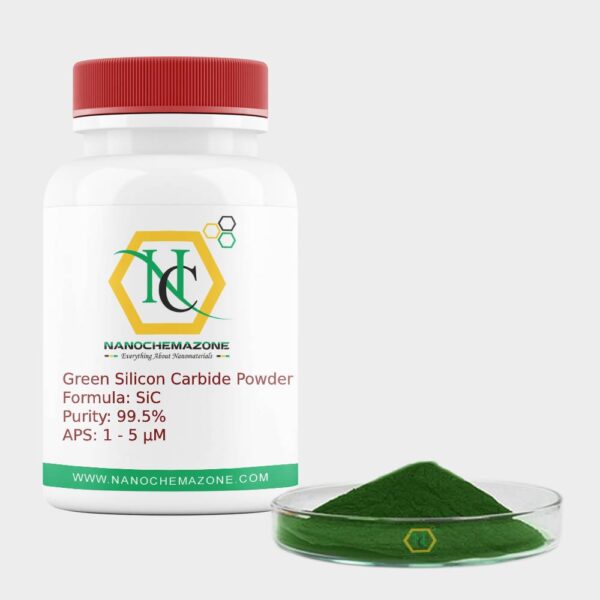
| Product | Green Silicon Carbide Powder |
| CAS No. | 409-21-2 |
| Appearance | Green Powder |
| Purity | 99.8% |
| APS | 1 – 5 Microns (Can be customized) |
| Ingredient | SiC |
| Product Code | NCZ-AE-101 |

Gypsum Submicron
Gypsum Submicron
Product Name: Gypsum Submicron (CaSO4•2H2O, Purity: >99%, APS: < 1μm)
| Product |
Gypsum Submicron |
| Cat No | NCZ-NSC900/20 |
| CAS No | N/A |
| Purity | >99% |
| APS | < 1μm (Can be customized) |
| Molecular Formula | CaSO4•2H2O |
| Crystal System | Monoclinic |
| Streak | White |
| Luster | Vitreous, silky, sugary |
| Cleavage | Perfect |
| Mohs Hardness | 2 |
Related Information
Storage Conditions: Airtight sealed, avoid light and keep dry at room temperature. Please contact us for customization and price inquiry Email: contact@nanochemazone.com Note: We supply different size ranges of Nano and micron as per the client’s requirements and also accept customization in various parameters.
Hafnium Boride Nanopowder
Product Name: Hafnium Boride Nanopowder
| Product | Hafnium Boride Nanopowder |
| CAS No. | 12007-23-7 |
| Form | Powder |
| Purity | ≥ 99 % |
| APS | 80 – 100 nm (can be customised) |
| Ingredient | HfB2 |
| Product Code | NCZ-MS-120 |

Hafnium Carbide Micro powder
Hafnium Carbide Micro powder
Product Name: Hafnium Carbide Micro powder (HfC, Purity: >99%, APS: 40-50µm)
| Product |
Hafnium Carbide Micropowder |
| Cat No | NCZ-NSC856/20 |
| CAS No | 12069-85-1 |
| Purity | >99% |
| APS | 40-50 µm (Can be customized) |
| Molecular Formula | HfC |
| Molecular Weight | 190.05g/ mol |
| Form | Powder |
| Color | Gray/Black |
| Density | 12.2g/ cm3 |
| Melting Point | 2930 ºC |
| Electrical Resistively | 1.09 x10⁻⁶cm |
| Solubility | Insoluble in water |
Related Information
Storage Conditions: Airtight sealed, avoid light and keep dry at room temperature. Please contact us for customization and price inquiry Email: contact@nanochemazone.com Note: We supply different size ranges of Nano and micron as per the client’s requirements and also accept customization in various parameters.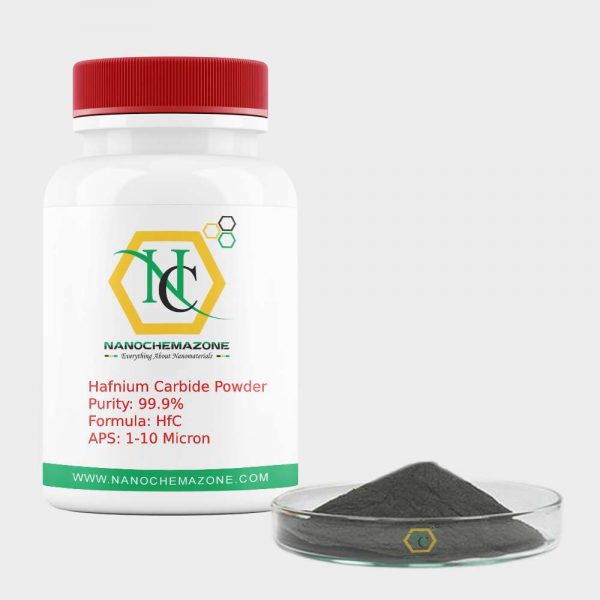
Hafnium Carbide Powder
Product Name: Hafnium Carbide Powder
| Product | Hafnium Carbide Powder |
| Colour | Gray Powder |
| Purity | ≥ 99.9% |
| Particle size | 1-10 µM (customizable) |
| Ingredient/MF | HfC |
| Product Code | NCZ-C-103/20 |
| CAS Number | 12069-85-1 |
Brief Description of Hafnium carbide powder HfC:
Hafnium carbide ( HfC) is a chemical compound of hafnium and carbon With a melting point of about 3900 °C it is one of the most refractory binary compounds known. However, it has low oxidation resistance, with the oxidation starting at temperatures as low as 430 °C Hafnium carbide is usually carbon deficient and therefore its composition is often expressed as HfCx (x = 0.5 to 1.0). It has a cubic (rock-salt) crystal structure at any value of xApplication of Hafnium carbide powder HfC:
- Used for preparation of ultra-high temperature ceramics
- The reactant in the synthesis of hafnium-containing organometallic polymers
- Used as an additive in alloys
- Used in coatings
- Widely used in microelectronics, semiconductor, aerospace high-temperature resistant material, coating materials, ceramic materials, ceramic target material, etc.
Hafnium carbide Powder related Information
Please email us for the customization. Email: contact@nanochemazone.com Please contact us for customization and price inquiry Note: We supply different size ranges of Nano and micron as per the client’s requirements and also accept customization in various parameters.
Hafnium Chloride
Hafnium Chloride
Product Name: Hafnium Chloride (HfCl4, Purity: >99%, APS: 10-20µm)
| Product |
Hafnium Chloride |
| Cat No | NCZ-NSC856/20 |
| CAS No | 13499-05-3 |
| Purity | >99% |
| APS | 10-20µm (Can be customized) |
| Molecular Formula | HfCl4 |
| Molecular Weight | 320.30g/mol |
| Form | Powder |
| Color | White |
| Density | 3.89 g/cm³ |
| Melting Point | 432°C |
| Solubility | Soluble in Water |
Related Information
Storage Conditions: Airtight sealed, avoid light and keep dry at room temperature. Please contact us for customization and price inquiry Email: contact@nanochemazone.com Note: We supply different size ranges of Nano and micron as per the client’s requirements and also accept customization in various parameters.
Hafnium Chloride
Hafnium Chloride
| Product |
Hafnium Chloride |
| CAS No. | 13499-05-3 |
| Appearance | White |
| Purity | 99% |
| APS | 1-5 µM (Can be customized) |
| Ingredient | HfCl4 |
| Product Code | NCZ-NSC564/20 |
| Molecular Weight | 320.302 g/mol |
| Density | 3.89 g/cm3 |
| Melting Point | 432ºC (809.6°F) |
Hafnium Chloride Description
Hafnium Chloride is an excellent water soluble crystalline Hafnium source for uses compatible with chlorides. Chloride compounds can conduct electricity when fused or dissolved in water. Chloride materials can be decomposed by electrolysis to chlorine gas and the metal.
They are formed through various chlorination processes whereby at least one chlorine anion (Cl-) is covalently bonded to the relevant metal or cation. Ultra high purity and proprietary formulations can be prepared. The chloride ion controls fluid equilibrium and pH levels in metabolic systems. They can form either inorganic or organic compounds. Hafnium Chloride is generally immediately available in most volumes. Ultra high purity and high purity compositions improve both optical quality and usefulness as scientific standards.
Nanoscale elemental powders and suspensions, as alternative high surface area forms, may be considered. We also produce Hafnium Chloride Solution. Nanochemazone produces to many standard grades when applicable, including Mil Spec (military grade); ACS, Reagent and Technical Grade; Food, Agricultural and Pharmaceutical Grade; Optical Grade, USP and EP/BP (European Pharmacopoeia/British Pharmacopoeia) and follows applicable ASTM testing standards. Typical and custom packaging is available. Additional technical, research and safety (MSDS) information is available as is a Reference Calculator for converting relevant units of measurement.
Related Information
Storage Conditions:
Airtight sealed, avoid light and keep dry at room temperature.
Please contact us for customization and price inquiry
Email: contact@nanochemazone.com
Note: We supply different size ranges of Nano and micron as per the client’s requirements and also accept customization in various parameters.
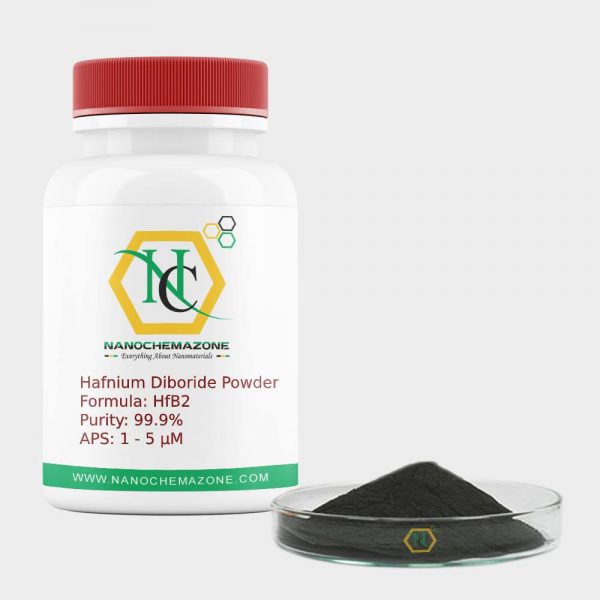
Hafnium Diboride Powder
| Product | Hafnium Diboride Powder |
| CAS No. | 12007-23-7 |
| Appearance | Powder |
| Purity | 99.9% |
| APS | 1 – 5 Microns (Can be customized) |
| Ingredient | HfB2 |
| Product Code | NCZ-AE-168 |

Hafnium Granules
| Product | Hafnium Granules |
| CAS No. | 7440-58-6 |
| Appearance | Granules |
| Purity | 99.9% |
| APS | 2 x 10 mm (can be customized) |
| Ingredient | Hf |
| Product Code | NCZ-AE-173 |
- Commonly used as X-ray cathode and tungsten wires manufacturing industry
- Pure Hafnium with plasticity ,easy process , high temperature corrosion resistance is an important materials for the atomic energy industry
- Hafnium thermal neutron capture cross section , is the idea neutron absorber , can be used as atomic reactor control rod and protection devices.

Hafnium Hydride Powder
Product Name: Hafnium Hydride Powder
| MF: | HfH2 |
| Chemical Name | Hafnium Hydride |
| Color | Gray to black powder |
| Chemical family: | Metal Hydride |
| Purity: | 99.9% |
| Molecular Weight: | 180.51 |
| Product Number: | NCZ-NSC-122/20 |
| Cas Number: | 12770-26-2 |
Hafnium Hydride Powder Related Information
Zirconium Hydride Powder, Titanium Hydride Powder, Vanadium Hydride Powder, Hafnium Hydride Powder, Zirconium Nitride Powder, Titanium Nitride Powder, Vanadium Nitride Powder, Nitrogen-Containing Chrome Powder, Nitrogen-Containing Manganese Powder. Metal hydrides are metals that have been bonded to hydrogen to form a new compound. Generally, the bond is covalent in nature, but some hydrides are formed from ionic bonds. Most hydrides behave as reducing agents in chemical reactions. Nickel metal hydride (NiMH) batteries rely on hydrides of rare-earth intermetallic compounds, such as lanthanum or neodymium.
Please email us for the customization. Email: contact@nanochemazone.com Please contact us for customization and price inquiry Note: We supply different size ranges of Nano and micron as per the client’s requirements and also accept customization in various parameters.
Hafnium Hydride Powder
Hafnium Hydride Powder
Product Name: Hafnium Hydride Powder| Product | Hafnium Hydride Powder |
| Colour | Gray black |
| Purity | ≥ 99.99% |
| Particle size | 1-10 µM (customizable) |
| Ingredient/MF | HfH2 |
| Product Code | NCZ-CE-157/20 |
| CAS Number | 12770-26-2 |
Application of Hafnium hydride powder:
Hafnium Hydride Powder is used in the atomic energy industry and aerospace industry, the control rod material of nuclear energy reactor, can also be used as a small and powerful rocket propeller. Please email us for the customization. Email: contact@nanochemazone.com Please contact us for customization and price inquiry Note: We supply different size ranges of Nano and micron as per the client’s requirements and also accept customization in various parameters.
Hafnium Metal Powder
| Product | Hafnium Metal Powder |
| CAS No. | 7440-58-6 |
| Appearance | Powder |
| Purity | 99.9% |
| APS | 1 – 5 microns (can be customized) |
| Ingredient | Hf |
| Product Code | NCZ-AE-230 |

Hafnium Micro Powder
Hafnium Micro Powder
Product Name: Hafnium Micro Powder (Hf, Purity: 99.9%, APS: 40-50 µm)
| Product |
Hafnium Micro Powder |
| Cat No | NCZ-NSC932/20 |
| CAS No | 7440-58-6 |
| APS | 40-50 µm (Can be customized) |
| Purity | 99.9% |
| Molecular Formula | Hf |
| Molecular Weight | 178.49g/mol |
| Form | Powder |
| Color | Gray |
| Density | 13.31 g/cm³ |
| Melting Point | 2233 °C |
| Boiling Point | 4603 °C |
| Thermal Expansion | (25 °C) 5.9 µm•m-1•K-1 |
| Resistivity | 29.6 μΩ-cm, 0°C |
Related Information
Storage Conditions: Airtight sealed, avoid light and keep dry at room temperature. Please contact us for customization and price inquiry Email: contact@nanochemazone.com Note: We supply different size ranges of Nano and micron as per the client’s requirements and also accept customization in various parameters.
Hafnium Oxide Nanoparticles
Hafnium Oxide Nanoparticles
Hafnium Oxide Nanopowder
Nano Hafnium Oxide
| MF | HfO2 |
| Chemical Name | Hafnium Oxide |
| Purity | ≥ 99.99% |
| APS | 50-100 nm (Size Customization possible) |
| Form | Nanopowder |
| Product Number | NCZ3201 |
| CAS Number | 12055-23-1 |


Hafnium Silicide Powder
Hafnium Silicide Nanoparticles
| MF | HfSiO2 |
| Chemical Name | Hafnium Silicide |
| Purity | ≥ 99% |
| APS | 50-100 nm, 1 to 5 um, 10 um, 325 Mesh (Size Customization possible) |
| Form | Gray Powder |
| Product Number | NCZ3244-20 |
| CAS Number | 12401-56-8 |
Technical Parameter:
| Product Name | MF | Purity | Particle Size | Melting Point | Density | Color |
| hafnium silicide | HfSi2 | 99% | 1-5um | 1680℃ | 8.02 g/cm3 | gray |
Chemical Composition:
| HfSi2 | Hf | Si | Zr | P | Fe | S | Ni |
| >99% | >75.2% | balance | 1.76% | 0.02% | 0.15% | 0.01% | 0.05% |
Hafnium Silicide Powder
Hafnium Silicide Powder
Product Name: Hafnium Silicide Powder| Product | Hafnium Silicide Powder |
| CAS No. | 12401-56-8 |
| Appearance | Powder |
| Purity | 99.9% |
| APS | 1 – 5 Microns (Can be customized) |
| Ingredient | HfSi2 |
| Product Code | NCZ-AE-137 |
RELATED INFORMATION
Storage Conditions: Airtight sealed, avoid light, and keep dry at room temperature. Please email us for the customization. Email: contact@nanochemazone.com
Halloysite Clay Nanotubes
Halloysite Clay Nanotubes
Product Name: Halloysite Clay Nanotubes (Al2Si2O5 (OH)4·2 H2O, 99.9%, Length: 1-15 µm)
| Product |
Halloysite Clay Nanotubes |
| Cat No | NCZ-MN-124/20 |
| CAS No | 1332-58-7 |
| Purity | 99.9% |
| Molecular Formula | Al2Si2O5(OH)4 • 2 H2O |
| Molecular Weight | 294.19g/mol |
| Form | Powder |
| Color | Greyish/off-white/ yellowish powder |
| Density | 1.8-2.6 g/cm³ |
| Length | 1-15µm |
| Refractive Index | 1.54 |
| Inner Diameter | 15nm |
| Average Tube Diameter | 50nm |
| SSA | 65m2/g |
Halloysite Clay Related Information
Storage Conditions: Airtight sealed, avoid light and keep dry at room temperature. Please contact us for customization and price inquiry Email: contact@nanochemazone.com Note: We supply different size ranges of Nano and micron as per the client’s requirements and also accept customization in various parameters.
Halloysite Nylon Composite
Halloysite Nylon Composite
Product Name: Halloysite Nylon Composite (HNT, APS: 80-100 nm, Purity: 99.9%)
Product |
Halloysite Nylon Composite |
| Cat No | NCZ-MN-125/20 |
| CAS No | 12068-50-7 |
| Purity | 99.9% |
| APS | 80-100nm |
| Molecular Formula | HNT |
| Molecular Weight | 295.19 g/mol |
| Color | White |
| Specific Gravity | 2.5 (H2O) |
| Odor | Mild clay odor |
| Density | 1.34 g/cc |
| Boiling Point | 100 °C |
| pH | 4.0-6.5 |
| Tensile | 3031 psi |
| Elongation at Break | 101% |
Related Information
Storage Conditions: Airtight sealed, avoid light and keep dry at room temperature. Please contact us for customization and price inquiry Email: contact@nanochemazone.com Note: We supply different size ranges of Nano and micron as per the client’s requirements and also accept customization in various parameters.
Hexafluoropropylene
Hexafluoropropylene
Product Name: Hexafluoropropylene (HFP, Purity: 99.9%, APS: 40-50 µm)
| Product |
Hexafluoropropylene |
| Cat No | NCZ-NSC913/20 |
| CAS No | 116-15-4 |
| APS | 40-50 µm (Can be customized) |
| Purity | 99.9% |
| Molecular Formula | C3F6 |
| Molecular Weight | 150.02g/mol |
| Appearance | Colorless |
| Density | 1.332g/ml |
| Melting Point | −153 °C |
| Boiling point | −28 °C |
| Solubility | Insoluble in Water |
Related Information
Storage Conditions: Airtight sealed, avoid light and keep dry at room temperature. Please contact us for customization and price inquiry Email: contact@nanochemazone.com Note: We supply different size ranges of Nano and micron as per the client’s requirements and also accept customization in various parameters.
Hexagon Boron Nitride Powder
| Product | Hexagon Boron Nitride Powder |
| CAS No. | 10043-11-5 |
| Appearance | Powder |
| Purity | 99.9% |
| APS | 1 – 5 microns (can be customized) |
| Ingredient | BN |
| Product Code | NCZ-AE-201 |
